
My Friend’s Living Room Was Too Polite
Nora’s living room was beautiful in a way that made people sit carefully.
Nora’s living room was beautiful in a way that made people sit carefully.
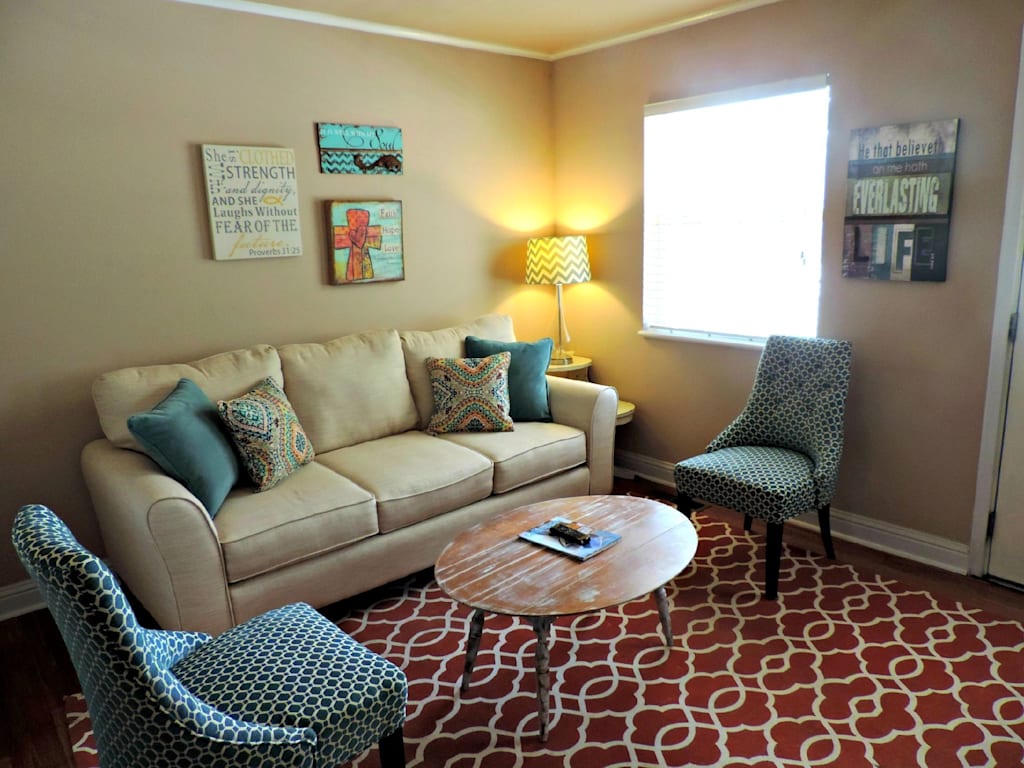
There was a cream sofa, a glass coffee table, two pale chairs, and a large framed print above the fireplace. The rug was soft. The curtains were linen. The room looked exactly like the kind of room that receives compliments.
It also made everyone uncomfortable.
At parties, people gathered in the kitchen.
When her nieces visited, they played in the hallway.
Nora herself rarely watched movies there, because the sofa was too far from the television and the glass table made her nervous whenever she put down a mug.
The living room looked finished, but it did not invite real life in.
For months, Nora tried to ignore this. She told herself the room was new, and maybe she simply needed time to get used to it. But one evening, after a friend came over with takeout, they both sat at the kitchen counter eating noodles from paper boxes while the living room waited silently nearby.
Her friend looked over and said, “Why don’t we sit there?”
Nora replied without thinking.
“It feels like we need permission.”
That sentence bothered her.
The room was hers. Why did it feel like someone else’s showroom?
The next weekend, she decided to change it. At first, she thought the solution was visual. Maybe the wall color was too pale. Maybe the coffee table was wrong. Maybe she needed more art, more texture, more personality.
She searched for ai interior design ideas and tried several versions of the room: warmer colors, deeper sofa tones, softer lighting, a wooden table instead of glass. The images helped her see what kind of feeling she wanted.
But they also revealed something else.
The layout was the bigger problem.
Everything in the room had been arranged for symmetry. The sofa faced the fireplace, the chairs balanced each other, the table sat perfectly in the center. It looked calm in a photo, but it did not support the way Nora actually lived.
She wanted to read near the window. She wanted friends to sit close enough for casual conversation. She wanted to watch movies without moving furniture. She wanted a place to put a cup without feeling like she was disturbing the room.
So she borrowed an idea from restaurant planning. In a good restaurant floor plan, tables are not placed only to look neat. They are placed so people can enter, sit, talk, eat, and leave comfortably. A living room is different, of course, but it still has movement, distance, and human habits.
Nora began moving things with that in mind.
The sofa shifted closer to the television. One chair moved near the window with a small lamp beside it. The other chair turned slightly toward the sofa instead of standing like a formal guest. The glass coffee table was replaced by a wooden one with rounded edges and a lower shelf for books.
The room became less balanced.
It also became easier to use.
The first test came on a Friday night. Two friends came over, and this time Nora led them into the living room without thinking about it. They put drinks on the table. Someone curled up in the window chair. They watched half a movie and talked through the rest of it.
At one point, Nora noticed a takeout container sitting on the coffee table.
Before, that would have annoyed her.
Now it made her happy.
The room had finally stopped performing.
Over the next few weeks, small changes followed. A warmer lamp. A basket for blankets. A stack of books that did not need to look casual because they actually were being read. The large framed print stayed, but it no longer had to carry the entire personality of the room.
Nora still receives compliments on the living room.
But now people sit down while giving them.
That is the difference.
A beautiful home is pleasant to look at. A livable home lets you forget how carefully it was arranged.
Sometimes the best design choice is the one that makes a room less polite and more forgiving.
About the Creator
Enjoyed the story? Support the Creator.
Subscribe for free to receive all their stories in your feed.
Comments
There are no comments for this story
Be the first to respond and start the conversation.