
my favorite movie magic is reel to reel
For Angela's So, Like, What Shows Do You Watch? challenge.


Spoiler alert: This whole damn article is a spoiler!
The film begins with a zither filling the screen, its strings vibrating behind the opening credits while its hidden musician plays one of the great musical scores in movie history. When the opening credits end a British narrator introduces us to post-war Vienna, a city divided into four zones by its occupying Armies: British, American, Russian and French. In its center an international force shares the responsibility for its policing with all the nasty political ramifications you might expect.
And then we meet our protagonist, Holly Martins, as he arrives in Vienna to meet his friend Harry Lime, "Happy as a lark and without a cent." But everything in the story is off-kilter. He doesn't speak the language, is frequently so confused he is slow in answering questions, his happiness dissolving when he learns Harry died a few days before when he was hit by a car. Killed instantly.
In this respect, the film provides one of the best examples of dramatic irony I have witnessed in cinema. The audience frequently sees and understands more fully what our poor muddled hero cannot.
When Holly goes to Harry's funeral, he sees Harry's gal, Anna, for the first time. It's not long before he loses his heart to her and damn near loses his head.
I majored in film in graduate school. It would be an understatement to say that I love movies. But The Third Man, I simply adore. I have watched it countless times and have never tired of it. It is a quintessential example of the Noir genre and as perfect a film as an ardent movie goer could desire.
The cast is international in keeping with the characters they play. The stars are American actors Joseph Cotton playing Holly Martins and Orson Welles as Harry Lime, British stalwart Trevor Howard dons the uniform of a British Military Policeman and Alida Valli plays Anna in her second English speaking role. She was one of the biggest stars in Italian cinema in the 1930s.
The first time Holly interacts with her, he bluntly asks if she loved Harry and she heartbreakingly answers, "I don't know anything anymore except I want to be dead too."
The writing is spare, measured and often comic. Not really surprising given that the story was created by the great novelist Graham Greene, who visited postwar Vienna before writing the film treatment that helped shape the screenplay. A former member of MI6 during the war, he understood how postwar tension and politics could serve as a backdrop for a story idea that had bounced around in his head for years.
The film's cinematographer, Robert Krasker, was heavily influenced by German expressionism and used harsh lighting and Dutch angles while filming at locations in Vienna where the rubble and damaged buildings from the war could still be found. This helps evoke the deep cynicism and political exhaustion in the story especially in the scenes that foreshadow the start of the cold war.
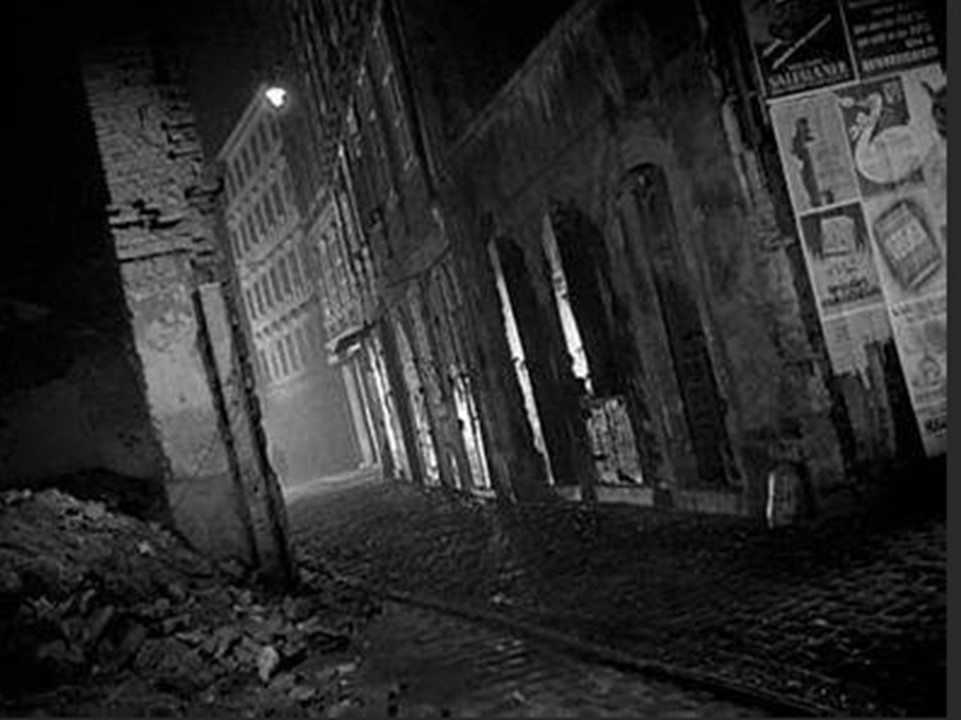
The cinematography also employed chiaroscuro lighting to produce rich images of light and shadow to create a dramatic effect that increases the tension and heightens the actions sequences.
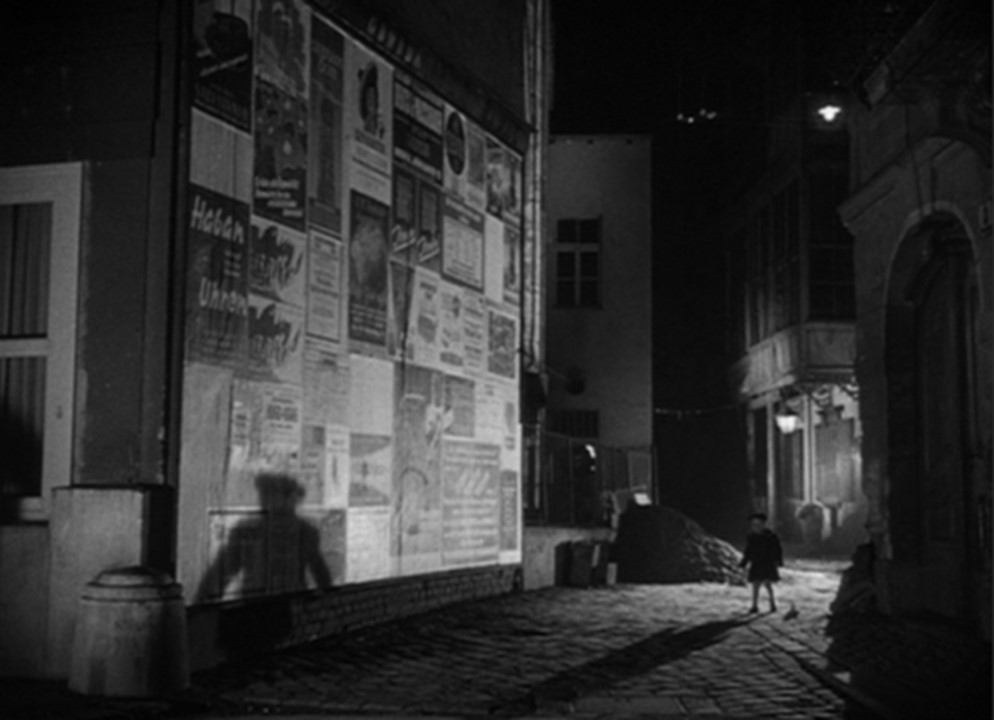
The film’s music is a personal favorite. The director, Carol Reed, visited a small club when he was in Vienna scouting shooting locations, purely at random, and heard Anton Karas, a zither player performing that evening. He was so impressed by the music's jangling melancholy that he invited him to score the film and play the zither as the sole instrument.
His music helps create an exotic sonic backdrop for the city and the story, winning the Oscar for best soundtrack in the 1950 Academy awards. The film quickly rocketed a small local instrumentalist to international fame, a true rags to riches story.
The American film critic Roger Ebert once asked: "Has there ever been a film where the music more perfectly suited the action than in Carol Reed's The Third Man?" If there is, I have not seen it.
In the late 1940's, Vienna was in bad shape. Many necessities were hard to come by, especially medicines, and the black market was a thriving and dangerous reality. This stark foundation helped inspire the backstory for the movie and makes Vienna a character in it every bit as important as the protagonist and the antagonists he confronts trying to learn what really happened to Harry Lime.
But when Holly's efforts gets too close to the truth an already dark tale turns even darker leading to as clever a bit of film writing that I have had the joy to experience.
Holly Martins is a writer of westerns and one of the other guests staying in the same hotel invites him to speak at a symposium of sorts to discuss contemporary fiction. But when they begin asking him questions about stream of consciousness and what he thinks of the famous author James Joyce, poor Holly is lost to near speechlessness.
He has never heard of James Joyce or stream of consciousness and soon the audience members begin to lose interest in his meandering comments. Enter stage right the mysterious and murderous Popescu with two men who walk slowly on either side of the room toward the stage where Harry is talking. But before the action starts Popescu and Martins engage in a thinly cloaked war of words:
Popescu asks, "Is Mr. Martins engaged in a new book?"
"Yes, it is called the third man."
"A novel, Mr. Martins?"
"It's a murder story. I've just started it ... based on fact."
"Are you a slow writer?"
"Not when I get interested."
"I see you are doing something pretty dangerous ... this time."
"Yes."
"Mixing fact and fiction."
"Should I make it all fact?"
"Why no, Mr. Martins. I'd say stick to fiction. Straight fiction."
"I'm too far along with the book, Mr. Popescu."
"Haven't you ever scrapped a book ... Mr. Martins?
"Never."
"Pity."
Such a delicious way to end a conversation with a palpable threat.
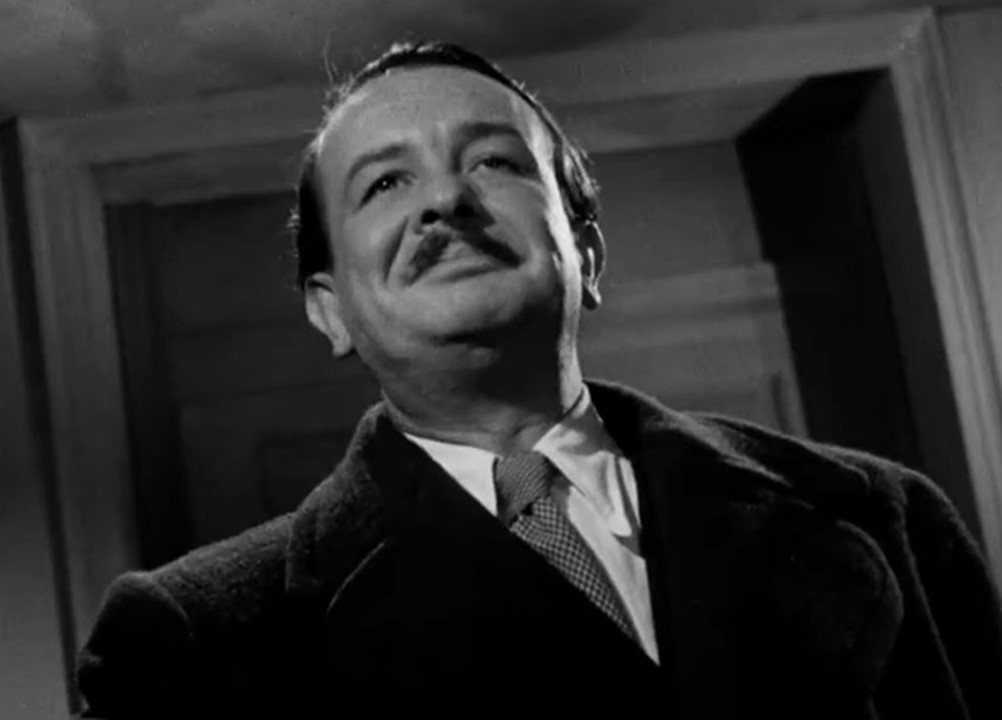
This leads to a dramatic chase scene. But later that night Holly, who is appropriately frightened by his brush with death, gets good and proper drunk.
That night he hears the footsteps of someone behind him, the streetlights casting menacing shadows across the surrounding baroque architecture. But Holly is still drunk and confused when he turns to confront the man tailing him but sees only the empty street.
A moment later he notices a kitten sitting on a step in a doorway. And then he sees that the kitten is in fact perched atop a pair of shoes, the rest of the figure hidden in deep shadow.
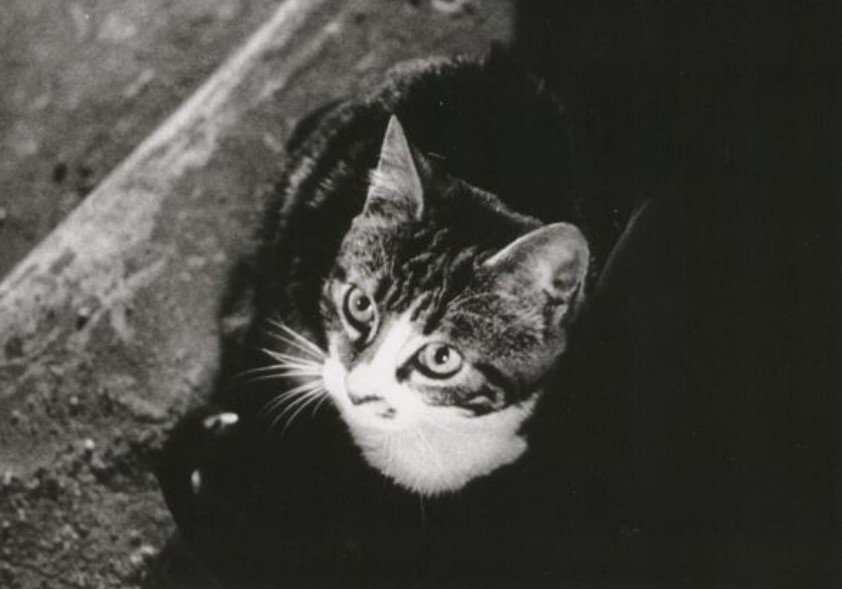
"Satchel foot?" Holly drunkenly calls out. "What are you tailing me for? Cat got your tongue? Come on out!"
"Come out - come out wherever you are! Step into the light, let's have a look at you."
A light goes on and Holly is shocked to see his friend Harry Lime give him a cat ate the canary grin before running off and disappearing into the night.
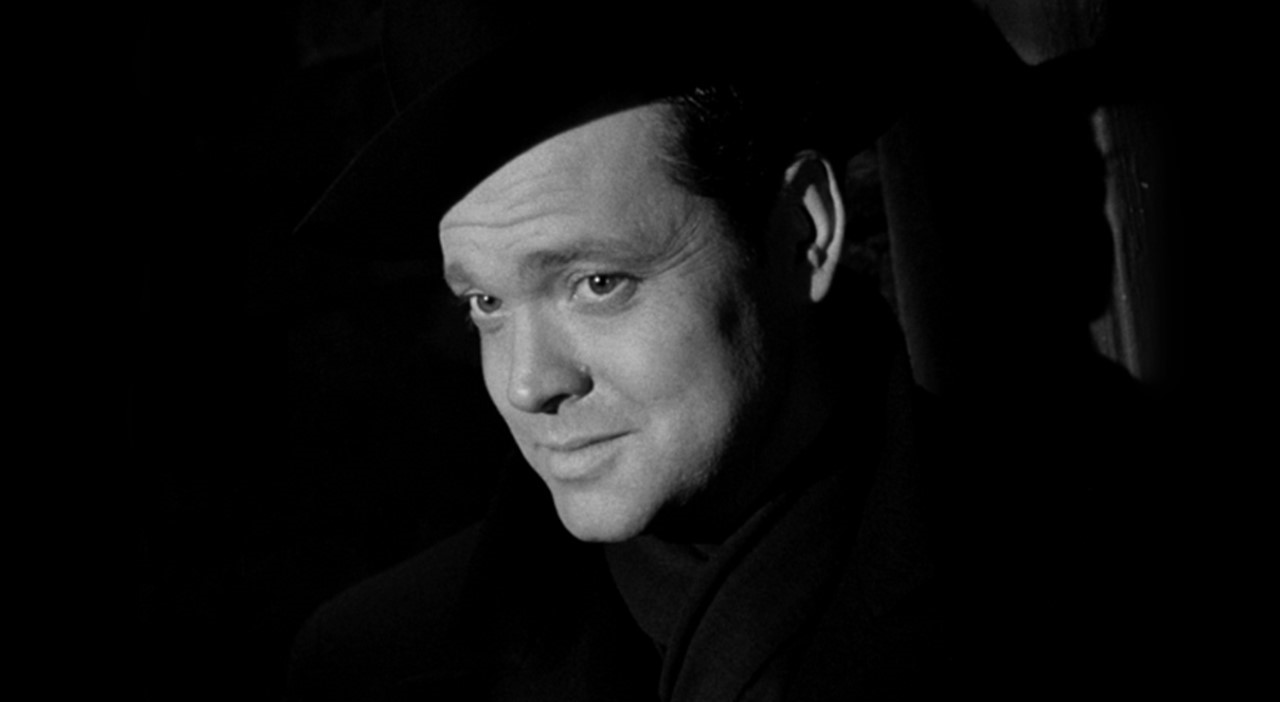
Roger Ebert wrote that "I remember the kitten in the doorway too. A little (Paris) cinema on the Left Bank was showing The Third Man, and I went into the humid cave of Gauloise smoke and perspiration and saw the movie for the first time. When Welles made his entrance, I was lost to the movies."
And friends, so was I.
I'm a storyteller at heart and The Third Man is first rate storytelling. It has shaped my own approach to fiction every bit as much as Conrad, Kipling, Bradbury and a host of other unconventional writers.
See you at the movies!
____________________________

About the Creator
John Cox
Where would you like to travel? Who would you like to meet? No ticket required, a surprise at every destination guaranteed. Strap on your time travel goggles and bring a compass. It's sometimes bumpy in my imagination, so hold on tight!
Enjoyed the story? Support the Creator.
Subscribe for free to receive all their stories in your feed. You could also become a paid subscriber, letting them know you appreciate their work.
Comments
There are no comments for this story
Be the first to respond and start the conversation.