
Mobile Crusher Price Trends: What’s Driving the Numbers Up
Mobile Crusher Price Trends

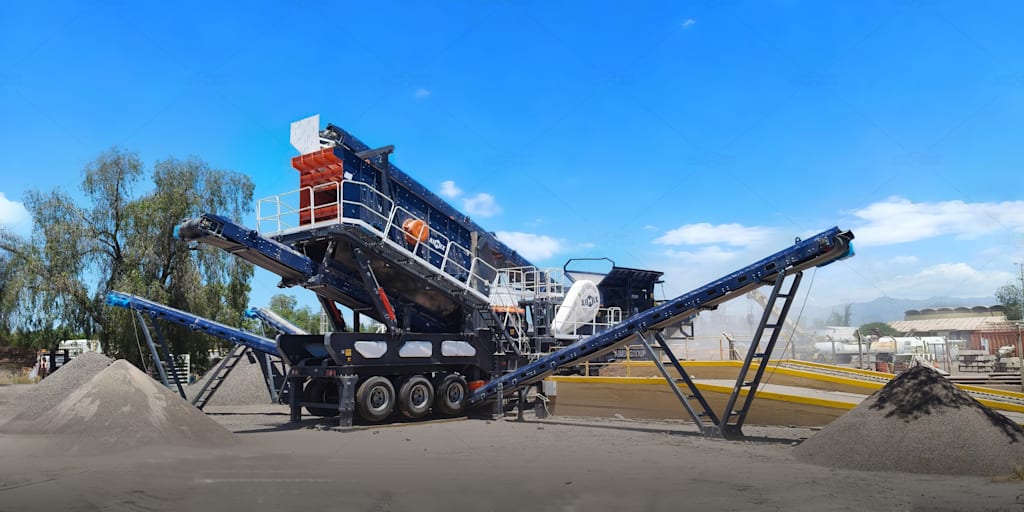
The upward trajectory of mobile crusher prices has become impossible to ignore. Over the past five years, the cost of acquiring a track mounted jaw or impact crusher has increased by approximately 25 to 40 percent, depending on the manufacturer and specification. This escalation is not the result of a single factor. It is the convergence of multiple pressures: raw material inflation, emissions regulation, technological integration, and supply chain realignment. Contractors who entered the market expecting prices to stabilise or decline have been surprised. The purpose of this article is to identify and explain the specific drivers of these price increases. The analysis draws on industry data, manufacturer announcements, and procurement records. The conclusion is that prices are unlikely to retreat. Understanding the drivers is the first step toward adapting procurement strategies to the new reality.
Raw Material and Component Inflation
Steel Prices and the Structural Impact
A mobile crusher is predominantly fabricated from steel. The main frame, the hopper walls, the conveyor structure, and the crushing chamber all require substantial tonnages of rolled and fabricated steel. Between 2020 and 2024, global steel prices experienced volatility unprecedented in the past two decades. The COVID-19 pandemic disrupted mill production. The subsequent demand surge strained supply chains. Energy price spikes in Europe and Asia increased the cost of electric arc furnace production. A mobile crusher plant that required $50,000 worth of steel in 2019 may require $75,000 worth in 2024. Manufacturers cannot absorb this difference. They pass it to buyers. The price trend for mobile crushers directly reflects the price trend for hot-rolled coil, structural sections, and wear-resistant plate. Contractors who track steel indices can anticipate crusher price movements with reasonable accuracy. The correlation is not perfect, but it is strong.

Premium Components and Supply Concentration
Beyond raw steel, mobile crushers depend on specialised components: diesel engines, hydraulic pumps, bearings, and control electronics. These components come from a concentrated supplier base. A small number of manufacturers produce the high-horsepower diesel engines suitable for mobile crushing. A small number produce the load-sensing hydraulic pumps that deliver efficiency. This concentration creates vulnerability. When a bearing manufacturer raises prices by 15 percent, every crusher manufacturer faces that increase. When an engine manufacturer introduces a new emissions-compliant model at a 20 percent premium, the crusher price follows. The argument is that component cost inflation is not under the crusher manufacturer's control. Buyers who seek lower prices by switching to lesser-known brands often discover that those brands use cheaper components. The trade-off is between upfront price and long-term reliability. The price trend for premium components drives the price trend for premium crushers. The relationship is direct.
Emissions Regulation and Engine Upgrades
From Stage III to Stage V: The Cost of Clean Air
The single most significant driver of mobile crusher machine price increases in regulated markets is emissions compliance. In the European Union, the transition from Stage III to Stage V emissions standards added $15,000 to $30,000 to the cost of a mobile crusher. In North America, the parallel transition from Tier 3 to Tier 4 Final added similar amounts. The cost is not in the base engine alone. Stage V requires diesel particulate filters, selective catalytic reduction systems, and diesel exhaust fluid dosing hardware. These components are expensive. They also require additional engineering to package within the crusher chassis. The crusher must accommodate a larger cooling package to manage the heat generated by aftertreatment. The result is a machine that is more expensive to produce, more expensive to purchase, and marginally more expensive to maintain. Contractors who operate in regions with less stringent regulations may avoid these costs. Contractors who operate in the EU, UK, or North America cannot. The price trend for mobile crushers in regulated markets will continue to be influenced by emissions standards. Each tightening of the standards adds cost.
Generator Sets and Electric Hybrids
An emerging cost driver is the shift toward electric and hybrid power. Some manufacturers now offer mobile crushers with electric motors for grid-connected operation, or with hybrid systems that combine a smaller diesel generator with battery storage. These configurations reduce fuel consumption and emissions. They also increase purchase price. An electric drive system adds $20,000 to $50,000 compared to a diesel-only machine. A hybrid system adds $30,000 to $70,000. The payback period depends on fuel prices and operating hours. For contractors with access to grid power, the electric crusher may offer lower total cost of ownership despite higher upfront price. For contractors operating in remote locations, the diesel-only crusher remains the economic choice. The price trend for mobile crushers is therefore bifurcating. Standard diesel machines continue to rise gradually. Electric and hybrid machines command a significant premium. Buyers must evaluate the total cost of ownership, not the purchase price alone, to determine which configuration is appropriate.

Technological Integration and Supply Chain Resilience
Telematics, Automation, and the Digital Premium
The modern mobile crusher is a data-generating platform. Telematics systems transmit operating hours, fuel consumption, and maintenance alerts to cloud-based dashboards. Automation systems adjust crusher settings in response to load variations. Camera systems provide 360-degree visibility for operator safety. These technologies add value. They also add cost. A telematics package may add $3,000 to $8,000. An automation package may add $10,000 to $25,000. A comprehensive safety camera system may add $5,000 to $12,000. The argument is that these features are not optional for contractors bidding on projects with safety and reporting requirements. The price trend for mobile crushers includes a growing digital premium. Buyers who compare prices across manufacturers must compare specifications. A lower-priced machine may lack the telematics and automation that a higher-priced machine includes. The apparent saving may be illusory.
Supply Chain Reconfiguration and Near-Shoring
The final driver of mobile crusher plant price increases is supply chain reconfiguration. The disruptions of 2020-2022 prompted many manufacturers to diversify their supplier base. Some have moved production closer to end markets to reduce freight costs and delivery times. This near-shoring increases manufacturing costs. A crusher built in Turkey for the European market may have lower freight costs than one built in China. It may also have higher labour costs. A crusher built in North America for the North American market avoids trans-oceanic shipping. It also pays North American wages. The argument is that supply chain resilience has a price. Contractors who value shorter lead times and reduced freight risk will pay that price. Contractors who prioritise lowest upfront cost will continue to source from distant, lower-cost manufacturing locations. The price trend for mobile crushers reflects this divergence. There is no single price trend. There are multiple trends shaped by supply chain strategy. Buyers must align their procurement strategy with their risk tolerance and delivery requirements.
About the Creator
AIMIX
Construction Machine Manufacturer in China. Find Machines here: https://aimixconcretesolution.com/
Enjoyed the story? Support the Creator.
Subscribe for free to receive all their stories in your feed.
Comments