
Le Guin Apprenticeship Journal II
On correctness, and taking a very deep breath


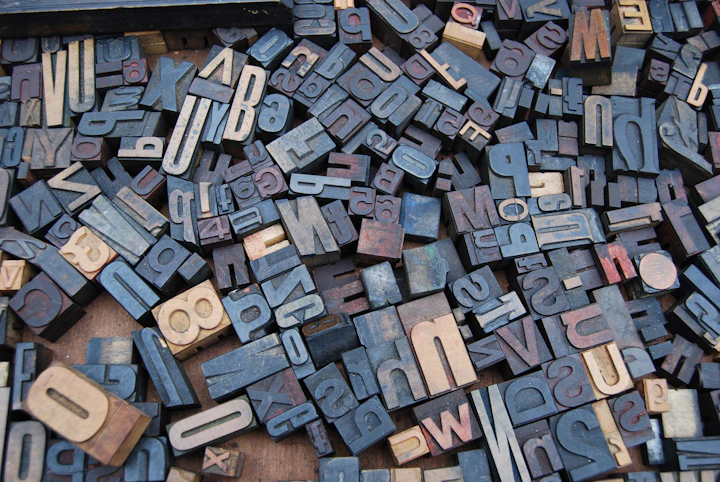
Hmm, grammar. English grammar, at that. Notoriously, a shifting tapestry of inconsistently applied rules, as full of loopholes as the first hand-knitted jumper of an enthusiastic amateur. I myself am such an amateur. Of grammar, that is; jumpers I leave to the professionals. (One encounter with an ill-fitting bobble hat was enough for me, thanks.) I swear, I paid attention in class, but my grammar, like my handwriting, remains strongly a matter of instinct and vibes. I'm trying to make changes. I'm taking a proofreading course, and I'm reading up on those shifting "rules" I mentioned. Accidental Apostrophe by Caroline Taggart is, so far, very engaging and not at all schoolmarm-ish. I've made it to the "hanging hyphen," and I haven't given up yet. Next on my list is Bill Bryson's Troublesome Words, and after that I'll be looking for recommendations, so if you happen to have any, I'd be extremely grateful. (Especially relating to commas, which look set to be my nemesis.) So please do drop them in the comments!
Of course, the rise of AI may have made knowing the rules seem obsolete. Even as I type this, the siren call of Grammarly sings my name. I could click one button and the need for my own brainpower would be rescinded. Commas would place themselves, present and correct. And yet... what about style? What about the beauty of a word all your own, or a broken rule? Even a misused word, if well-defended, if used on purpose, isn't there a place for that? (Shakespeare loved a malapropism!) While Grammarly would smudge it through with a big red line and demand you kill it.
If, at this point, you're a little confused, then perhaps you missed the first one on these? Never fear, you can find it here:
With this, we come at last to the point...
Exercise Two: Am I Saramago
Write a paragraph to a page (150-350 words) of narrative with no punctuation (and no other breaking devices).
Steering the Craft, Ursula K. Le Guin
Le Guin suggests potential subjects for us: people engaged in a "hurried or hectic or confused activity," such as at the scene of an accident or a revolution. I found this quite challenging to engage with so I plucked a scene out of a WIP I've been churning over for a while. I've played with grammar in my prose before, when I've tried "breathless" flash pieces (my favourite one is called Remember, and if you're at all interested it's pinned to my profile, I'd love you to read it). I was exploring my limits when I discovered the form, and I loved the apparent formlessness of its stream-of-consciousness format, entirely missing the point of the grammar doing all that heavy lifting right under my nose until this exact moment as I study this exercise. Please do picture me facepalming, I assure you it's quite accurate. I also, as a result, thought I was going to breeze this whole thing. Until it clicked that Le Guin was saying NO punctuation, NONE. Not even full stops. A single, 150-350 word sentence. And oh, arrogance, thy name is Lauren. I realised I was actually smoked. This was HARD. Brain-grinding, pen-putting-down, walking in little circles, hard. In the end though, I had a lot of fun. And here it is:
There's a crack in the crystal laughter like a struck champagne glass breaking against her ear and Kit can hear that Tippy doesn't find the boy funny at all as she fishes in her drink for an ice cube to roll on her tongue until it burns until the laughter comes again and she crushes it between her teeth to drown them out which is why she doesn't hear Tippy coming until there's a warm body flinging itself across her lap and it's Tippy's words ringing Kit's head instead of that laugh Christ's balls Kitten Henry is the most incredible bore and you have atrocious taste and all Kit can think to ask is if Tip means to cure her of him while her lips grow cold from the ice and her skin grows hot from the weight of her friend and her stomach turns with the nameless thing that has darted between them ever since Tippy's tits grew in but Kit's figure turned out better or since Tip could sing but Kit could paint or since the sky was blue and the sea was green and since Tippy was Tippy and Kit was Kit and ever since forever and probably even the day before that.
Oh my god, my fingers have never itched for a full stop more in my life! Which, I suppose, is Le Guin's point. She aims to teach the importance of grammar by banning it entirely. But also to point out its flexibility. Without it, things can flux. Meaning. Breathing. Without me beside you to read it in your ear, I imagine you will all hear it differently to yourselves, take its meaning for yourselves in different ways. And does having no grammar at all, "the unbroken flow of words," fit the subject? That is something Le Guin asks. In the piece I ended up writing I think it does: in a way, it reflects the continuous flow of power and feeling back and forth between the girls.
In the meantime, I face my personal grammar studies with renewed excitement and enthusiasm. I want to know the rules. I want to use them to shape this unbroken flow. I want to break them!
Ok then, I think that's enough for now. It's Sunday, I'm going to grab a beer and read a book. Maybe I'll see you at the next one.
xx
About the Creator
Lauren Everdell
Writer. Chronic sickie. Part-time gorgon. Probably thinking about cyborgs right now.
Website: https://ubiquitousbooks.com
Instagram: https://www.instagram.com/scrawlauren/
bluesky: https://bsky.app/profile/scrawlauren.bsky.social
Enjoyed the story? Support the Creator.
Subscribe for free to receive all their stories in your feed. You could also become a paid subscriber, letting them know you appreciate their work.
Comments
There are no comments for this story
Be the first to respond and start the conversation.