
How AI Is Changing Daily Life in India in 2026
Exploring the Real Impact of AI on Education, Healthcare, Work, and Technology in Modern India

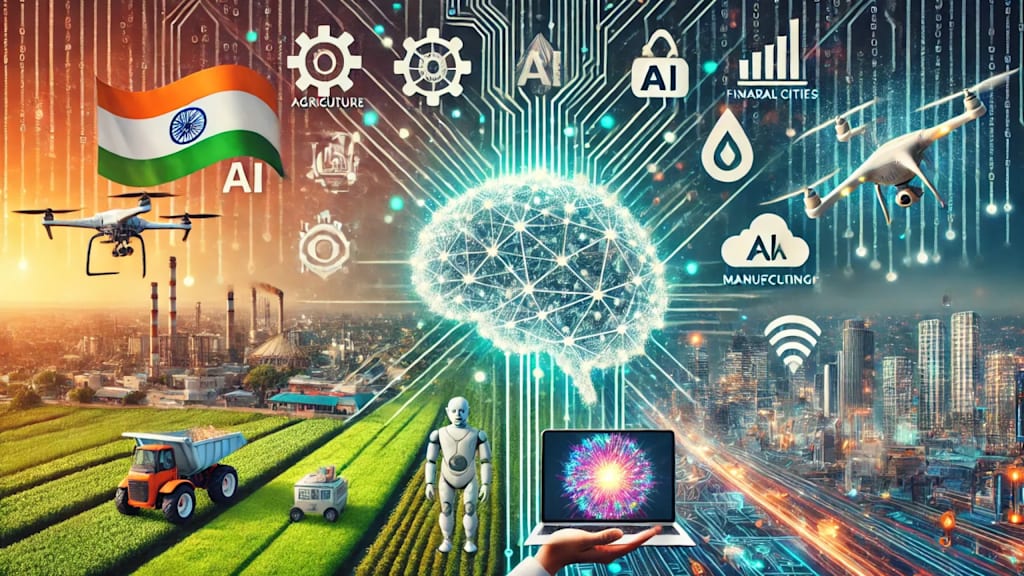
Artificial Intelligence is no longer a futuristic idea in India. In 2026, it has quietly become a part of everyday life. From the way people shop online to how students study and farmers manage crops, AI is influencing decisions in ways many people do not even notice.
A few years ago, AI sounded like something limited to tech companies and scientists. Today, it is present in smartphones, banking apps, hospitals, classrooms, and even government services. Whether someone lives in a metropolitan city or a small town, there is a high chance they interact with AI almost every day.
India’s fast-growing digital economy, increasing internet access, and widespread smartphone usage have accelerated AI adoption across different sectors. Government initiatives and private companies are also investing heavily in AI-based systems designed specifically for Indian users and local languages.
AI in Everyday Smartphone Usage
One of the biggest ways AI affects daily life is through smartphones. Most people use AI without realizing it.
Voice assistants now understand Indian accents much better than before. Phones can translate regional languages instantly, suggest replies to messages, organize photos automatically, and even filter spam calls more accurately.
Social media platforms also rely heavily on AI. The reels, videos, and posts people see are often recommended through AI systems that study viewing habits and preferences. Music and video streaming apps now suggest highly personalized content based on listening and watching patterns.
Even mobile cameras use AI to improve image quality automatically. Features like portrait enhancement, night photography, and object detection are all powered by machine learning.
AI Is Transforming Education
Education in India is changing rapidly because of AI-powered learning platforms. Students now receive more personalized learning experiences compared to traditional classroom systems.
Many educational apps can identify weak subjects, recommend practice tests, and adjust lessons according to individual learning speed. AI tools also help students prepare for competitive exams through mock interviews, instant doubt-solving, and adaptive quizzes.
Regional language support has become a major advantage. Students from non-English backgrounds can now access educational material more easily through AI translation and voice tools. Platforms like DIKSHA and several EdTech companies are already integrating AI into digital learning systems.
Teachers are also benefiting from AI. Automated grading systems, attendance tracking, and content planning tools are reducing repetitive work and allowing teachers to focus more on teaching.
Healthcare Is Becoming More Accessible
Healthcare is another area where AI is making a visible difference in India.
Hospitals and clinics are increasingly using AI to support diagnosis and patient care. AI tools can analyze medical scans faster, identify abnormalities in reports, and assist doctors in detecting diseases earlier.
In rural areas, telemedicine platforms powered by AI are helping people consult doctors remotely. This is especially important in regions where access to healthcare specialists is limited.
Several healthcare initiatives in India are focusing on AI-driven systems to improve accessibility and efficiency. Recent developments show AI being used for faster diagnosis, patient support systems, and healthcare management.
Wearable devices have also become smarter. Smartwatches now monitor heart rate, sleep patterns, oxygen levels, and fitness activities while providing health alerts in real time.
AI and Digital Payments
India’s digital payment ecosystem is one of the strongest examples of AI integration in daily life.
UPI transactions, fraud detection systems, and banking apps rely heavily on AI to identify suspicious activities and improve security. AI can detect unusual spending patterns instantly and help prevent financial fraud.
Banks are also using AI chatbots for customer support. Instead of waiting for human representatives, users can now solve common banking issues within minutes.
Many financial apps provide personalized budgeting advice, spending analysis, and investment recommendations using AI-powered systems. This has made financial planning easier for young professionals and small business owners.
As India continues to lead in digital payments, AI is becoming essential for handling massive transaction volumes securely and efficiently.
AI in Agriculture and Rural India
AI is not limited to urban areas. It is slowly becoming important for Indian farmers as well.
Farmers are using AI-powered tools to monitor weather conditions, check soil quality, detect crop diseases, and improve irrigation planning. Some systems can even predict pest attacks before crops are damaged.
Government-backed AI initiatives are focusing on solving India-specific agricultural challenges. Local language AI assistants are helping farmers access schemes, market prices, and farming advice more easily.
Drone technology powered by AI is also becoming more common in agriculture. Farmers can now survey large areas of land quickly and identify problems more efficiently.
Although challenges like data infrastructure and digital literacy still exist, experts believe AI has strong potential to improve agricultural productivity in the coming years.
AI Is Changing Work Culture
The workplace in India looks very different in 2026 compared to a few years ago.
AI tools are helping employees automate repetitive tasks like report generation, scheduling, email drafting, and data analysis. Many professionals now use AI assistants daily to improve productivity.
Content creators, marketers, designers, and writers are also using AI tools for research, editing, and idea generation. However, human creativity and originality still remain extremely important.
Companies are increasingly hiring people who know how to work alongside AI systems rather than replace them. As automation grows, upskilling and digital learning are becoming more valuable for career growth.
Remote work has also become more efficient because of AI-powered meeting summaries, real-time translations, and smart collaboration tools.
AI in Transportation and Smart Cities
Traffic management in Indian cities is gradually becoming smarter through AI technology.
AI-powered traffic systems can monitor congestion, optimize signal timing, and improve road safety. Navigation apps now provide highly accurate traffic predictions using real-time data analysis.
Ride-sharing and delivery apps also depend heavily on AI for route optimization and customer matching. This helps reduce delivery times and fuel consumption.
Several smart city projects in India are integrating AI into public services such as waste management, surveillance, and energy efficiency.
Concerns Around AI Growth
While AI offers many benefits, it also raises important concerns.
One major issue is job displacement. As automation increases, some traditional roles may disappear or change significantly. This is why skill development and digital literacy are becoming essential.
Privacy is another concern. AI systems rely heavily on user data, and many people worry about how their personal information is collected and used.
There are also concerns about misinformation and deepfake content. AI-generated media can spread false information quickly if not regulated properly.
Experts continue to emphasize the need for ethical AI systems, transparent policies, and responsible usage as AI adoption expands across India.
Conclusion
In 2026, AI is no longer a technology limited to laboratories or large corporations. It has become part of normal life in India.
People use AI while making payments, studying online, watching videos, booking rides, visiting hospitals, or simply scrolling through social media. It is helping businesses grow, improving access to services, and making digital systems more efficient.
At the same time, India is still learning how to balance innovation with responsibility. Questions around jobs, privacy, and ethical AI usage will continue to shape discussions in the future.
What is clear, however, is that AI is already transforming how Indians live, work, learn, and communicate. The technology may continue to evolve, but its influence on daily life is only becoming stronger with time.
About the Creator
Prateek Mittal
Prateek Mittal is an Indian blogger with 4 years of experience, focusing on business and the energy sector, sharing simple and insightful content on industry trends and market developments.
Enjoyed the story? Support the Creator.
Subscribe for free to receive all their stories in your feed.
Comments
There are no comments for this story
Be the first to respond and start the conversation.