
From School Uniforms to the Hospital Bed: A Love That Never Let Go
Married to my first love for eight happy years, our perfect life was shattered by an unexpected tragedy.

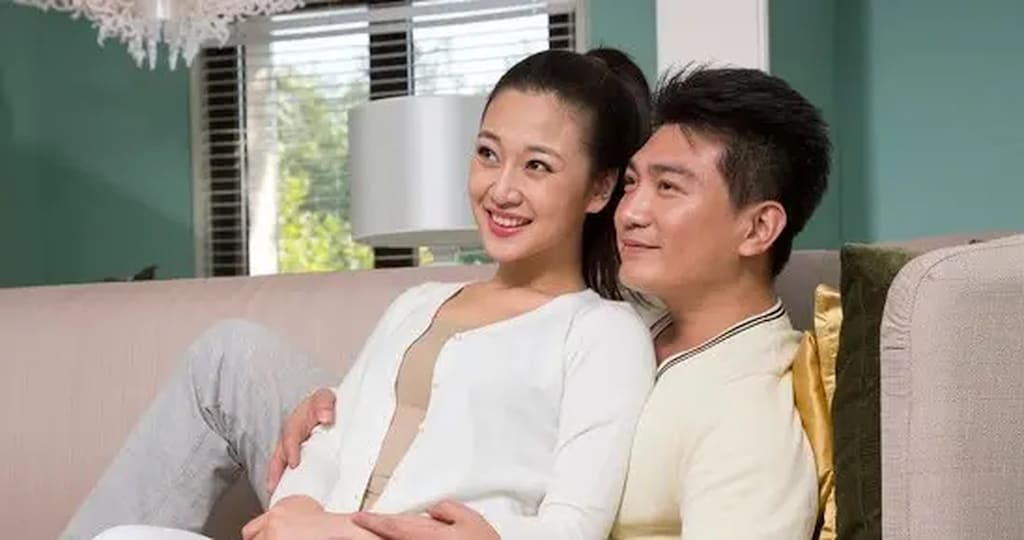
My name is Lin Xiaoman. I’m thirty-two years old, and in the eyes of others, I’m probably the kind of woman who “saved the galaxy in her past life.” It’s not because I’m wealthy or exceptionally beautiful—it’s because I married my first love.
Saying it out loud makes it sound incredibly romantic, but in the beginning, it wasn’t that profound.
My husband, Chen Yu, and I were high school classmates. We became desk-mates during our junior year. Back then, he was as thin as a bamboo pole, wore black-rimmed glasses, and his school uniform was always a size too big, making him look like a flag hanging on a pole whenever the wind blew. My initial impression of him was simply: This guy is great at math; I’ve never been caught copying his homework.
How did we end up together? It’s a bit of a cliché. During a winter night of our senior year, it was snowing heavily after evening self-study. I took a spill on my bike and scraped my knee badly. I was crouching by the roadside, grimacing in pain. He appeared out of nowhere, tossed his bike aside without a word, looked at my knee, and said, “Wait here.”
I thought he was going to get help. Three minutes later, he ran back with a bottle of iodine and a pack of cotton swabs. I found out later he had climbed over the school wall to reach the pharmacy at the gate just before it closed for the night.
He crouched under the streetlight to treat my wound. His fingers were beet-red from the cold, but his touch was so gentle, as if he were afraid of breaking something. In that moment, my heart skipped a beat, and I knew I was done for. I was going to fall for this man for the rest of my life.
On graduation day, he confessed to me on the school track. He didn’t say “I like you.” Instead, he said, “Lin Xiaoman, I want to go to college in the same city as you.”
With just those words, I cried a river.
We did end up in the same city. He went to the University of Technology, and I went to the Normal University. Our campuses were eight bus stops apart. Over those four years, we fought and even "broke up." During our worst fight, I packed up everything he’d ever given me and mailed it back. The next day, he took a ninety-minute bus ride to my school gate, clutching a bag of roasted chestnuts, and stood in the freezing wind waiting for my class to end. When I saw him with his nose red from the cold and that steaming bag of chestnuts in his hand, my heart melted instantly.
I asked, “Weren't you coming to return my things?”
He said, “I’m here to take you back.”
That’s just who he is—never one for flowery words, but always knowing exactly how to touch the softest part of my heart.
Three years after graduation, we got married. The wedding wasn't huge, but we organized every detail ourselves. In front of all our friends and family, he said: “Lin Xiaoman is the only girl I’ve ever loved. From school uniforms to the wedding dress, I never want to let her down.”
There wasn't a dry eye in the house. My makeup was ruined.
Married life was quiet, but truly happy.
Neither of us craves grand gestures. We go about our work during the day; at home, one of us cooks while the other washes dishes. On weekends, we curl up on the sofa for a movie or visit the wet market to buy fresh ribs for soup. His cooking is mediocre, but his corn and pork rib soup is exceptional. Every time I’d come home late from overtime, the scent would hit me at the door, and I’d feel warm all over.
We don’t have children. It’s not that we can’t, but we agreed to wait. It wasn't about money or the hassle; we just felt like we hadn't had enough time as a couple yet. As he put it: “Let’s play for another two years. I’m not tired of our ‘world of two’ yet.”
He was thirty when he said that, but his smile was still that of the teenage boy I once knew.
As for our "private life," we weren't the "wild" type, but we were consistent. Usually twice a week, maybe once if we were busy, but we never went more than ten days without intimacy. The quality was good—never a "chore," but filled with the tenderness and closeness we needed. Afterward, he’d hold me and chat—about work, the past, or sometimes nothing at all, just listening to each other breathe.
I think that’s the best state for a marriage—not necessarily constant passion, but knowing that the person is always there, within your reach.
Friends joked that we were "too clingy," acting like new lovers after years of marriage. I’d deny it, but inside, I was proud. In an era with such high divorce rates, staying sweet with your first love into the eighth year of marriage is a rare thing.
I thought life would go on like this forever.
Until last autumn.
It was a Friday—I remember it clearly because he promised to make sweet and sour ribs. I waited until nearly 8:00 PM. When he finally walked in, he didn't have any groceries, and his face looked off.
I asked what was wrong. He said he was just tired.
I didn’t think much of it and told him to shower and rest. But when he came out of the bathroom, I noticed a slight protrusion on the right side of his chest, about the size of a fingernail. I asked, “What’s that growing there?”
He looked down and said, “Oh, probably just a lipoma. It doesn’t hurt or itch. It’s fine.”
I told him he should get it checked anyway.
He agreed, but dragged his feet for two weeks before going. On the day the results came out, he went to get the report alone. When he came back, he was in a daze. I asked what the situation was, and he handed me the report. As I read it word by word, my head began to buzz.
Malignant Breast Tumor.
My first reaction was that there had been a mistake. A breast tumor? Men get breast cancer? I’d never heard of it. The doctor explained that while rare, men do get it, and because it’s often ignored, it’s usually discovered late.
Chen Yu’s situation wasn’t the worst, but it wasn't great. The tumor was over two centimeters. There was no distant metastasis, but there were signs of lymph node involvement. The doctor recommended surgery as soon as possible, followed by a decision on chemotherapy based on the pathology.
I felt numb, but I didn't dare cry because I was afraid of making him panic more. He drove on the way home, and I sat in the passenger seat; neither of us spoke. At a red light, he suddenly reached out and squeezed my hand. “Xiaoman, I’m sorry,” he said.
I asked, “What are you apologizing for?”
He said, “I don’t know how this will go. If—”
I cut him off. “There are no ‘ifs.’ Shut up.”
My voice was so loud it startled me. He didn’t say anything else, but he didn’t let go of my hand.
The surgery was scheduled for three weeks after the diagnosis. Those were the longest three weeks of my life. I accompanied him through countless tests: blood work, CT scans, MRIs, biopsies... every wait for a result felt like waiting for a verdict. He appeared calm, but I knew he was scared. One night, I woke up to find him sitting alone on the balcony, his phone screen glowing with a search for "male breast cancer survival rates."
I walked over and hugged him from behind. I could feel him shaking.
On the day of the surgery, just before he was wheeled in, he looked back at me, smiled, and said, “Don't be afraid. I’ll be out soon.”
I nodded and smiled back. Once he was inside, I crouched in the hallway and cried for a full hour.
The surgery went well. They performed a mastectomy on the right side along with lymph node dissection. The first thing he did when he woke up was look down at his chest. He said nothing and turned his gaze toward the window.
I knew he was hurting inside. Even though men might not care about the appearance of their chest as much as women do, it was still a part of his body. To suddenly have a piece of yourself missing takes time for anyone to accept.
The pathology results came back better than expected. It was hormone-receptor positive and HER2-negative. This meant endocrine therapy could be effective and chemotherapy wouldn't be necessary, but he would need to take medication for a long time—at least five to ten years.
I breathed a sigh of relief then, thinking that avoiding chemo was a blessing. But I soon realized that the surgery wasn't the hard part; it was the days that followed.
He started endocrine therapy, taking a drug called Tamoxifen. The doctor said it would lower his estrogen levels to prevent recurrence, but the side effects were heavy: hot flashes, night sweats, mood swings, joint pain, and... a loss of libido.
I was prepared for the first few, but I hadn't realized how severe the last one would be.
At first, he’d still try to be intimate, but gradually, the frequency dropped. From twice a week, to once every two weeks, to eventually not once in a month. I tried to initiate, but he always found an excuse—he was tired, he had a headache, he had to wake up early... I knew he wasn't doing it on purpose; the medication simply stripped his body of any desire.
Knowing that didn't make the sense of loss go away.
One night, after my shower, I put on a nightgown he used to love and lay down beside him, leaning in gently. He was silent for a long time before he said something that still breaks my heart.
He said, “Xiaoman, I’m sorry. I really can’t. I’ve tried, but there’s just nothing in my head. I don’t know when I’ll get better, or if I ever will. If you... if you feel wronged, I won't blame you for whatever decision you make.”
The tears just started streaming down my face.
It wasn't because I felt "wronged," but because he actually thought I would leave him over this.
I said, “Chen Yu, are you stupid? I’m your wife, not some casual hookup. You think I married you just for that?”
He didn’t answer, but in the dark, I felt his tears fall onto my hand.
After that, I never brought it up again. Not because I had given up, but because I didn't want to pressure him. He became sensitive and self-conscious, sometimes turning his back to me just to change his clothes. I knew what he was worried about—the surgical scar and the side effects made him feel like he was "less of a man."
It took a long time to help him let his guard down. I’d intentionally walk over while he was changing, hug him from behind, and kiss the scar on his shoulder. I told him, “This scar is cool. It’s like a superhero mark.”
He’d say, “Oh, stop it.”
But I could feel his tense body slowly relax.
During that time, I obsessively researched everything I could. I joined several support groups for families of breast cancer patients. Most were women whose husbands were supporting them; wives supporting husbands were few and far between. Every time I spoke up, someone would ask, “Your husband?” When I said yes, they’d sigh, “That’s not easy.”
It really wasn't easy. But honestly, compared to what he was going through, my efforts were nothing.
The side effects persisted. When the hot flashes hit at night, he’d wake up drenched in sweat. I kept a dry towel by the bed to wipe his back before letting him go back to sleep. When his joints ached and he limped, I’d make ginger soup and massage his knees. When he felt low, he’d snap at me for no reason, then apologize like a child who’d done something wrong.
I didn't blame him. I really didn't.
Because I remembered when I was at my lowest, he treated me the same way. A few years ago, due to work stress, I had severe insomnia and a hair-trigger temper. I’d cry at the drop of a hat. Every night, he’d talk to me, soak my feet, and massage my temples without a single word of complaint.
What is marriage? Isn't it just one person leaning on the other, stumbling through life together?
His condition is stable now. He’s still on the meds, and the side effects are still there, but he’s adapted. He’s had two follow-ups with normal results, and the doctor says he’s recovering well.
As for our intimate life, it’s much less frequent now—maybe once a month, sometimes less. But the quality is actually better. It’s no longer a routine to maintain a frequency, but a genuine desire to be close. It’s always slow and gentle now. He’ll ask, “Is this okay?” with the same caution he had when we first started dating.
Once, after we finished, he suddenly said, “Xiaoman, thank you.”
I asked, “For what?”
He said, “Thank you for not leaving.”
I rolled over, wiped a tear with the blanket, and said, “Where would I go? I’ve been with you since I was seventeen. In these fifteen years, I’ve only learned one thing—once you’ve found your person, you never let go.”
He didn't say anything else, but in the dark, I felt his hand reach out and grip mine tightly.
Same strength, same warmth.
I often think back to what he said at our wedding: “From school uniforms to the wedding dress, I never want to let her down.”
The truth is, he never has. Getting sick wasn't his fault; he didn't want this. He just had some bad luck, meeting the worst thing at the best time of his life.
But what I want to say is: so what if tragedy strikes? It’s not like we haven't weathered storms before. Since that day in our junior year when he applied iodine to my knee, I knew this man might not give me a life of immense wealth, but he would never let go of my hand when things got hard.
Now, it’s my turn to hold onto his.
Life goes on. He wakes up every morning and takes his pill; I go to the market and come back to make soup. On weekends, we watch a movie or do nothing at all, just soaking up the sun on the balcony while scrolling through our phones. He still gets the occasional hot flash, the joint pain, the low moods, but more often than not, he’s smiling.
And that’s enough.
Lastly, I want to say:
If you are going through something similar, if you are walking a difficult path with your partner, I want to give you a hug. Truly, this road isn't easy, but please believe that as long as neither of you lets go, there is no hurdle you cannot cross.
As for us, we’re still on our way.
Hand in hand, one step at a time.
Just like that snowy night fifteen years ago.
About the Creator
Water&Well&Page
I think to write, I write to think
Enjoyed the story? Support the Creator.
Subscribe for free to receive all their stories in your feed.
Comments
There are no comments for this story
Be the first to respond and start the conversation.