
Face Liveness Detection to Prevent Fraud with AI Security
Discover how Face Liveness Detection prevents fraud by verifying real users and blocking spoofing attacks with advanced AI-powered security.

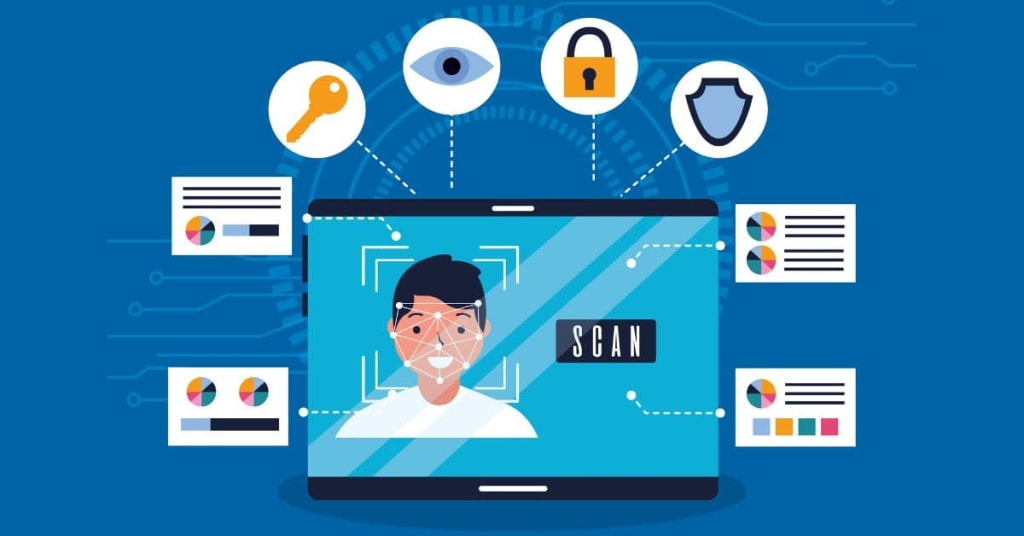
Is Face Liveness Detection the Key to Preventing Spoofing Attacks?
What is Face Liveness Detection?
Face Liveness Detection is an advanced biometric security technology designed to distinguish between real human faces and fake representations such as photos, videos, or 3D masks. It plays a crucial role in fraud prevention, particularly in industries like banking, healthcare, and access control.
How Face Liveness Detection Works
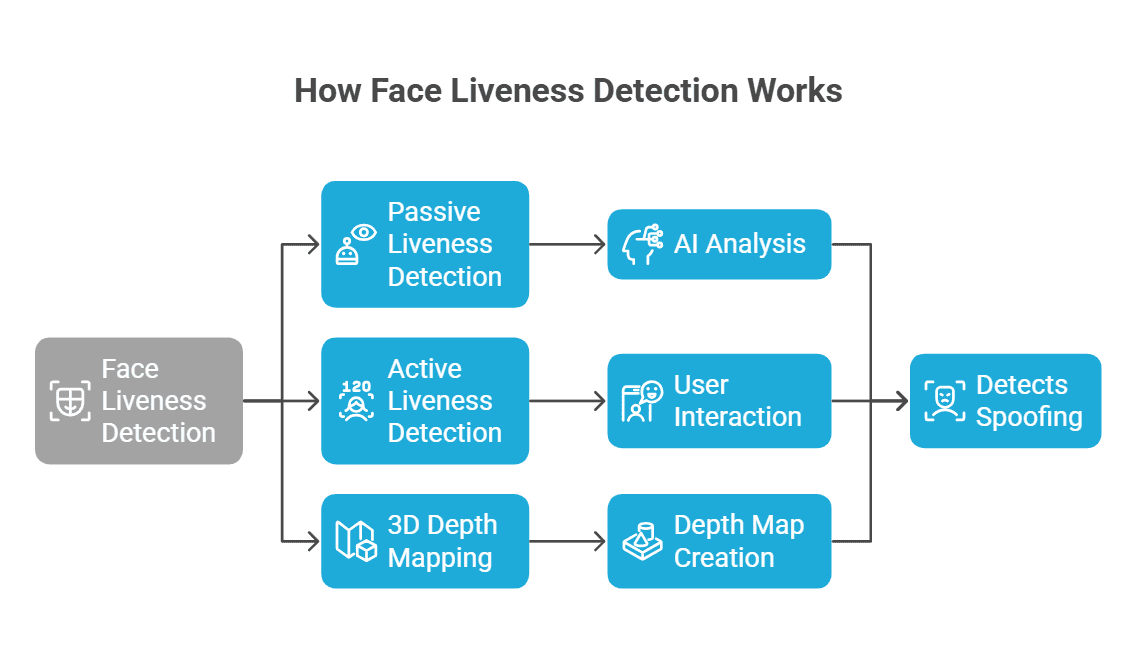
Liveness detection methods use a combination of AI-driven algorithms, machine learning models, and sensor-based technologies to verify the authenticity of a face. The process typically involves:
- Passive Liveness Detection: Uses AI to analyze image artifacts, subtle facial movements, and texture patterns without user interaction.
- Active Liveness Detection: Requires the user to perform tasks like blinking, smiling, or turning their head to confirm they are real.
- 3D Depth Mapping: Utilizes infrared or structured light sensors to create a depth map and detect flat images attempting to spoof the system.
Why Face Liveness Detection Matters
The rise of identity fraud has made liveness detection a necessity. Consider these alarming statistics:
- $56 billion was lost to identity fraud in 2020 alone (Javelin Strategy & Research).
- Fraudulent identity verification attempts increased by 48% in the past five years.
- 80% of cybersecurity breaches involve weak authentication methods (Verizon Data Breach Report).
By implementing Face Liveness Detection, organizations can reduce fraud, enhance security, and improve user trust.
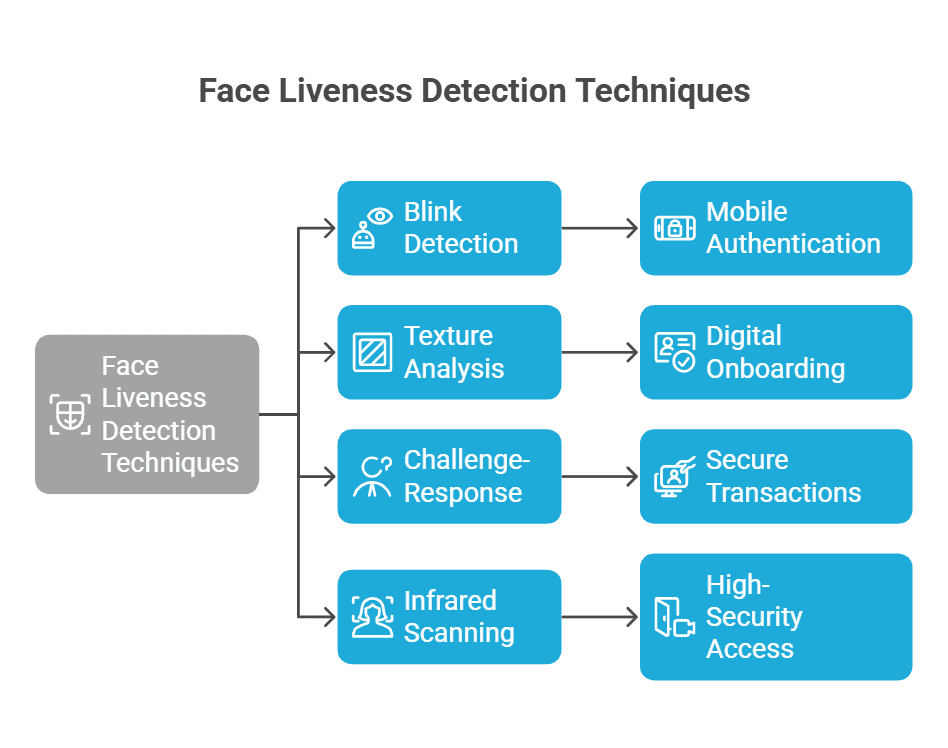
Techniques Used in Face Liveness Detection
Challenges in Face Liveness Detection
Despite its effectiveness, face liveness technology has hurdles to overcome:
1. Adversarial Attacks
Hackers constantly develop sophisticated spoofing methods, such as ultra-realistic 3D masks and deepfake videos. AI-driven systems must evolve to stay ahead.
2. False Positives & Negatives
If not properly trained, AI models can incorrectly flag real users as fraudulent or fail to detect spoofs. High-accuracy models require vast datasets and continuous improvement.
3. Privacy Concerns
Users worry about data security and facial recognition misuse. Companies must ensure compliance with GDPR, CCPA, and other privacy regulations.
Real-World Applications of Face Liveness Detection
1. Financial Services
Banks use liveness detection to prevent fraudulent account openings, unauthorized transactions, and identity theft.
2. Healthcare
Ensures only authorized personnel access sensitive medical records and prescription systems.
3. Mobile Authentication
Smartphones integrate liveness detection to enhance biometric security for unlocking devices and authorizing payments.
4. Border Control & Law Enforcement
Governments use biometric security for airport screening, passport verification, and criminal identification.
The Future of Face Liveness Detection
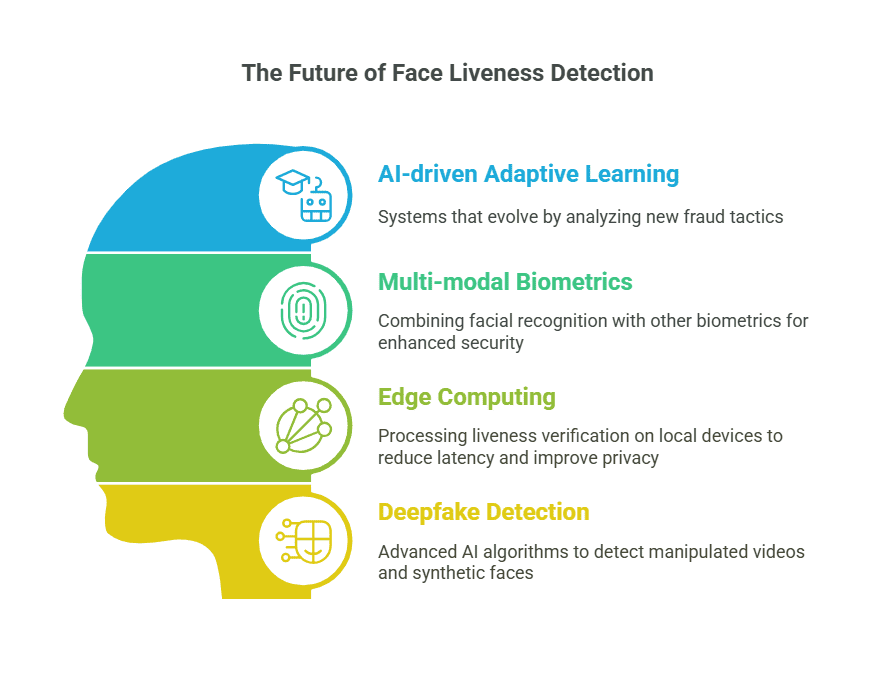
The next evolution of Face Liveness Detection will involve:
- AI-driven adaptive learning: Systems will self-improve by analyzing emerging fraud tactics.
- Multi-modal biometrics: Combining facial recognition with fingerprint and voice authentication for multi-layered security.
- Edge computing: Liveness verification processed on local devices rather than cloud servers, reducing latency and improving privacy.
- Deepfake detection: Advanced AI algorithms will be able to instantly detect manipulated videos and synthetic faces.
Conclusion
Face Liveness Detection is no longer a luxury, it’s a necessity in today's digital landscape. By leveraging AI-powered security, organizations can safeguard identities, prevent fraud, and create a seamless user experience. As threats evolve, so must our defenses. Businesses looking to integrate cutting-edge liveness detection solutions should consider Recognito for advanced biometric security technology.
About the Creator
Recognito
RECOGNITO is a NIST FRVT top face recognition algorithm developer and a leading provider of identity verification, specializing in face recognition, liveness detection and ID document verification.
Enjoyed the story? Support the Creator.
Subscribe for free to receive all their stories in your feed.
Comments
There are no comments for this story
Be the first to respond and start the conversation.