
Explicate!
A Harper Lewis Rogue Challenge

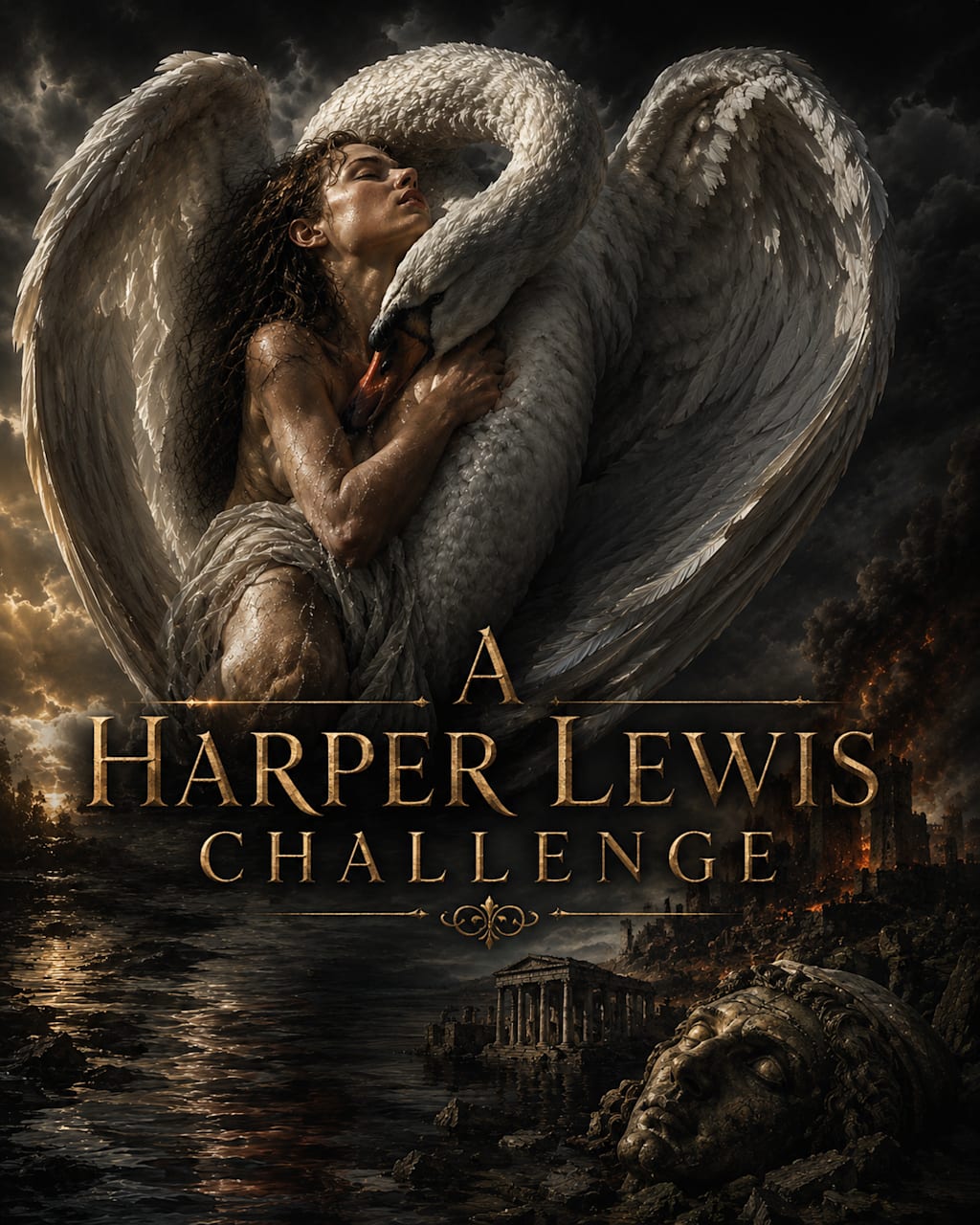
Oh, fuck the world.
I’m pretty sure I just articulated the philosophy of Zeus.
Zeus is an asshole. I’ll say it again. Zeus is an asshole—just ask one of his daughters (any of them—take your pick).
We can’t address all of this in one challenge, no matter how rogue it is. In the absence of phantom quartz from Brazil, we’re going to take a stab at one of the greats—William Butler Yeats.
We’re not disparaging him, although Saint Shannon probably would if she could, but I seriously doubt that her intellectual capacity would allow her to successfully explicate Dr. Seuss, much less Yeats, which is hilarious, considering her Aquinas pride.
I digress. I’m here to be serious about literature, not Saint Shannon, so let’s get back to Yeats. I didn’t have the pleasure of a Yeats seminar, but I had a Twentieth Century British Poetry survey in grad school, and Yeats was central to it. I was too inexperienced to fully comprehend much of his poetry, but enough landed and resonated: I’ve always loved “The Lake Isle of Innisfree,” and “The Second Coming” lands harder today than it ever has. What rough beast indeed. We’re not looking at either of those. We’re looking at Leda, and we’re looking at the swan.
Leda and the Swan
BY WILLIAM BUTLER YEATS
A sudden blow: the great wings beating still
Above the staggering girl, her thighs caressed
By the dark webs, her nape caught in his bill,
He holds her helpless breast upon his breast.
How can those terrified vague fingers push
The feathered glory from her loosening thighs?
And how can body, laid in that white rush,
But feel the strange heart beating where it lies?
A shudder in the loins engenders there
The broken wall, the burning roof and tower
And Agamemnon dead.
Being so caught up,
So mastered by the brute blood of the air,
Did she put on his knowledge with his power
Before the indifferent beak could let her drop?
🦢🦢🦢🦢🦢🦢🦢🦢🦢🦢🦢🦢🦢🦢🦢
Here’s the challenge: explicate the poem.
As an English and Humanities professor, I’m fully qualified to judge the challenge myself, and I’m far too impoverished to pay someone to do something I’m capable of doing. I will be the judge. I have a BA and MA in English literature, and I studied this poem in grad school and wrote my own explication of it for my 20th century British poetry survey with Simon Lewis, whose surname I incorporated into my pseudonym.
Rules
1. Explicate the poem.
2. Post your explication where you will—Poets or Writers is the logical community for this, and leave a link in the comments here.
3. Cite your sources—MLA or APA preferred.
4. Absolutely no ai text, unless you want me to publicly humiliate you.
5. One submission per person, full stop.
6. Anything in all italics or bold font will be disqualified for pretentious posturing.
Prize: I honestly don’t expect anyone to enter this challenge, but the winner will receive an explication of one of their own poems and ten dollars.
The first runner-up will receive an explication of one of their poems and five dollars
The second runner up will receive an explication and three dollars.
Everyone else will receive the knowledge they gain.
Deadline: June 28, 2026z
Results: July 5, 2026
Seriously, I don’t expect anyone to take this on, but maybe y’all will surprise me.
Here’s a link to clarify explication:
Tim Carmichael has requested exemption from this challenge, citing his experience with this type of work as a disproportionate advantage over others, although he completed the assignment as a labor of love. Please read his explication of “Leda and the Swan” as an example of an explication.
About the Creator
Harper Lewis
Intrusive rhyme bothers me, except as a weapon.
Intertextuality is my passion.
Formalist/ New Critical are my guiding theories.
My words are mine, not a robot’s.
MA English literature, CofC
Enjoyed the story? Support the Creator.
Subscribe for free to receive all their stories in your feed. You could also become a paid subscriber, letting them know you appreciate their work.
Comments
There are no comments for this story
Be the first to respond and start the conversation.