
Evidence of a Life
The Lives a Name Can Carry


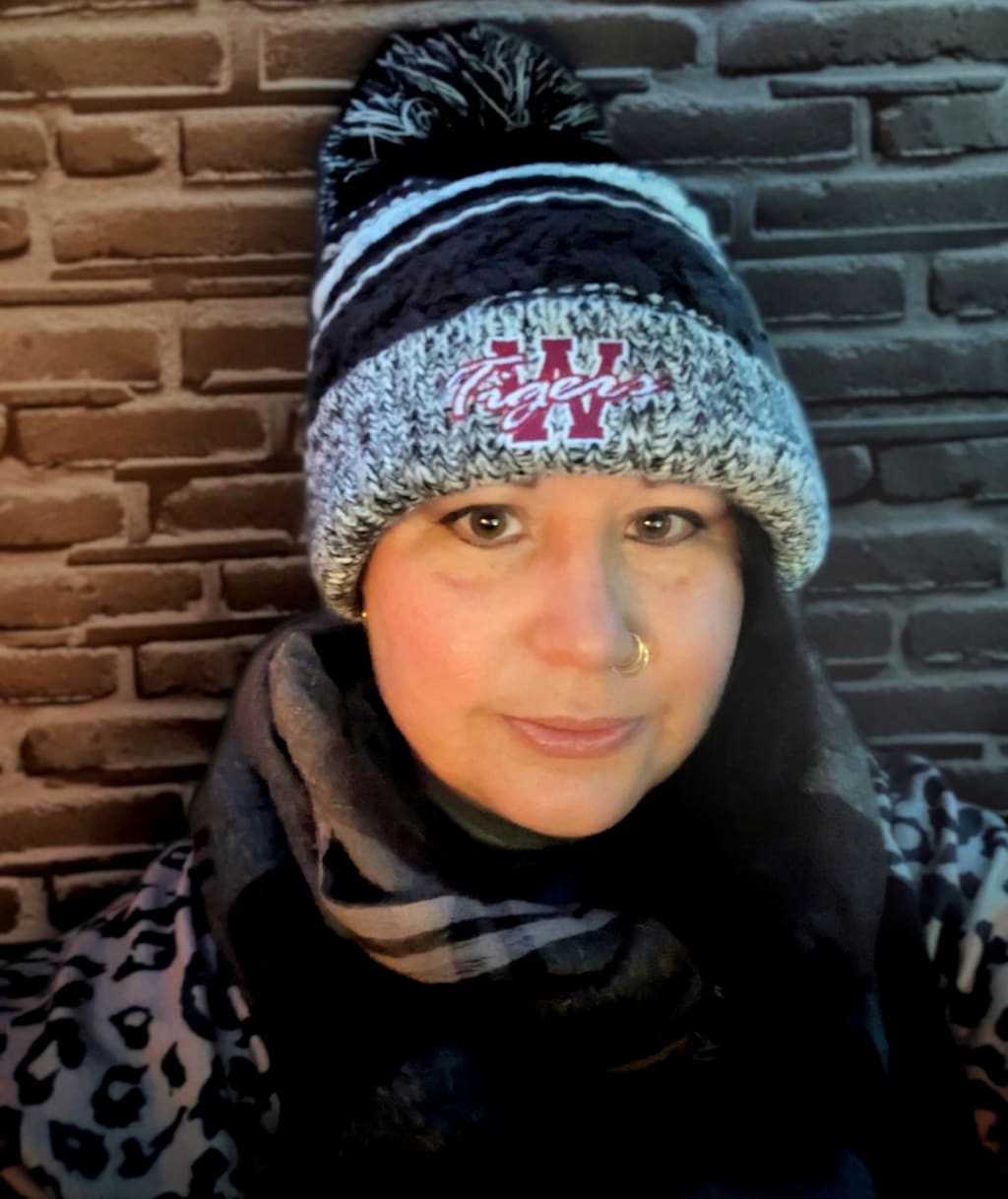
Every life leaves evidence. Very few leave themselves.
On the matter of names, there is no practical reason to begin with a first name.
It explains almost nothing. Still, the biographies insist.
Kristina belonged to the American nineteen eighties, a decade that mass-produced girls through a surprisingly small number of syllables. Jennifer, Jessica, Jessie, Ashley, Amanda, Mandy, Stephanie, Heather, Kristina, Christina, Christine, Kristin, and Christy all seemed to arrive at once. It was an era convinced that individuality could be achieved through alternative spelling.
Kristina appears only rarely in the surviving biography because she rarely had use for the name again. The writer remembered by the public answered to Fatal, but only after other pen names had served their purpose.
It is tempting to read this as a transformation, but it was not. Human beings don't molt into new identities like cicadas abandoning shells on tree trunks. More often they accumulate names.
Lenore came first. A nod to Poe while filling early Xanga journals and forgotten corners of the internet between 2000 and 2005 with poems, fragments, and the kind of writing that survives adolescence mostly because nobody remembers the password.
Viola followed as an affectionate theft from Shakespeare. She carried it through early writing forums, critique groups, and the first serious attempts at becoming a novelist before an internet troll named Adam, remembered chiefly for a red cake and a talent for cruelty, dismantled enough confidence to silence her for years. During that period she self-published her first novel, Whisper Me Sweet Death, a book now remembered less for its literary ambitions than for proving she had them.
Heidi Frankie belonged to necessity rather than literature.
The name honored no one. It simply made money.
While Kristina built an eighteen-year career in education, Heidi Frankie answered phone sex calls, then text-based chat requests, constructing an entirely separate working life that existed alongside literature but rarely touched it.
Fatal arrived last. It began as a username, became a byline, then spread across contributor biographies, literary journals, social media accounts, book jackets, archived readings, and the surviving fragments of websites that no longer exist.
Later critics treated the name as a declaration of temperament, equal parts fatality and chance, violence and luck, doom and coincidence.
In the Spring 2027 issue of Margin Notes Quarterly, she was asked whether the name had always meant what readers believed it meant.
"I wish the answer were more interesting," she said. "I liked the way the words sounded together."
The remark was dismissed for decades as evasive.
It was almost certainly the truth.
The first casualty of death is not the body but the author's authority over their own story.
It was here, strangely, that the biographies stopped multiplying and began converging.
Kristina, Lenore, Viola, Heidi Frankie, and Fatal had always been the same woman. Critics preferred them separated because separation made interpretation easier.
After her work as a phone sex and text sex worker became public, readers returned to the erotic fiction published as Heidi Frankie looking for autobiography where there had only ever been fiction.
The Mercer recordings complicated that reading. Laughing with a friend, she remarked, "Most clients were less interesting than my characters, and most of my characters were more honest than my clients."
Paid intimacy is no less constructed than unpaid intimacy. It is merely required to admit the transaction.
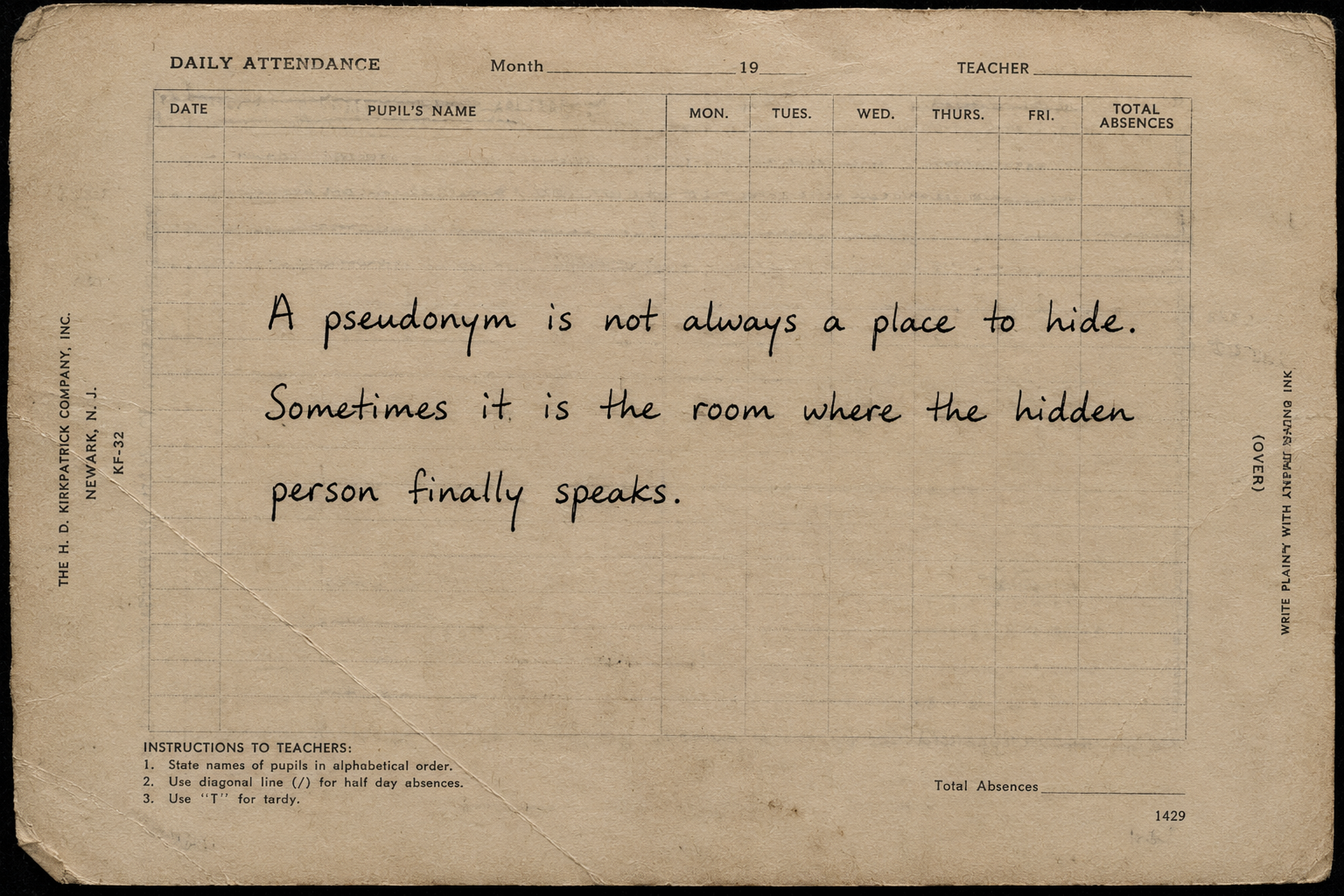
Fatal Serendipity
Untitled (Pseudonym Note)
c. 2027
Ink on the reverse of a school attendance sheet
Gift of the Estate of Fatal Serendipity, 2062
The Fatal Archive, Special Collections
Biography preserves what bureaucracy requires.
Fatal spent eighteen years in education, and the record is unusually complete. Contracts, evaluations, payroll records, attendance logs, and training certificates all survive because schools are built to preserve employment, not experience.
Teaching leaves very little physical evidence. No personnel file can record the conversation that changed a student's confidence, the lesson that unexpectedly worked, or the afternoon that fell apart before lunch. It can tell you she was there. It cannot tell you what being there meant.
Former students remembered different teachers. Some recalled a quiet woman who always carried books. Others remembered someone impossible to ignore. Several said she taught them to write. Others never knew she wrote at all.
They were probably all remembering her accurately.
Performance reveals that identity was always partly created.
Fatal studied theater in college and remained deeply involved in local theater, dance, and music for years afterward. Teachers perform authority. Writers perform coherence. Sex workers perform intimacy. Comedians perform spontaneity. Believers perform certainty. Families perform continuity.
Later critics searched for the authentic woman beneath those performances. Fatal's work rarely suggests such a woman existed apart from them. Performance was never deception. It was one of the ordinary ways human beings became legible to one another.
Identity did not wait beneath the role.
It accumulated through the roles.
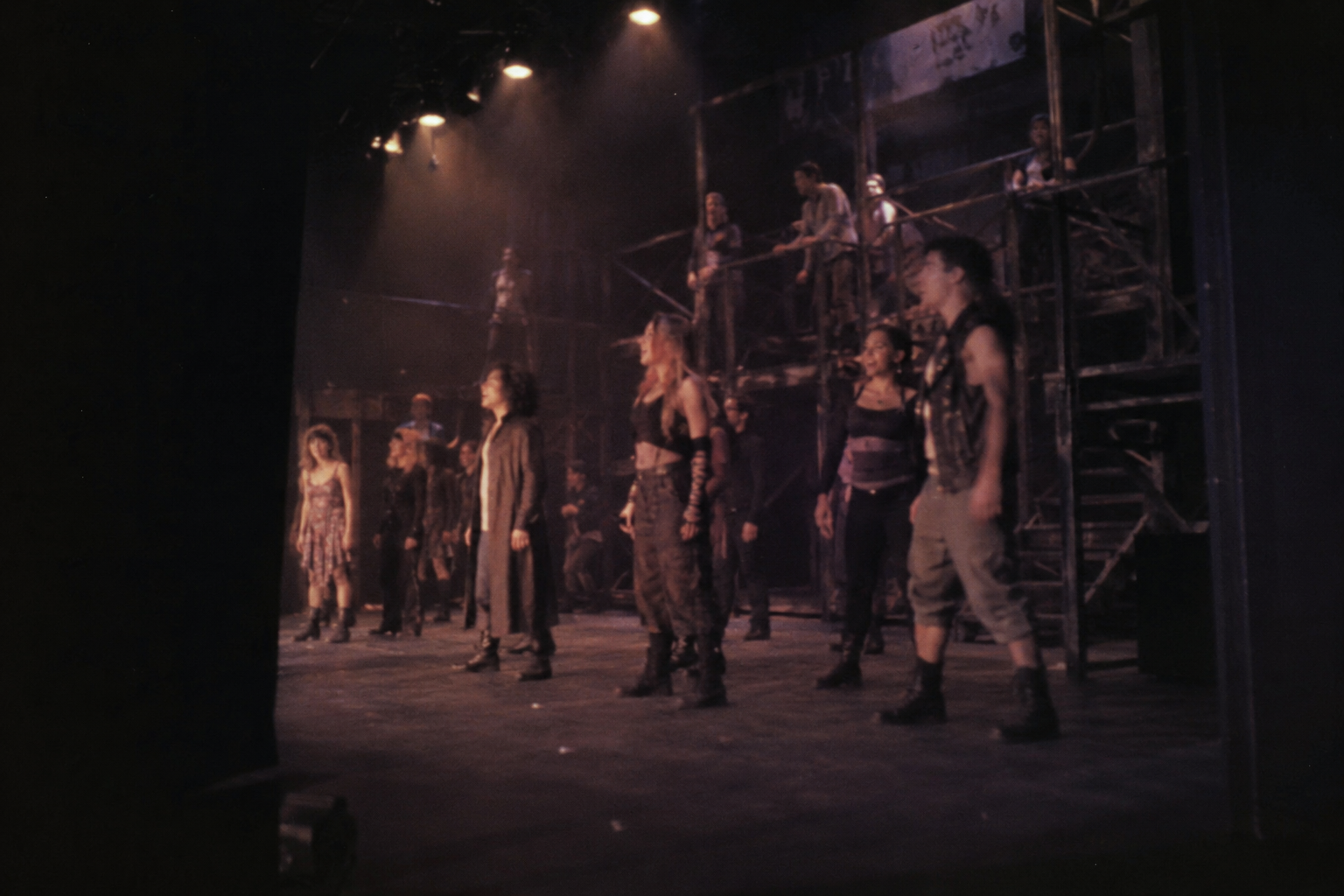
Fatal Serendipity
Untitled (Community Theater Rehearsal)
c. 2011–2015
Color photograph
Photographer unknown
Gift of the Estate of Fatal Serendipity, 2062
The Fatal Archive, Special Collections
Writing careers almost never begin where later readers expect them to.
Fatal’s began with a self published novel called Whisper Me Sweet Death. It led to local book signings, newspaper interviews, and the small but genuine excitement that accompanies a first book, regardless of how many people eventually read it.
The years that followed were spent writing almost constantly. The novellas The Summer of Spontaneity, Drifting, and Touching the Sky appeared alongside dozens of short stories as she worked through critique groups, online workshops, and the slow education that comes from finishing one manuscript after another.
The publications came later, along with the awards and recognition.
By the end of her career, Fatal’s work had appeared in literary journals, anthologies, museum readings, national mental health publications, and online magazines. To Write Love on Her Arms published her work multiple times, featured her twice in its 2026 calendar, adapted one piece into its Refuse merchandise campaign, and later included her in the organization’s twenty fifth anniversary anthology.
She also served as a volunteer first reader for Anarchist Fiction. What began as reading unsolicited submissions grew into something much larger when the editorial staff invited her to help develop prison editions of the Montreal based journal for incarcerated readers in Canada. The project required more than selecting stories. Every issue had to be reimagined around institutional mail regulations, printing limitations, and the realities of getting literature into correctional facilities. It was painstaking editorial work driven by a simple conviction that good writing should reach people who are too often denied access to it. That effort became one of the quietest and most meaningful forms of literary service in her career.
Institutions rarely prohibit language in the abstract; they prohibit paper, staples, bindings, addresses, and names so that the abstract cannot meet the imagination.
The second half of Fatal's adult life was spent with her partner, Ray, a man better known to audiences and collaborators as Johnny Kranston.
Later biographers couldn't resist the comparison. Like Fatal, Johnny had chosen the name by which he would eventually be remembered. Both found that the names they invented gradually became more recognizable than the ones they had been given. Whether either of them intended that is impossible to know.
Every archive eventually acquires a ventriloquist.
Johnny found his in thrift stores, estate sales, flea markets, and garage sales, rescuing forgotten family photographs and giving them the shared surname Kranston. Before long, the strangers covering his walls had become a family. Guests eventually stopped asking who they were and started asking what happened to them.
His own work wandered just as easily between identities. He first built a following as a stand up comedian across the Midwest before turning toward horror, writing independent screenplays throughout the 2020s that carried traces of John Carpenter, Sam Raimi, and David Lynch without belonging to any of them. He later moved behind the camera as a cinematographer and director of photography, where the same eye that saw forgotten families in secondhand photographs found stories hiding in ordinary places.
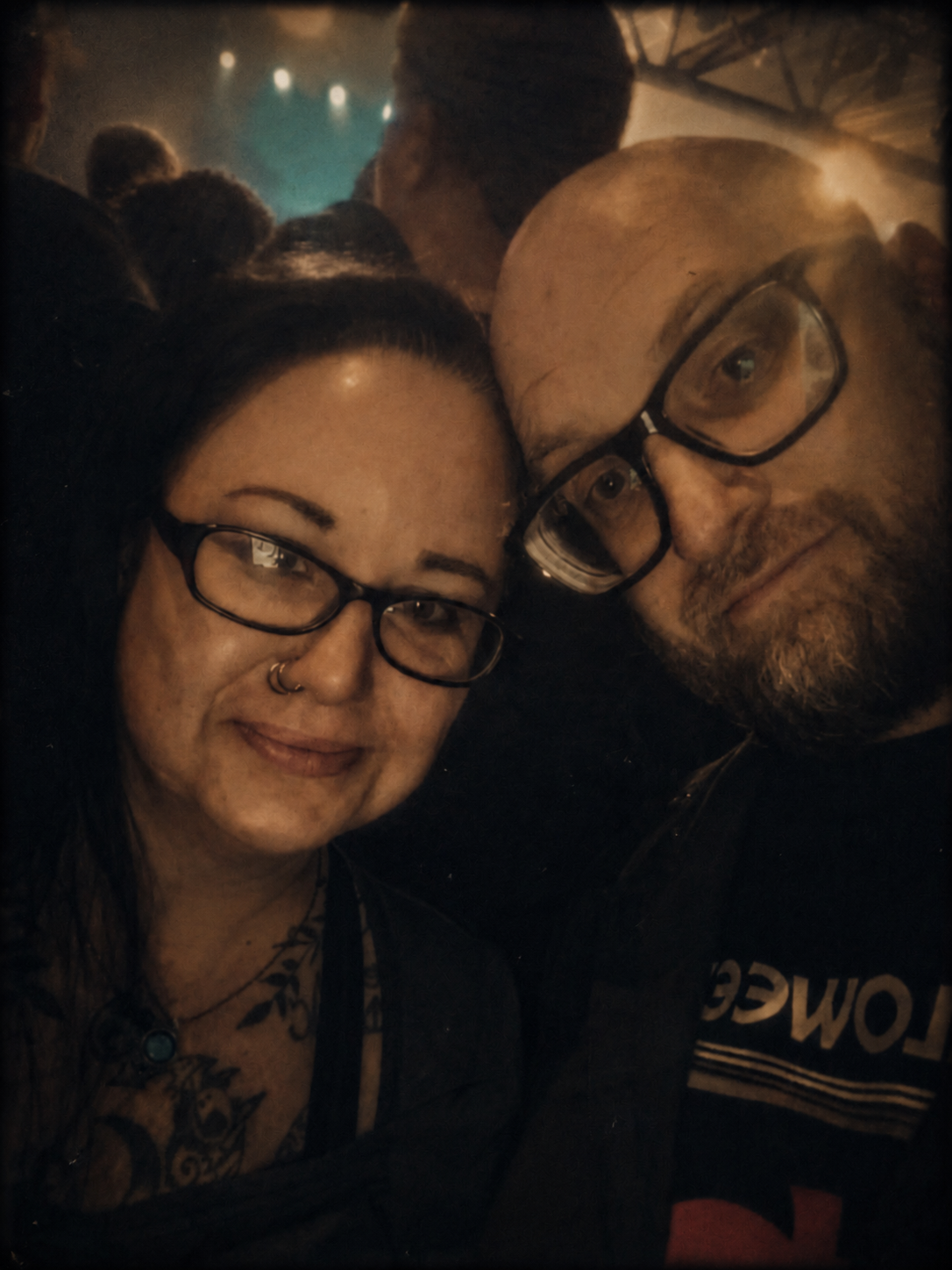
Fatal Serendipity
Untitled (With Johnny Kranston)
c. 2026
Digital photograph
Photographer unknown
Gift of the Estates of Fatal Serendipity and Johnny Kranston, 2067
The Fatal Archive, Special Collections
The bibliography continued to grow. Seventeen more books joined the shelves, followed by stories and essays in The Missouri Review, The Kenyon Review, The Southern Review, The Gettysburg Review, Ploughshares, Tin House, The Sun, The Paris Review, Granta, The Atlantic, and eventually The New Yorker. Looking back, the progression seems almost predictable. It was anything but.
She remained irrationally invested in a handful of publications that meant almost nothing to anyone else.
Book Worms Horror Zine was one of them.
The submission guidelines became something of a running feud. Regina St. Claire insisted on printed manuscripts long after nearly every other journal had moved online. Fatal made trip after trip to the public library because she refused to buy a printer she would use only a few times each year. She fed bills into machines that jammed at the worst possible moments, bought envelopes and stamps she resented paying for, and raced to the post office hoping another manuscript would earn the right postmark before another deadline slipped away. She complained about the process constantly.
She kept submitting anyway.
When Book Worms Horror Zine finally accepted one of her stories, nobody was happier to admit she had been wrong than Fatal herself.
Flash Frog proved equally stubborn. The rejections became so frequent they lost their sting and settled into routine. Every few months another story disappeared into the queue, another rejection arrived, and another story took its place. When an acceptance finally appeared after years of trying, it felt less like discovering a new audience than finally convincing an old one.
By then, writing had become more than enough to support the life she wanted. She stopped measuring success by the next acceptance and began measuring it by the freedom to spend ordinary afternoons with Johnny, to watch her children build families and lives of their own, and to share a home that never seemed to have fewer than two cats occupying whichever chair she had intended to sit in.
The money found its way back to the things she had loved long before anyone had paid her to write. Libraries, preschools, literacy programs, and the local performing arts center benefited quietly from her success. She also helped establish an independent bookstore where readers could stay for hours with a book in one hand and a cat asleep beside them.
The archive begins where the person ends. It preserves what remained. Everything after that is interpretation, though history has rarely considered the distinction important.
About the Creator
Fatal Serendipity
Fatal Serendipity writes flash, micro, speculative and literary fiction, and poetry. Their work explores memory, impermanence, and the quiet fractures between grief, silence, connection and change. They linger in liminal spaces and moments.
Enjoyed the story? Support the Creator.
Subscribe for free to receive all their stories in your feed. You could also become a paid subscriber, letting them know you appreciate their work.
Comments
There are no comments for this story
Be the first to respond and start the conversation.