
Angrily Searching for Love
The Life of Tina Lopez


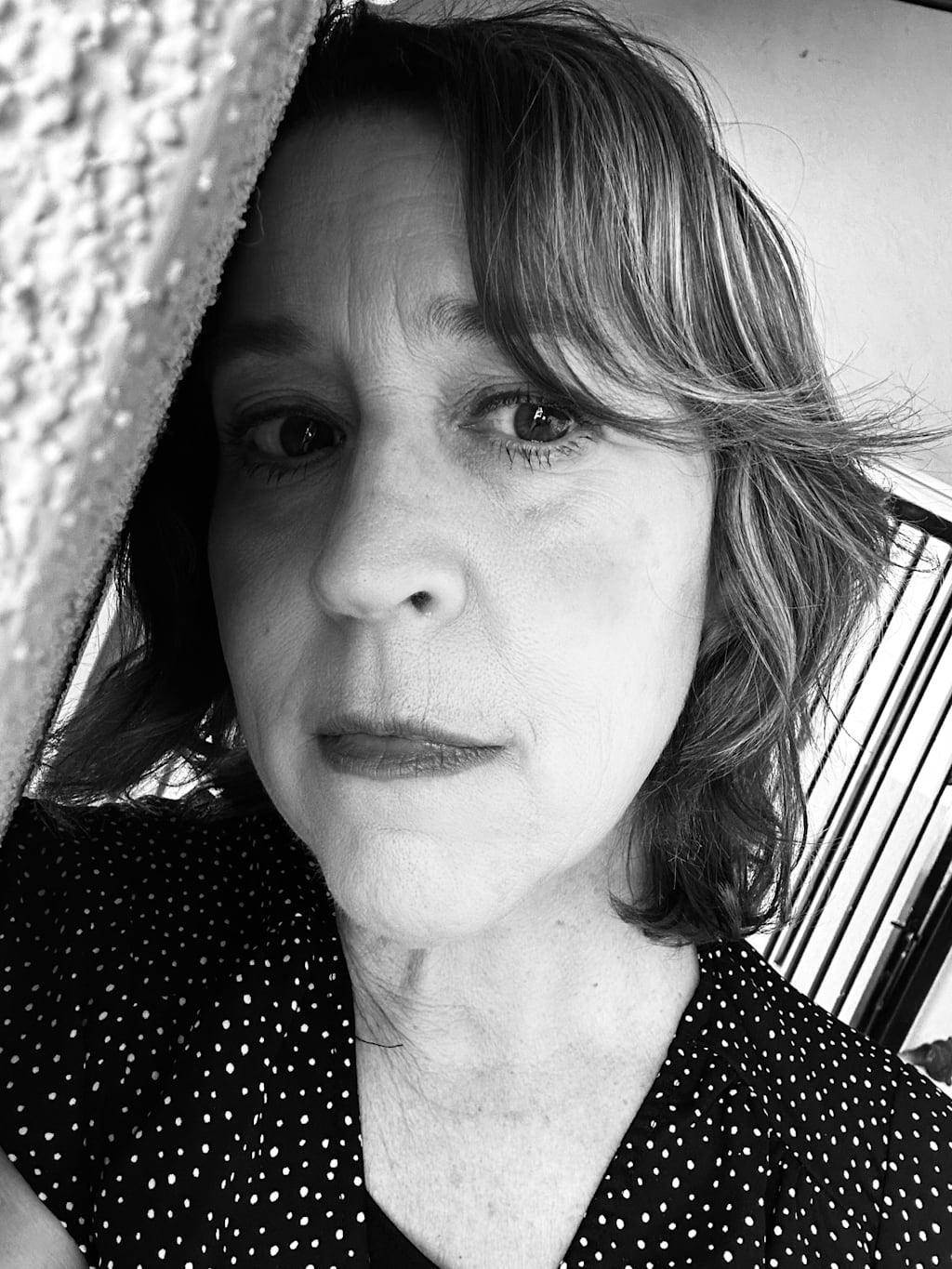
Angrily Searching for Love
On the five year anniversary of her death, the arguments still haven’t settled: was Tina Lopez anti-love or just afraid of it?
While alive, Tina was often dismissed as an angry poet who had declared war on love and romance. After her death, her active profiles on numerous dating apps, caused her harshest, most vocal critics to reexamine her works, often dissecting the profiles themselves as if they were unfinished manuscripts. In her eulogy, Tina’s oldest daughter Sharon Holloway called the profiles “a fourth collection she never had the nerve to publish.” Tina’s friend Cynthia Misterias dismissed that take outright by stating, “Tina just wanted a date.”
The Collections
Her first poetry collection, Love Ain’t No Friend of Mine, established Ms. Lopez as a fearless writer of heartbreak. The poems were raw, vulnerable, and unafraid to show the resentment, confusion, and grief that follow emotional loss. While critics and her exes described the writings as bitter and ruthless, her devoted followers recognized something deeper. The book was not about someone who hated love. It was about someone who hated what people can do to one another in the name of love.
Her second collection, No Love, Just Lessons, expanded on those themes by exploring what remains after relationships end and people are forced to rebuild with many missing pieces of themselves. It is here that the split among critics becomes the widest. Many cite this collection as Tina’s learning to survive her own bitterness, poem by poem, line by line, until she arrives as close to peace as possible. A small but vocal faction rejects that line of thought stating “The woman only got better at writing about being angry.”
Her controversial memoir, Things that Happened & Things that Didn’t, blurred the line between memory, exaggeration, and storytelling, leaving critics to wonder what happened and what didn’t. The book opens with a disclaimer Ms. Lopez herself wrote: “Everything in here is true, except for what is not.” Her editor, Stephanie Song, in the only interview she gave about the book offered this explanation: “She mixed up names, combined several nights into one. But she never softened her part in anything. If she was the problem, and she frequently was, like the night she stole her boyfriend's car and then sold it for a Slurpee to a group of teenagers hanging around 7-11, she said so. That’s what made people uncomfortable–not the exaggeration, the honesty.”
The Bathroom Scriptures
Long before she published anything, Ms. Lopez started gaining a cult following in the greater San Francisco Bay Area due to the poems she scribbled on bathroom walls of dive bars with names like The Bitter End, Dirty Laundry, and her most frequented Oakland’s The Double Standard (critics often debated if she chose these locations intentionally or if her brokenness just led her to them). She documented the “vandalism” with selfies. These poems would later be called the “Bathroom Scriptures” by her devoted cult-like following of fans.
They would also become her most analyzed work because they were not written to be read as literature. Unlike her published collections, the Scriptures were unfiltered, fueled by tequila, and often gone within weeks, painted over by an annoyed bar owner. To scholars, the impermanence became the appeal: here was Tina before she knew she was Tina, writing for drunk women with smeared mascara. Some argue the Scriptures are her most honest work because she never expected anyone to be sober enough to read them.
The Scriptures have come under scrutiny however, since no two people can agree on the canon. Some photos capture Tina at her sharpest, mid sentence, and grinning, purple sharpie in hand and one line legible over her shoulder: “i’m no saint with my teeth wired shut.” Other images are blurry or missing the wall completely, just Tina’s face and a caption. Several podcasts have been started simply in hopes of discovering which scrawled lines are hers and which were added afterward by bar patrons hoping to be mistaken for her. The Double Standard's longtime bartender Paul admitted that "People started writing fake Tina lines on that wall the year after she died.”
The Llamas Line
The most famous line attributed to Ms. Lopez from her poem “What I Have Seen” remains: “And you can see the llamas. No, wait…that’s a chair.” Her peers, critics, and fans, have spent years interpreting the quote as a profound statement on perception, identity and the unreliability of human understanding. One widely cited essay “Love and Llamas” called the line "the perfect encapsulation of Lopez's entire project: the confident misreading, corrected too late, that defines every relationship she ever wrote about."
Her daughter, Venus Mopera, tells a less profound story, “Tingo, that’s what I called her, hated wearing her glasses. We were at the MoMA, looking at art work. She thought the chairs in the picture were llamas.” Asked about the essay, Venus laughed and said, “Tingo would have peed her pants laughing and let them keep believing that. She would never correct a critic who liked her that much.”
Hugs and Hearsay
One of the greatest hypocrisies surrounding Ms. Lopez was that she often described herself as anti-social, self-identified as a misanthrope, and yet her social calendar was always full. While she seemed to thrive at gatherings, smiling, greeting people with hugs, toasting everything, the truth was more complicated. Her journals kept the stories she was told: all the dirty, dark details, the gossip friends whispered about other friends. She collected evidence on everyone around her which was documented in the case Combs vs. Lopez. While she was ordered not to contact Mr. Combs for six months, the judge dismissed Mr. Comb’s attempt to bar Ms. Lopez from writing about him, ruling that as long as she stuck to the truth, she was free to keep speaking and writing about him.
Reading her journals now, alongside the poetry, critics have noticed a lifelong pattern: the people she wrote about the most bitterly were people she had loved wholeheartedly. The anger was never a stranger’s anger. It was the anger of someone keeping score because, at some point, she had actually cared about the outcome.
A House of Sweet Strays
After her death, visitors to her home discovered a pantry full of peanut M&M’s and a garage housing twenty-three mostly feral cats. While literati were certain that the candy represented Ms. Lopez’s never ending quest for a one of a kind sweet love in her life, her friends explained that the M&M’s were due to her being addicted to sugar paired with a Costco membership.
While scholars continue to ponder whether the cats represented Ms. Lopez's belief in unconditional companionship, or whether she simply lost control of a situation that started with feeding one stray cat, her next door neighbor, Ruby had this to say, “That woman always left her side door to the garage open. All sorts of animals wandered in. I am willing to bet not all of those twenty-three cats are cats. Some are probably possums or raccoons.”
The Last Word
Today, Tina is remembered as one of the defining voices of a brokenhearted generation, a writer who lived in the space between wanting connection and being terrified of what connection could cost. While her writings on the surface seemed as if she was antilove, it is now believed she was someone who kept trying to love despite her fear and that her anger was not the absence of feeling, but proof that something had mattered enough to leave a mark on her.
Not everyone agrees, and that may be the most fitting tribute to her. Those who found redemption in her work and those who refuse to find it are doing exactly what she spent two collections and a memoir daring her readers to do: deciding for themselves what a wound means long after the wounded has stopped explaining.
Tina Lopez wrote about the things that break people because, until the very end, she was trying to find what puts them back together. Whether she ever found it is anyone’s guess, and she would have let every guess stand, especially the more absurd ones.
About the Creator
Tina D. Lopez
I’m just a human trying to make it in this world. I write about heartbreak, loneliness, longing, anger, family—all the things I can’t seem to leave alone. Everything I write is about me, even when it’s about someone else.
Enjoyed the story? Support the Creator.
Subscribe for free to receive all their stories in your feed. You could also become a paid subscriber, letting them know you appreciate their work.
Comments
There are no comments for this story
Be the first to respond and start the conversation.