
AI Companions Move Beyond Assistants Toward Personalized Digital Experiences
AI Companions Move Beyond Assistants

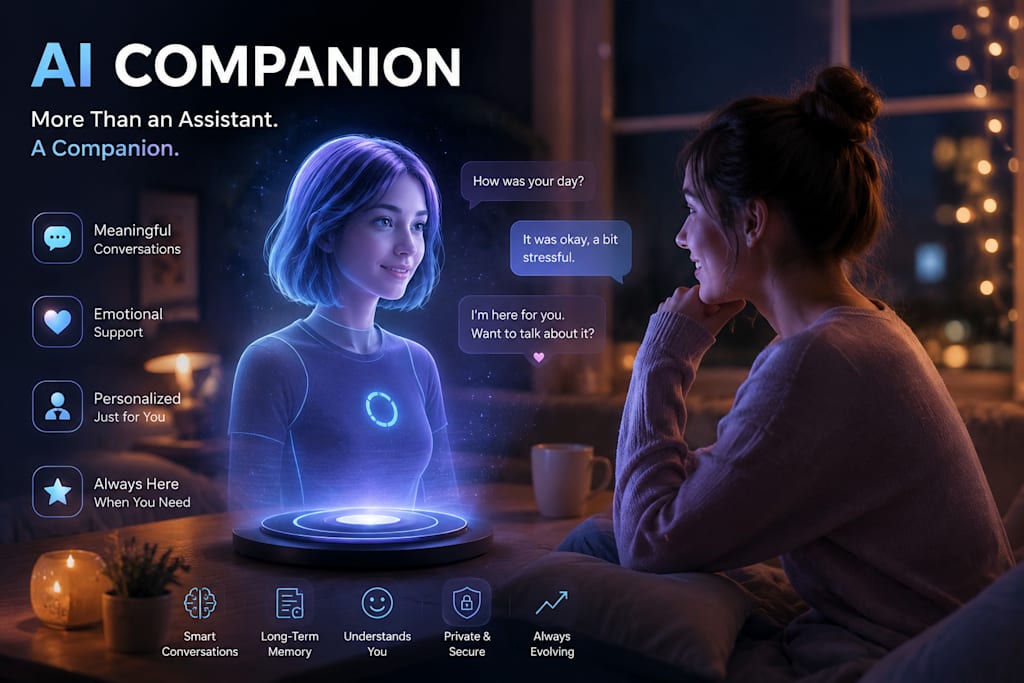
Artificial intelligence has already changed the way people search for information, organize schedules, and communicate online. However, a noticeable shift is taking place. AI companions are no longer limited to answering questions or setting reminders. They are gradually becoming personalized digital experiences designed around individual preferences, communication habits, and emotional expectations.
Why Users Expect More Than Basic Assistance
Early AI systems were largely designed to complete specific functions. They answered factual questions, processed commands, and automated repetitive activities. While useful, these interactions often felt transactional.
Modern users spend a significant portion of their lives online. Social media feeds, streaming recommendations, personalized shopping suggestions, and tailored content experiences have conditioned people to expect customization everywhere.
Consequently, expectations for AI have changed as well. People want conversations that remember context, recognize preferences, and adapt over time. A digital interaction that feels unique often generates stronger engagement compared to a generic response.
Research from McKinsey has shown that companies delivering effective personalization can achieve significantly higher customer satisfaction and retention rates. The same principle is increasingly influencing AI-driven experiences.
Instead of functioning solely as virtual assistants, AI companions are becoming digital environments where conversations, preferences, and interactions continuously shape future experiences.
Memory and Context Create More Natural Conversations
One of the biggest developments in AI companion technology is the ability to maintain conversational context. Earlier systems often treated every interaction as an isolated event. This limitation created repetitive exchanges and reduced user satisfaction.
Today's AI models can retain relevant details from previous conversations and use them to provide more coherent responses. This creates a stronger sense of continuity.
For example, when a user discusses favorite hobbies, entertainment interests, or communication preferences, future interactions can reflect that information. The result feels more natural because the conversation develops rather than restarting each time.
This improvement has encouraged more users to view AI companions as ongoing digital relationships instead of temporary tools. In the same way that people appreciate personalized recommendations from streaming services, they value AI interactions that recognize their preferences.
The emphasis on continuity is becoming one of the defining characteristics of next-generation companion technology.
Emotional Personalization Is Becoming a Key Differentiator
Technology companies have traditionally competed on performance, speed, and functionality. AI companion platforms are increasingly competing on emotional relevance.
Users often spend extended periods interacting with AI systems. During these interactions, communication style matters just as much as technical accuracy. A response that feels thoughtful, supportive, or engaging can create a stronger impression than one that simply delivers information.
This trend explains why many modern platforms are investing in personality customization. Users can select communication styles, conversational tones, and interaction preferences that align with their expectations.
In certain markets, demand for companionship-oriented experiences has grown considerably. Some users prefer digital interactions that feel conversational and personalized. Others seek entertainment-focused engagement that evolves over time. The increasing visibility of the AI girlfriend category reflects how personalization continues to shape consumer interest in AI-powered communication.
Although user motivations differ, the common factor remains the desire for experiences that feel individualized rather than generic.
Personalization Extends Beyond Conversations
The future of AI companionship involves far more than text interactions. Visual experiences, creative content generation, voice communication, and character customization are becoming important components of engagement.
Users increasingly expect digital experiences to offer multiple forms of interaction. Consequently, AI companions are expanding into areas that combine conversation with creative expression.
Visual personalization has become particularly important. Many users enjoy generating customized images that align with specific themes, styles, or character concepts. The growing interest in tools connected to the adult image generator market demonstrates how personalization demand extends into visual content creation as well.
Similarly, AI-generated voice interactions are gaining momentum. Hearing a customized voice response can create a stronger sense of presence than text alone. As these technologies improve, digital experiences are likely to become more immersive and interactive.
Platforms that successfully combine conversational intelligence with visual and audio personalization may gain a significant advantage in user engagement.
How Digital Identity Shapes User Experience
Personalization is closely connected to identity. People naturally gravitate toward experiences that reflect their interests, preferences, and values.
AI companions are increasingly designed around this concept. Rather than presenting a single standardized experience, they allow users to shape interactions according to individual expectations.
Not only does this improve user satisfaction, but it also increases the likelihood of long-term engagement. Users often return to experiences that feel tailored to their specific interests.
The continued growth of Xchar AI reflects broader industry recognition that personalization is becoming one of the most valuable elements of AI-driven platforms.
Businesses Are Paying Attention to Companion Technology
The evolution of AI companions is not limited to consumer entertainment. Businesses across multiple industries are studying how personalized AI interactions can improve engagement and customer experiences.
Customer support systems already use conversational AI to handle inquiries more efficiently. However, future implementations may focus more heavily on relationship-building rather than problem-solving alone.
Educational platforms can create personalized learning companions. Healthcare organizations may introduce AI systems that provide ongoing support and information. Retail companies can use AI-driven interactions to create highly customized shopping experiences.
According to industry reports from Grand View Research, the global AI market is expected to continue expanding significantly throughout the coming years, driven largely by increasing demand for personalized applications and intelligent digital services.
As organizations recognize the value of personalization, companion-oriented AI models may become a common component of customer engagement strategies.
Privacy Expectations Continue to Influence Development
Although personalization creates significant opportunities, it also raises important questions about privacy and data management.
Users want AI systems that understand their preferences, yet they also expect transparency regarding how information is collected and used. Consequently, trust has become a critical factor in the success of companion platforms.
Companies investing in AI companions must balance personalization with responsible data practices. Clear communication regarding privacy policies, memory functions, and user controls can help build confidence.
Despite ongoing concerns, many users remain willing to share information when they perceive a clear benefit. Personalized recommendations, customized interactions, and improved experiences often motivate users to participate in data-sharing arrangements.
The challenge moving forward involves maintaining trust while continuing to improve personalization capabilities.
What the Next Few Years Could Look Like
AI companions are moving toward a future where interactions feel increasingly adaptive and responsive. Advances in language models, memory systems, voice technology, and visual generation tools are creating opportunities for richer digital experiences.
Future platforms may recognize emotional cues more effectively, support multiple communication formats, and provide deeper levels of customization. Conversations could become more context-aware, while digital personalities become increasingly sophisticated.
The competitive advantage will likely belong to platforms capable of delivering personalization without sacrificing user trust or experience quality.
This ongoing transformation is already visible across the market. Xchar AI continues to demonstrate how personalized engagement has become a major focus for modern AI experiences. As technology advances, the distinction between assistant and companion will likely become even less significant.
Read Also:- Transforming User Engagement with Intelligent AI Companions
Conclusion
AI companions are entering a new phase of development where personalization sits at the center of the user experience. What began as simple assistant technology is gradually becoming a dynamic digital environment shaped by individual preferences, behaviors, and communication styles.
Memory, contextual awareness, emotional relevance, visual customization, and adaptive interactions are collectively redefining what users expect from AI. Consequently, companion technologies are attracting attention across both consumer and business markets.
About the Creator
John Miller
I am John Miller, a passionate blogger exploring the world of technology, artificial intelligence, and business. I dive deep into the latest trends, innovations, and strategies shaping the future.
Enjoyed the story? Support the Creator.
Subscribe for free to receive all their stories in your feed.
Comments
There are no comments for this story
Be the first to respond and start the conversation.