
A Writer's Guide to Working with ChatGPT
A New Way to Write
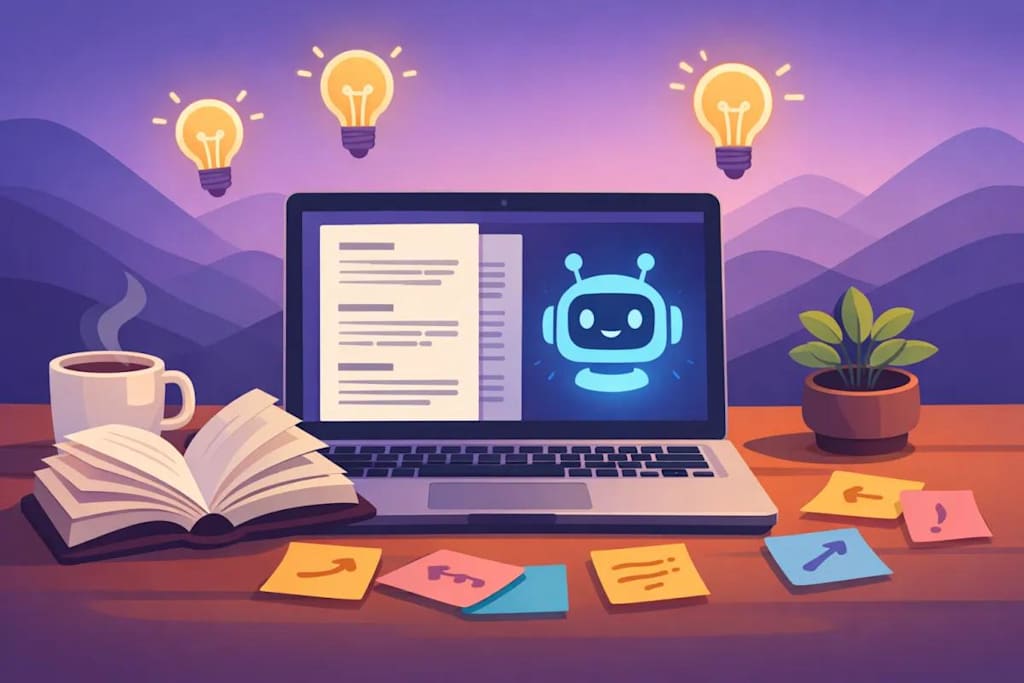
When people hear that I use ChatGPT to help write articles, some assume that I simply type in a title, press a button and publish whatever appears on the screen. The reality is rather different from that, as ChatGPT is a tool, and like any tool, it is only as useful as the person using it. In my case, it has become a research assistant, editor, proofreader, brainstorming partner and writing companion that helps me produce articles more quickly and efficiently than ever before.
The process usually begins with an idea, often sparked by something I have seen on YouTube, since I do not watch any other channels, unlike my wife and all my other friends, who tend to watch all the topical programmes. If I do watch the news, it is on GB News or Talk TV, both of which are on YouTube. Sometimes it is a topic that has interested me for many years. On other occasions, it is a question that has arisen during a conversation with friends or family. Once I have chosen a subject, I start by asking ChatGPT for background information, alternative viewpoints and possible angles that might make the article more interesting to readers.
One of the greatest advantages of ChatGPT is that it helps overcome the blank page problem. Every writer knows the feeling of staring at an empty screen and wondering where to begin. By discussing the subject with ChatGPT, I can quickly generate ideas for introductions, possible structures and key themes that deserve attention. This does not mean the AI is doing all the thinking. Rather, it provides a starting point from which I can develop my own ideas.
I often ask ChatGPT to suggest titles because a good title can determine whether someone chooses to read an article. Sometimes the first suggestion is excellent. At other times, I may ask for ten or twenty alternatives before finding one that captures exactly the tone I want. The process is similar to working with a human editor who offers suggestions and challenges assumptions.
Once I have settled on a direction, I ask ChatGPT to draft an outline for me. The first draft is rarely the final version, and after I read through it carefully, I add my own observations, correcting points that do not align with my views and removing anything that sounds artificial or repetitive, bearing in mind that ChatGPT can make mistakes. In many cases, I ask ChatGPT to rewrite sections in UK English, avoiding American expressions and produce longer, more natural sentences. Over time, I have developed a set of instructions that reflect my preferred writing style, allowing the AI to produce material that is much closer to the way I naturally write.
Research is another area where ChatGPT can be extremely useful. When writing about science, history, technology, politics or social issues, I can ask questions and explore different perspectives before deciding what to include. This saves a considerable amount of time compared with searching dozens of websites individually. Nevertheless, I still believe that important facts should be checked independently, particularly when dealing with controversial subjects or statistics.
One feature that I find particularly valuable is the ability to rewrite material repeatedly until it sounds right. In the past, this might have involved rewriting paragraphs several times from scratch. Now I can ask for alternative versions, different tones, or different levels of complexity. The result is not that the AI replaces the writer but that it accelerates the editing process.
ChatGPT is also useful when I have written something by myself and want feedback. I can paste in an article and ask whether the argument is clear, whether the structure flows logically or whether there are sections that need strengthening. The responses often highlight weaknesses that I had overlooked because I had become too familiar with the text.
Another benefit is the generation of accompanying material. After completing an article, I frequently ask ChatGPT to suggest alternative titles, subtitles, promotional text and social media posts. It can also help create image descriptions for use with AI image-generation tools to produce illustrations that complement the article.
Critics sometimes argue that using AI somehow diminishes the role of the writer. My experience has been the opposite. The writer still chooses the subject, determines the viewpoint, edits the content, checks the facts and decides what is ultimately published. ChatGPT simply makes the process faster and more productive. It removes many routine tasks that can slow down writing while leaving creative decisions firmly in human hands.
The technology has enabled me to write more articles than would otherwise have been possible, covering a wider range of subjects and exploring ideas in greater depth. It has allowed me to focus more on thinking and less on struggling with wording, structure and presentation.
For me, ChatGPT is not a replacement for writing. It is an extension of the writing process. It helps transform ideas into articles, questions into research and rough drafts into polished pieces. The final article still reflects my interests, opinions and judgment, but the journey from concept to publication is far quicker and often far more enjoyable than it was before AI became part of my writing toolkit.
About the Creator
Alan Spencer
Have been an author and writer for over 20 years. Have been a journalist, editor, proofreader, and a designer and presenter of training courses. Have written over 100 articles, two books, and around 20 training courses.
Enjoyed the story? Support the Creator.
Subscribe for free to receive all their stories in your feed. You could also become a paid subscriber, letting them know you appreciate their work.
Comments
There are no comments for this story
Be the first to respond and start the conversation.