
A Woman Built From Words
Critics spent decades searching Megan Janousek's work for the truth about her life. What they found depended on what they were looking for.
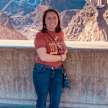

Megan Janousek has been dead for nearly forty years, which means we have had plenty of time to decide who she was.
We have called her a prairie writer, a feminist writer, a working-class writer and, for a particularly popular stretch of literary criticism, an angry rural housewife. Her marriage has been examined, her motherhood discussed, and the roads appearing throughout her work mapped across western Kansas. Scholars have counted how often her female characters look out windows and searched her fictional men for traces of her husband.
We know Megan Janousek very well. At least, that is what we have spent the last four decades telling ourselves.
The trouble is that Janousek was not famous while she was alive. She worked at a car dealership in western Kansas, where employment records suggest she held enough responsibilities that no one seemed entirely certain what her actual job was. She photographed vehicles, managed employees and performed administrative work. She made candles, took photographs and studied history.
She also wrote. At the time of her death, Janousek left behind thousands of pages of fiction, essays, poetry and unfinished manuscripts. Some had been published online. Most had not. Her earliest readers numbered in the hundreds rather than the millions who now purchase anniversary editions of her work.
The first posthumous collection of Janousek's unpublished writing appeared six years after her death. Its publisher printed five thousand copies.
Within eight months, nearly a million had sold. Suddenly, everyone wanted to know who Megan Janousek had been. Janousek was no longer available to answer. So we answered for her.
The earliest studies of her work focused on the women. This was understandable. Janousek's fiction is crowded with them, and they are rarely comfortable women.
They are tired mothers and overworked employees. They are wives who love their husbands and sometimes enjoy their absence. They stand at kitchen sinks after midnight and sit in parked cars before walking into their own homes. They lose their tempers. They forget things. They imagine other lives.
Critics decided Janousek had been unhappy. Her marriage became evidence. Biographers searched her fiction for her husband and found him surprisingly often, although they rarely agreed on which character he was. Every absent husband reflected her marriage. Every betrayal became autobiographical. When a woman in one of Janousek's unpublished stories packed a suitcase and left her family before sunrise, a biographer devoted an entire chapter to it.
She titled the chapter The Life Janousek Imagined. One of Janousek's sons publicly disputed the interpretation. "It was fiction," he said. Critics noted his defensiveness. His brother was less careful. "You people know writers make shit up, right?" We laughed at the quote. Then we continued searching the fiction for facts.
Motherhood became another argument surrounding Janousek. Her mothers are complicated. They love their children with an intensity that frequently borders on fear, but Janousek never pretends love makes motherhood easy. Her women resent interruptions. They long for silence. Some look at old photographs and struggle to recognize the woman they were before children.
Critics called this maternal fragmentation. We wrote papers about it. Then there was Kansas. No serious study of Janousek can avoid the prairie. She wrote about wheat, wind, limestone buildings, empty highways and towns declining so gradually that their residents barely noticed until the school closed. She wrote about people working full-time and still counting grocery money. She wrote about houses sitting empty after the last person who remembered the family inside them had died.
The earliest critics saw resentment. Roads became escape. Cars became freedom. The horizon became a boundary precisely because it appeared to have none. For nearly three decades, the accepted version of Megan Janousek was a woman who had spent her life wanting to leave western Kansas.
There was one problem with this interpretation. She did not leave. A surviving letter from one of Janousek's editors suggested that living closer to a major literary community might benefit her career. Janousek replied, "No thanks."
We have written three papers about those two words. I am responsible for one of them. Mine argued that Janousek's refusal represented a complicated attachment to the place she resented.
I was thirty-six when I wrote it. I had never been to Kansas. This is an uncomfortable fact to admit, but Janousek criticism is filled with uncomfortable facts once one begins looking for them.
After she became famous, we traveled to western Kansas. We photographed roads and visited towns. We stood beside wheat fields at sunset because Janousek had written about sunsets, and we believed seeing one might help us understand her.
One of her fictional farmhouses became a tourist attraction after a researcher claimed to have identified its location. The family living there eventually placed a sign beside the road.
MEGAN JANOUSEK NEVER LIVED HERE.
We continued visiting. Perhaps our greatest invention was the idea that Janousek had been reclusive. The word appears in nearly every early biography. Private. Guarded. Hidden. The evidence suggests something less interesting.
Janousek published her work online. She shared it on social media. She told people she was writing. One surviving Facebook post has become particularly important in recent Janousek scholarship. In it, she admitted that sharing her work made her uncomfortable. She told her friends she had spent years writing quietly, explained where they could read her stories and left a link.
The post received forty-three likes. Two days later, Janousek shared a photograph from a race. It received two hundred and seventeen.
For years, we asked why Megan Janousek chose silence. I no longer believe she did. I think we preferred that story.
A reclusive writer is interesting. A woman who wrote between work, children, errands and whatever else needed done that day is ordinary. We do not like ordinary beginnings for extraordinary people. So we changed hers.
We made her mysterious. We placed her beside windows she may never have sat beside and imagined her staring across Kansas, dreaming of somewhere else.
Then her unpublished manuscripts were discovered, and we searched for her there too. We compared fictional mothers to Janousek. We mapped imaginary towns against real ones. We treated angry women as confessions and unhappy marriages as evidence.
I once argued that the anger of one of Janousek's most famous characters represented the author's inability to express her own.
Years later, an early draft of the manuscript became available to researchers. In the margin beside one of the character's scenes, Janousek had written:
Need to make her meaner.
I have not cited my earlier paper since. This does not mean we were wrong about everything. That would be another convenient story.
Janousek wrote about exhaustion because she understood it. Her work returns repeatedly to low wages, invisible labor, motherhood, marriage and the quiet anger of people expected to be grateful simply because things could be worse.
The mistake was believing all of it belonged to her. We built Megan Janousek from selected pieces of Megan Janousek.
When we wanted an unhappy wife, we found the stories about marriage. When we wanted an overwhelmed mother, we found the essays about motherhood. When we wanted a woman trapped in Kansas, we counted the roads.
There was always evidence. A person who leaves behind enough words will eventually provide proof of almost anything.
One of Janousek's sons understood this better than most of us. In his final interview about his mother's legacy, he was asked what biographers had gotten wrong.
"Nothing," he said. The interviewer reportedly appeared surprised. He waited before continuing. "That's the weird part. None of it is completely wrong. It's just not her."
For years, scholars debated what he meant. We are very good at doing that. I think I understand him now.
Megan Janousek has been dead for nearly forty years, and I have spent twenty-three of them studying her. I have read her stories, essays, poems and notes left in manuscript margins. I know what she wrote about marriage and motherhood. I know she complained about the Kansas wind and photographed the Kansas sky.
I know she once wrote "coffee" twice on the same grocery list even though evidence shows she never consumed it. An early biographer believed this was evidence of chronic exhaustion.
Perhaps she simply forgot she had already written it. That is the problem. We cannot ask her.
By the hundredth anniversary of Janousek's birth, her work had been translated into thirty-two languages. Students who had never seen Kansas wrote essays about her prairie. Readers argued over which fictional women were secretly Megan.
Everyone wanted to understand her. There is a screenshot I return to more often than I should. It is the Facebook post Janousek wrote when she first began sharing her work publicly. She told her friends that putting her writing into the world was outside her comfort zone. She promised she was not trying to bombard them with posts.
Then she explained where they could find her stories. At the bottom was a link. For decades, we called Megan Janousek a woman who hid. We called her reclusive because it made the story better. We said she had been afraid to be known because her fiction gave us enough evidence to make the argument.
Perhaps she was. Or perhaps she was thirty-one years old, sitting somewhere in western Kansas, waiting to see if anyone would click.
We will never know. Nobody asked her while she was alive.
About the Creator
Megan Janousek
Writer and history lover rooted in western Kansas. Writing about forgotten places, complicated people, history, home and what it means to be human.
Enjoyed the story? Support the Creator.
Subscribe for free to receive all their stories in your feed.
Comments
There are no comments for this story
Be the first to respond and start the conversation.