
A 1999 Flight Home: Cambodian Attorney’s Eyewitness Memory Surfaces in West Point Dispute Over PM Hun Manet
"The larger lesson is not about West Point. It is about protecting factual discourse in an era when misinformation can spread faster than verification." – H.E. Samantha Yem, SK Law Office
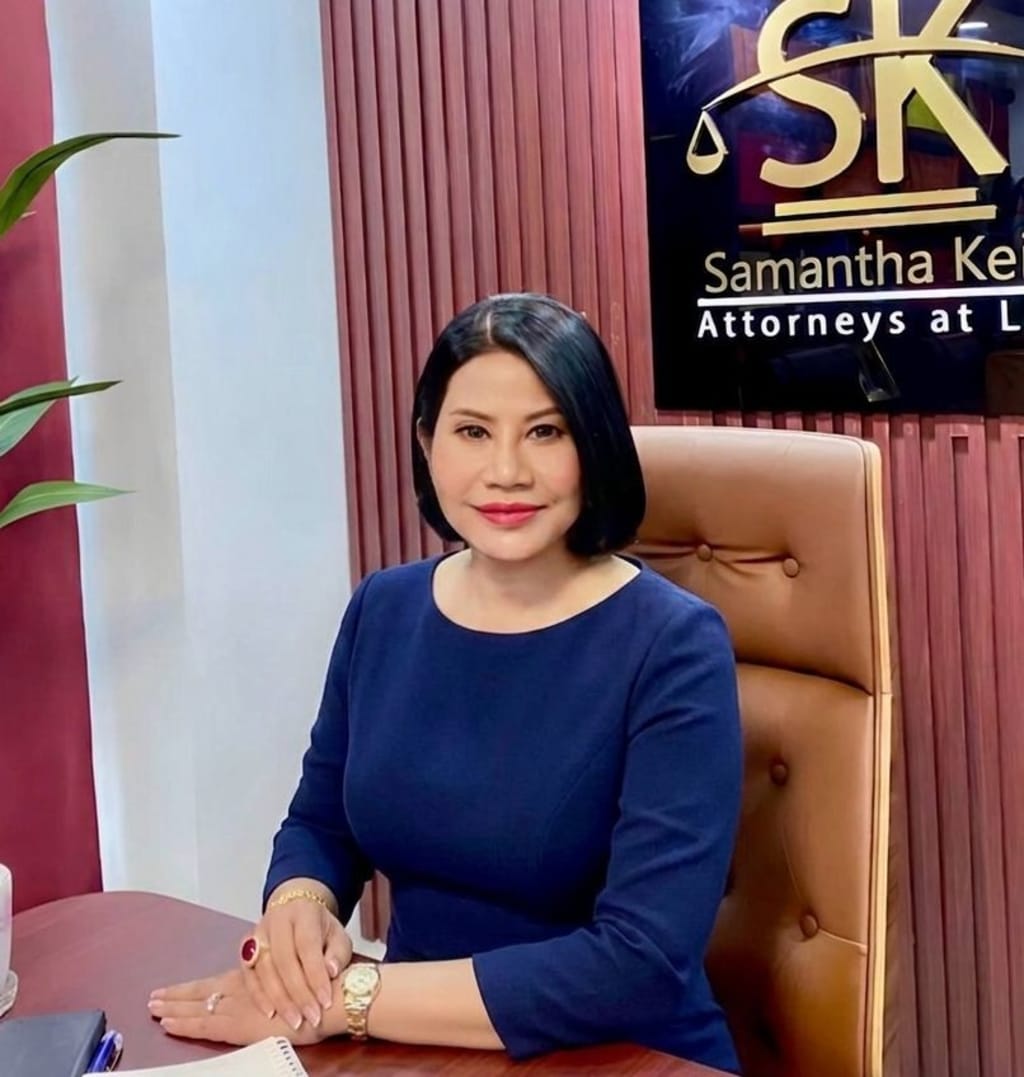
Phnom Penh-based lawyer Samantha Yem recalls unknowingly sharing a Singapore-to-Phnom Penh flight with the future Prime Minister days after his West Point graduation — a personal recollection now entering a wider regional debate over verified facts and online narratives
Introduction
PHNOM PENH — Claims circulating in segments of Thai media and on social platforms questioning how Cambodian Prime Minister Hun Manet was admitted to the United States Military Academy at West Point have drawn a public clarification from the Prime Minister and, unexpectedly, a personal recollection from a Phnom Penh-based attorney who says she crossed paths with him as a young West Point graduate in 1999.
The allegations surfaced following public remarks marking the 27th anniversary of the Prime Minister’s West Point graduation. Posts shared across social media and amplified in parts of the Thai press alleged that Hun Manet had entered the academy through a military quota allocated to Thailand rather than Cambodia.
The Prime Minister’s Clarification
In response, the Prime Minister publicly stated that he was nominated by Cambodia’s Ministry of National Defence and endorsed by the United States Embassy in Phnom Penh before being admitted to West Point as a Cambodian cadet.
That account places his admission within the standard pathway for international cadets at the academy, which requires nomination by the cadet’s home government and coordination with the relevant United States diplomatic mission. Each such admission produces a documentary record covering nomination, endorsement, and enrollment.
Neither the United States Military Academy nor the U.S. Embassy in Phnom Penh has publicly disputed the Prime Minister’s account.
An Unexpected Witness: A Singapore Layover in June 1999
Samantha Yem, Founder and Managing Partner of SK Law Office in Phnom Penh, says the recent dispute returned her to a personal memory from June 1999 — a memory she had not connected to public events until the West Point allegations resurfaced.
At the time, Yem was an Associate Professor at Humphreys College in Stockton, California, traveling to Cambodia for the first time since leaving the country following the fall of the Khmer Rouge era. The journey, she recounts, was personal: she was returning to meet her sister, from whom she had been separated by war and history, and who by then had become seriously ill. Yem says she ultimately took her sister to Saigon for urgent medical care during what was meant to be a brief two-week visit.
Her route home routed through Singapore. On the SilkAir flight bound for Phnom Penh, Yem recalls, a young Cambodian man was seated directly behind her.
“I remember turning around and noticing a young man with a kind and humble demeanor,” Yem said. Shortly after takeoff, she says, the captain announced that the aircraft would have to return to Singapore due to a mechanical issue. While passengers waited for the plane to be repaired, a nearby passenger told her that the young man behind her was Hun Manet, the son of then-Prime Minister Hun Sen, who had just graduated from West Point and was returning home to Cambodia.
“At the time, I did not know him personally,” Yem said. “Nor could I have imagined that twenty-seven years later I would find myself writing about that very chapter of his life.”
Her account, while personal, places a contemporaneous Cambodian-American witness on the same return journey home as the newly graduated Cambodian cadet, days after the West Point ceremony she now finds herself defending in print.
A Wider Pattern Across the Region
The episode arrives at a moment when regional analysts have flagged a widening gap between the speed at which unverified claims travel on social media and the time required for institutions to respond with documentation. Disputes touching on national pride, historical memory, or bilateral sensitivities have proven particularly prone to this dynamic.
In recent years, Southeast Asian governments have faced a rising number of cross-border controversies driven less by official disagreements than by viral online narratives, ranging from disputed cultural attributions to claims involving prominent individuals.
The Question of Evidence vs. Assumption
Cambodian legal commentators argue that the substance of the West Point dispute is verifiable through institutional records rather than political assertion.
“Institutions such as military academies, universities, courts, and diplomatic missions exist precisely because they create verifiable records,” Yem said. “In healthy societies, disagreements are resolved through evidence rather than speculation.”
Cambodia and Thailand: Neighbours With Deep Ties
Cambodia and Thailand share centuries of historical, cultural, and economic linkages, alongside periodic disagreements that have surfaced in public discourse at various points. Bilateral trade remains substantial, and cross-border movement of people, goods, and services continues to shape both economies.
Analysts note that recent flashpoints between the two countries have tended to escalate quickly online before official channels engage — a pattern that bypasses the slower process of institutional verification.
Reputational Stakes for Cambodia
For Cambodia, observers say, the broader stake is reputational. Each Cambodian admitted to a leading international university, accepted into a global institution, or recognised for professional achievement abroad contributes to the country’s international standing. Legal commentators argue those achievements should be assessed on documented merit rather than political framing.
The Larger Question
The West Point episode, observers say, matters less for what it reveals about one graduate than for what it signals about how regional publics now process claims involving national achievement and bilateral sensitivity.
“The larger lesson from this episode is not about West Point,” Yem said. “It is about the importance of protecting factual discourse in an era when misinformation can spread faster than verification — and about recognising that international institutions operate according to documented procedures rather than political narratives.”
Conclusion
As regional debate continues across media and social platforms, the documented record on West Point admissions — nomination by the home government, endorsement by the U.S. diplomatic mission, enrollment by the academy — remains the verifiable standard. Whether public discussion ultimately returns to that standard, observers say, will shape not only how this controversy is remembered, but how future bilateral disputes are processed in the region’s information environment.
Author: Michael Reynolds is a journalist based in Southeast Asia, covering regional affairs, investment, and sustainable development.
About SK Law Office
SK Law Office is a Cambodia-based legal practice advising on investment, corporate, and cross-border matters, with a focus on supporting development and international cooperation in the Kingdom of Cambodia. Further information is available at sk-laws.com.
Media Contact: Samantha Yem | Email at: [email protected]
About the Creator
Backlinks Cart
Mohsin (CEO BacklinksCart Agency).
Our Backlinks Platform " Backlinkscart.com"
For any edits or link insertions. +92-309-1821105
Gmail: [email protected] OR
Enjoyed the story? Support the Creator.
Subscribe for free to receive all their stories in your feed.
Comments
There are no comments for this story
Be the first to respond and start the conversation.