
Why the 2026 F1 Season Won’t End in Las Vegas: Domenicali Rules Out U.S. Finale Amid Middle East Uncertainty
With Qatar and Abu Dhabi under review due to regional conflict, F1 CEO confirms a European fallback for December while dismissing rumors of additional American races.

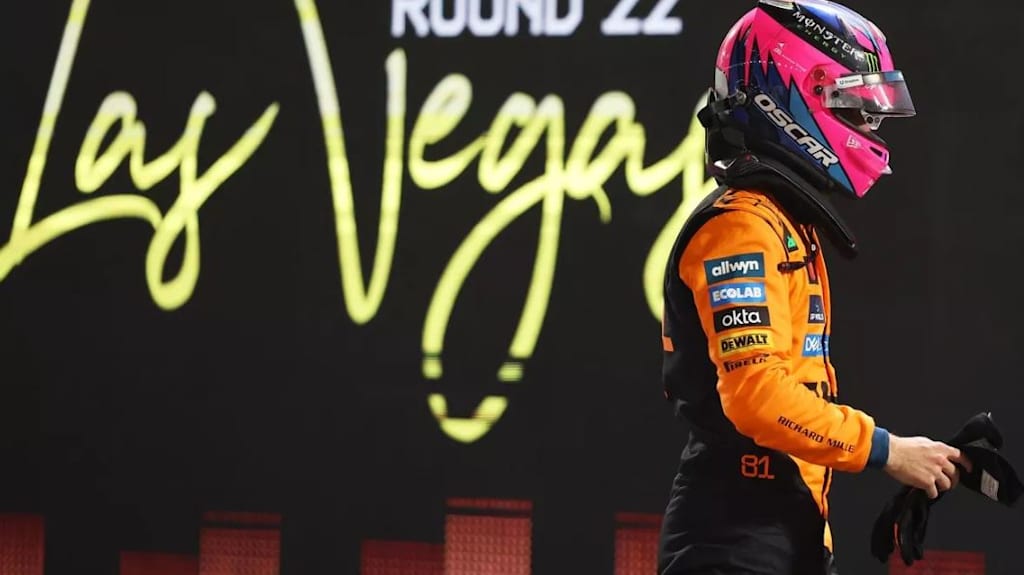
Formula 1’s creative solution to host the rescheduled Bahrain Grand Prix in Malaysia has temporarily stabilized the 2026 calendar, but uncertainty looms over the season finale. With the Middle East conflict ongoing, the fate of the Qatar and Abu Dhabi Grands Prix currently scheduled as the closing double-header after Las Vegas remains undecided. F1 CEO Stefano Domenicali has confirmed that a final decision will be deferred until mid-September, and if cancellation becomes necessary, the championship will conclude in Europe rather than with an additional North American round.
The September Decision Deadline
Domenicali emphasized that F1 is monitoring the situation closely but refuses to make premature calls. “We will take the maximum time for us to see how the situation will develop,” he told select media. “That moment will not be before the middle of September. For us today, the races in Qatar and Abu Dhabi are confirmed.” He noted both events are already sold out, calling it “an incredible sign of how much the sport is bigger than the problem our world is living.”
However, the World Endurance Championship’s recent decision to cancel its late-season Middle East rounds underscores the volatility. If safety or logistics cannot be guaranteed by mid-September, F1 will activate contingency plans. “If the situation would not be clearer... we will take the decision,” Domenicali stated. “And in that respect, I just want to confirm to you that if this is not possible, the end of the season will be in Europe, because we cannot go to other places.”
Why Not Another U.S. Race?
Paddock speculation had suggested Circuit of The Americas or a second Las Vegas race as logical replacements. Domenicali firmly shut down both options, citing cultural and commercial realities.
The week following the Las Vegas GP (November 21) coincides with U.S. Thanksgiving, when the NFL schedules five games including matchups in Los Angeles and Dallas. “We are fighting the US against the NFL,” Domenicali explained. “There’s a lot of fans watching that. We need to avoid any situation that would put us in front of something that is still very big in the US.”
Additionally, Liberty Media remains cautious about oversaturating the Las Vegas market. Despite promoting the event as a success, the inaugural 2023 race faced stakeholder disputes and underpopulated VIP areas, leading to a $3 million class-action settlement this month. “We don't want to ruin, let me put it this way, something that is growing by undervaluing what we are doing there,” Domenicali said. A second race so soon risks diluting the brand’s premium positioning.
Europe as the Only Viable Fallback
With North America off the table, Imola emerges as the most likely European venue. Tracks in Turkey and Portugal, which might offer better weather, are undergoing upgrades for future calendar inclusion and aren’t ready for 2026. Domenicali acknowledged weather risks but expressed confidence: “If I look at the statistics of temperature in Europe at that time, it's less cold than Las Vegas average temperature when we are racing.”
He cited historical precedents, such as snow-affected Nürburgring races, but stressed that climate change makes long-term forecasts unreliable. “There’s no certainty on anything about that,” he admitted. Still, logistical constraints including post-Brexit documentation timelines for UK-based teams make Europe the only feasible option within the existing timeframe.
Strategic Implications
Domenicali’s stance reflects F1’s balancing act between commercial ambition and operational pragmatism. While expanding in North America remains a priority, forcing a U.S. finale amid NFL competition and unresolved Vegas growing pains could backfire. Conversely, maintaining Middle East dates preserves lucrative partnerships but carries reputational and safety risks.
By setting a clear September deadline and ruling out speculative alternatives, F1 signals disciplined crisis management. Whether the season ends under desert lights or European skies, the message is consistent: stability and integrity outweigh opportunistic expansion. As Domenicali concluded, “Hopefully this will not happen [weather issues]. But if it's happening, we'll try to react to that.” In 2026, adaptability may prove as vital as speed.
About the Creator
Mark Lim
Hi I am mark an automotive student and a car, tech and food enthusiast ! Im gonna try and post daily & hope you enjoy what I write and do share my page with people you know. I would gladly appreciate it! Cheers
Enjoyed the story? Support the Creator.
Subscribe for free to receive all their stories in your feed.
Comments
There are no comments for this story
Be the first to respond and start the conversation.