
Who Powers This RMB 300,000-Class Large Seven-Seat REEV? A Look at the Key Suppliers Behind the Xiaomi SkyNomad N90 Max
From the range extender to the autonomous driving chip, a mature supply chain network underpins Xiaomi's extended-range ambitions.

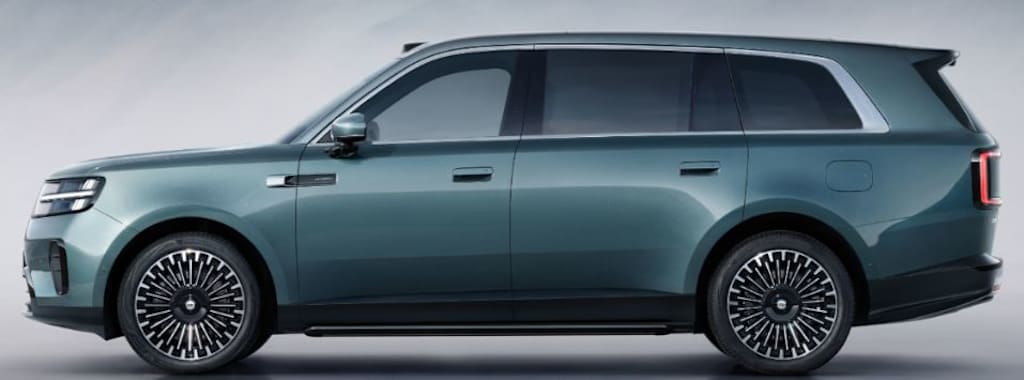
On the evening of July 30, Xiaomi Auto finally revealed its long-anticipated extended-range electric vehicle (REEV) strategy. The SkyNomad N90 Max, with a pre-sale price of RMB 299,900, is positioned as a large seven-seat flagship extended-range SUV. This is not only the first production model built on Xiaomi's Kunlun technology architecture but also Xiaomi's entry into a new battleground beyond its SU7 and YU7 pure electric lineup.
From a product definition standpoint, the N90 Max's approach is clear: use a large-battery extended-range system to eliminate range anxiety, equip it with NVIDIA Thor chips and dual LiDAR for a full suite of intelligent driving hardware to raise the bar on technology, and pair it with Xiaomi's ecosystem-driven multi-screen experience to target family-oriented buyers in the 300,000 RMB price segment.
Supporting this product logic is a mature and well-established supply chain network. According to official disclosures, key components of this architecture are supplied by both domestic and international partners.
Range Extender: Joint Customization with Dongan Power
The powertrain is often the most transparent part of a vehicle's supply chain, but the N90 Max's choice is not a simple off-the-shelf purchase. The range extender is a 1.5T four-cylinder engine model M15DRE from Harbin Dongan Power, with a displacement of 1,499cc and a maximum net power output of 112kW.
The key differentiator is that this is a "joint customization" effort. Xiaomi led the development of seven core components and re-optimized 57 additional parts. In simpler terms, Dongan Power provided the proven hardware platform and mass-production capabilities, while Xiaomi contributed the control strategy and engineering definitions. This division of labor is not uncommon among new EV makers today. The core logic is that automakers want to avoid heavy R&D investment in traditional mechanical components like internal combustion engines while retaining some degree of technical influence.
Battery: CALB's 76kWh Large-Cell Pack
The battery strategy is equally unconventional. The N90 Max is equipped with a 76kWh ternary lithium battery pack, supplied by China Aviation Lithium Battery (CALB).
This capacity is notably aggressive for an extended-range vehicle. The industry norm is to pair 40-50kWh batteries to "cover" daily electric driving needs, but Xiaomi has pushed the all-electric range to 464km (CLTC), roughly equivalent to an entry-level pure electric sedan. This means that for daily commuting, users can treat the N90 Max as a pure EV, with the range extender only engaging for long-distance travel.
Meanwhile, the standard N70 variant will use a lithium iron phosphate battery from Sunwoda, creating a dual-track battery supply strategy.
Smart Driving Hardware: NVIDIA Thor + Hesai + RoboSense
If the powertrain reflects Xiaomi's pragmatic supply chain management, the smart driving hardware showcases its determination in the field of intelligence.
The N90 Max comes standard with the NVIDIA DRIVE AGX Thor chip, built on a 4nm process with 700 TOPS of compute power. This chip is currently a top-tier option in the in-vehicle computing platform space, previously seen only in vehicles priced above RMB 500,000. Xiaomi's decision to bring it down to the RMB 300,000 price point is a clear statement: use smart driving hardware to differentiate from competitors in the same price bracket.
The sensor suite is equally generous. The forward-facing LiDAR is supplied by Hesai Technology, while the rear solid-state LiDAR is exclusively provided by RoboSense marking the first mass-produced Xiaomi vehicle to feature a rear-facing solid-state LiDAR. For a large seven-seat SUV measuring over 5.3 meters in length, rear blind spots have always been a pain point for parking and reversing maneuvers. Adding a rear LiDAR is a precise solution tailored to the vehicle's specific dimensions.
Cockpit and Chassis: Standardized Components from Mature Suppliers
For the cockpit and chassis, the N90 Max's supply chain selection is relatively standardized.
The cockpit is powered by a Qualcomm Snapdragon 8 Gen 3 SoC, paired with a 16.1-inch central display, an 8.88-inch instrument cluster, and a 21.4-inch rear entertainment screen, plus a 20-inch AR-HUD creating a six-screen interactive ecosystem. The audio system is Xiaomi's self-developed Stellar Sound system, featuring 25 speakers, 7.1.4-channel surround sound, and a peak output of 4,890W.
As for the chassis, the front double-wishbone and rear H-arm multi-link suspension structure, combined with five-level adjustable air springs and CDC continuous damping control, is supplied by Tuopu Group. The braking system is provided by Bosch, including the ESP 10.0 vehicle stability control system and the DPB brake controller.
Summary
From Dongan Power's range extender and CALB's 76kWh large-battery pack, to NVIDIA's Thor chip, Hesai and RoboSense's dual LiDAR, and Tuopu's air suspension paired with Bosch's braking system, the supply chain map of the Xiaomi SkyNomad N90 Max paints a clear picture of pragmatism balanced with ambition. For traditional mechanical components, Xiaomi opts for joint customization and leveraging established expertise. For core intelligent hardware, it spares no expense in stacking top-tier specifications.
This approach may well be the source of Xiaomi's confidence in capturing family buyers in the RMB 300,000 market segment.
About the Creator
Mark Lim
Hi I am mark an automotive student and a car, tech and food enthusiast ! Im gonna try and post daily & hope you enjoy what I write and do share my page with people you know. I would gladly appreciate it! Cheers
Enjoyed the story? Support the Creator.
Subscribe for free to receive all their stories in your feed.
Comments
There are no comments for this story
Be the first to respond and start the conversation.