
What Is a Container Terminal and How Does It Work?
From ship to shore to store!
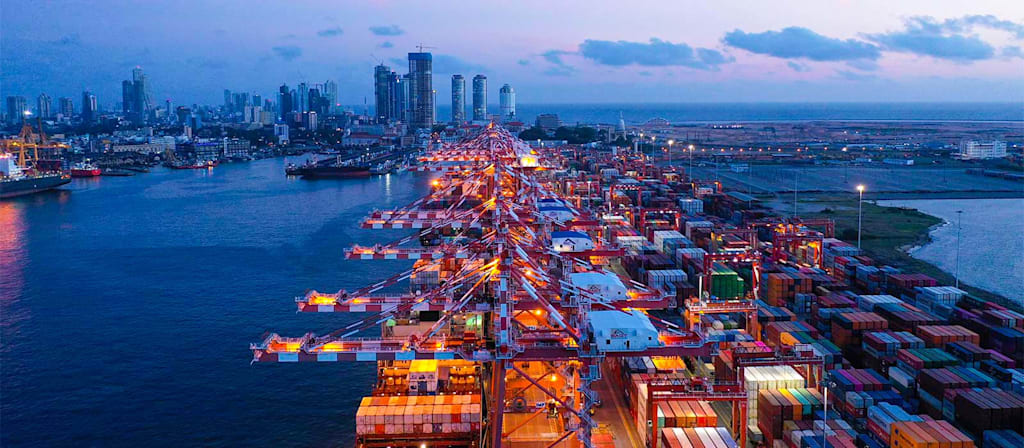
Today, the movement of cargo around the world is done by a complex logistics system, in which the main link is the container terminal. Container terminals are important places where cargo is switched from ships to trucks and trains to be moved to various destinations. However, you may wonder what is actually meant by container terminals?
Understanding Container Terminals
A container terminal refers to the specialised facility at a port used for the loading and unloading of cargo in ships. These use large standardised containers made from steel. Unlike in conventional handling of cargo where goods are loaded one by one, the use of containers have brought more efficiency. This allows millions of containers to be handled every year.
The process involves packing individual goods in standardised containers which makes the entire process more convenient. It minimises losses incurred during the loading of goods since there is no breakage, as is the case when handling cargo in the traditional way.
Importance in Global Trade
Container terminals are important for the global logistics network as they connect producers, suppliers, and consumers around the world. Without container terminals, international trade would be slower and more costly.
Sri Lanka has established itself as a significant maritime hub in the South Asian region. Operations like those carried out by SAGT Sri Lanka play an important role in dealing with transshipment cargo. It links major shipping lanes from East to West. This shows that the Global Container Terminal can benefit both domestic and international commerce.
Key Components of a Container Terminal
A container terminal doesn’t just function as a port; it also has various components working together as one system:
• Berths: Docking facilities where the container ships are berthed to embark and disembark containers.
• Quay Cranes: High-reaching cranes located at the berths and responsible for loading and unloading containers from the vessels.
• Yard Area: An extensive space used for storing containers until they are transferred.
• Transport Systems: Trucks, trailers, and AGVs used in the terminal to transfer containers.
• Gate Complex: Entrances/exit points used in processing road transportation of containers.
Each of the above components serves an important purpose in terms of cargo movements.
How Does a Container Terminal Work?
Container terminals run on several complex steps to keep cargo moving. When a large container ship arrives at the harbor, it cannot simply sail to the dock. These ships are too big to turn easily in tight waters. Local harbor pilots board the vessel to guide the captain. They know the water depths and hidden risks of the port. Tugboats then push and pull the ship to get it into the correct berth. This precision stops the ship from hitting the quay. Once the ship is tied down, quay cranes start their work. These massive machines reach over the deck to lift heavy boxes. They move the containers from the ship to the ground or onto trucks. This part of the process must be fast to keep the ship on schedule.
Quay cranes load the containers from the vessel to the trucks, which then move the cargo to the storage yard. Here, the stacking of the containers in order is achieved by employing special equipment such as rubber tire gantries or rail-mounted gantry cranes. The sorting depends on the purpose of the containers.
Before leaving the terminal, the cargo may go through customs clearance and security screening to comply with international trading laws. After that, the cargo is transported by road or rail transport to its destination. On the other hand, the cargo may be transported to another vessel for transshipment.
When it comes to exports, the cargo transported by land is put in the yard and then loaded into vessels using quay cranes.
Technology and Automation
In modern ports, there is increasing use of technology to make operations more efficient and reduce human errors. Automation in the tracking of containers is done using sophisticated technology, with software controlling the process of stacking and retrieving the containers.
There are some ports that use automation technologies like driverless trucks and robotic cranes to load/unload cargoes.
Technology also helps in digitalisation. The port's Terminal Operating System (TOS) controls every single operation in the port, from vessel arrivals to management of yard stock.
About the Creator
Enjoyed the story? Support the Creator.
Subscribe for free to receive all their stories in your feed.
Comments
There are no comments for this story
Be the first to respond and start the conversation.