
WEC 2030 Hypercar Rules: Bespoke Hybrid Freedom, LMDh Convergence, and Hydrogen’s Return
The FIA and ACO have outlined a dual-path technical framework for the next Hypercar era, preserving manufacturer innovation in hybrid systems while mandating rear-wheel drive and opening the door to liquid hydrogen competition.

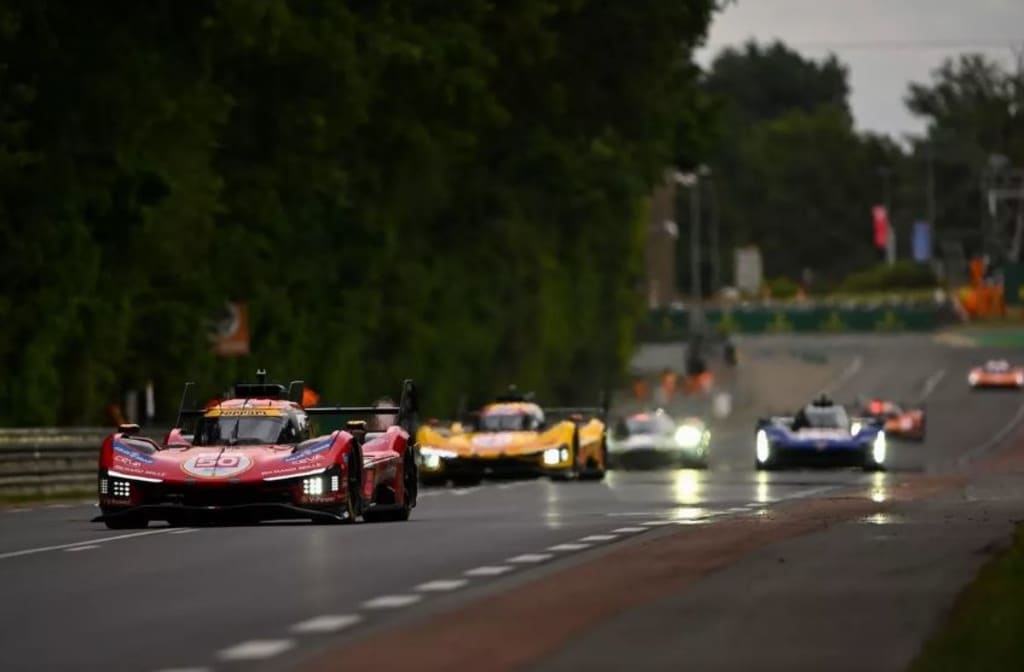
The future of the FIA World Endurance Championship’s premier class has taken shape with the announcement of the 2030 Hypercar regulations. In a significant move toward convergence, the category will adopt core LMDh performance parameters but will stop short of forcing manufacturers into a single-spec mold. Crucially, entrants will retain the freedom to develop bespoke chassis and hybrid systems, provided they adhere to unified technological constraints. This "one platform, two paths" approach aims to balance cost control with brand relevance, ensuring that Hypercar remains an attractive proposition for OEMs seeking to showcase proprietary technology while competing on a level playing field. The new rules will be locked in for a five-year homologation period with no performance evolutions permitted unless a significant speed deficit is demonstrated.
Two Paths to the Same Performance Window
FIA Chief Technology Officer Xavier Mestelan Pinon clarified that the 2030 regulations offer distinct development routes. Manufacturers can either adopt the existing LMDh model using a licensed chassis spine from one of four constructors and the spec Bosch/Fortescue Zero/Xtrac hybrid system or pursue a fully bespoke design. However, a key restriction applies: those building their own chassis cannot use the spec hybrid system, and vice versa. “This is very important for some of our manufacturers who want to promote their own technology for the battery or the hybrid system,” Mestelan Pinon explained. Both paths must meet identical technical specifications, ensuring performance parity regardless of development philosophy.
A major technical shift is the outlawing of four-wheel drive. All 2030 Hypercars will be rear-wheel drive only, with hybrid energy deployment restricted to the rear axle. This aligns LMH cars with LMDh architecture, simplifying BoP management and reducing drivetrain complexity. Minimum weight will rise from 1030kg to 1040kg for conventional cars, while maximum power increases by 20kW (26bhp) to 540kW (723bhp), sourced entirely from the internal combustion engine. These adjustments reflect lessons learned from the current generation’s operational challenges and aim to create a more sustainable performance envelope.
Design Freedom Meets Aero Standardization
While mechanical convergence increases, aesthetic differentiation will expand. Manufacturers will gain greater latitude to incorporate brand styling cues into the upper bodywork, addressing long-standing criticism that current Hypercars look too generic. “The most important thing is to offer more flexibility for the external design, the upper body; this is the spirit,” said Mestelan Pinon. However, this freedom comes with stricter underbody standardization: a common underfloor and rear diffuser will be mandated to reduce aerodynamic development costs and minimize dirty air effects. This trade-off more visual identity above, more parity below seeks to preserve marketing value without triggering expensive aero wars.
Hydrogen Returns with Equivalence of Technology
Perhaps the most ambitious element of the 2030 vision is the reintroduction of hydrogen as a competitive fuel source. Liquid hydrogen will be permitted to power both internal combustion engines and fuel cells, with a minimum weight of 1200kg. Performance will be balanced against conventional cars via Equivalence of Technology (EoT), a mechanism last used during the 2014-2020 fuel-formula era when petrol and diesel prototypes competed directly. Toyota, the strongest advocate for hydrogen endurance racing, already has its TR LH2 test car running; it made its public debut at Le Mans this week with Kazuki Nakajima at the wheel.
Notably, the FIA and ACO declined to confirm whether any hydrogen entries will actually materialize by 2030. The original plan had envisioned a separate hydrogen stream launching one to two years before full integration, but the decision to extend current Hypercar rules through 2029 compressed the timeline. Whether manufacturers commit to the added weight and infrastructure challenges of liquid hydrogen remains an open question, though Toyota’s continued investment suggests at least one OEM is preparing for the possibility.
Guidelines, Not Final Regulations
Officials stressed that Friday’s announcement represents strategic guidelines rather than binding technical rules. ACO Technical Director Thierry Bouvet confirmed that detailed regulations will be developed over the second half of 2026 through technical working groups involving manufacturers. This collaborative process is essential to address unresolved questions around hybrid system validation, EoT calibration for hydrogen, and safety standards for liquid fuel storage. The five-year stability promise also depends on getting these details right upfront; past regulation cycles have suffered from mid-cycle corrections that undermined confidence.
For now, the 2030 framework signals clear intent: Hypercar will become more accessible through LMDh alignment, more expressive through design freedom, and potentially more diverse through hydrogen inclusion. Whether this delicate balance attracts new manufacturers and retains current ones will depend on execution in the coming months. But by preserving choice within convergence, the FIA and ACO have laid groundwork that honors both competition and innovation, the twin pillars that have kept Le Mans relevant for over a century.
About the Creator
Mark Lim
Hi I am mark an automotive student and a car, tech and food enthusiast ! Im gonna try and post daily & hope you enjoy what I write and do share my page with people you know. I would gladly appreciate it! Cheers
Enjoyed the story? Support the Creator.
Subscribe for free to receive all their stories in your feed.
Comments
There are no comments for this story
Be the first to respond and start the conversation.