
"We Don't Want to Put Tape on Anyone's Mouth": Domenicali Balances Driver Criticism with Fan Satisfaction Amid 2026 Rule Debate
As Formula 1’s new regulations spark vocal discontent from the grid, CEO Stefano Domenicali defends the sport’s direction by citing record fan engagement metrics while affirming drivers’ right to speak freely.

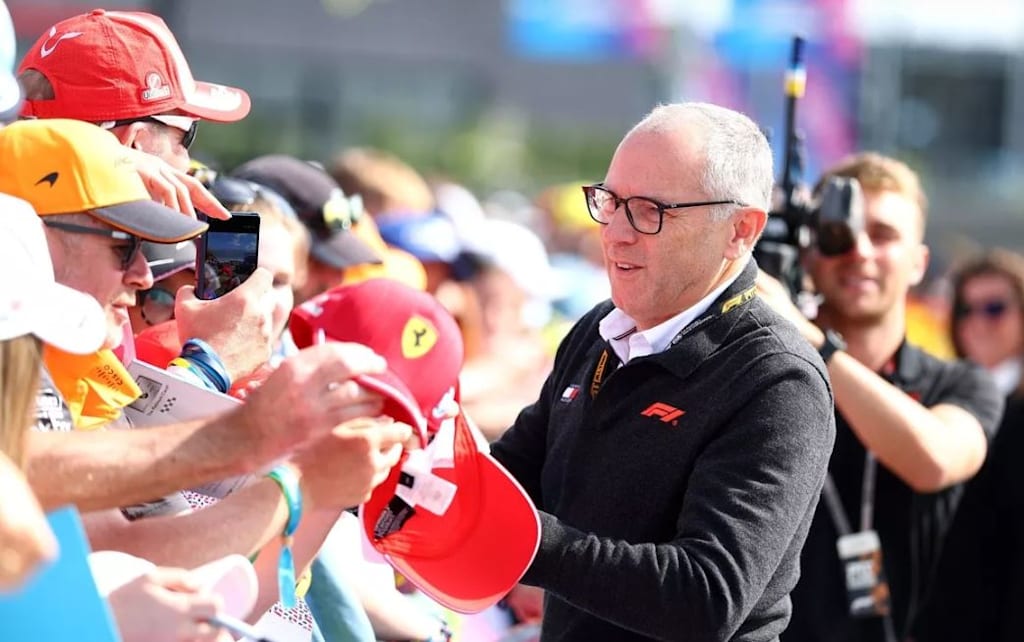
The 2026 Formula 1 season was designed to be a reset, a technical revolution intended to improve racing, enhance sustainability, and tighten competition. Yet, as the championship reaches its midpoint, the most consistent storyline has not been a title fight, but rather a chorus of driver criticism targeting the very rules meant to elevate the sport. From complaints about car weight and tire degradation to concerns over aerodynamic sensitivity, the paddock’s leading voices have been unusually candid in their dissatisfaction. In response, F1 CEO Stefano Domenicali has struck a nuanced tone: acknowledging the validity of driver feedback while firmly anchoring the sport’s priorities in fan experience. “We don’t want to put tape on anyone’s mouth,” Domenicali stated, emphasizing that open dialogue is essential even as he insists that fan enjoyment remains the ultimate metric of success.
The Right to Speak vs. The Duty to Deliver
Domenicali’s “tape” metaphor is deliberate. In an era where athlete activism and social media have amplified individual voices, F1’s leadership recognizes that silencing criticism would be both counterproductive and culturally tone-deaf. Drivers are not merely employees; they are stakeholders whose on-track experience directly shapes product quality. When Max Verstappen calls the cars “too heavy,” or Lewis Hamilton laments “artificial racing,” these critiques carry weight because they stem from lived expertise.
Yet Domenicali also draws a clear boundary: driver preference cannot override fan satisfaction. “I understand the criticism,” he told select media, “but we must remember who this sport is for.” This isn’t dismissal it’s prioritization. F1 operates as entertainment first, engineering showcase second. If drivers find the 2026 package challenging but fans are more engaged than ever, the trade-off may be justified.
What the Data Says: Fans Are Enjoying 2026 More
Crucially, Domenicali’s stance is backed by empirical evidence. According to F1’s internal analytics and third-party surveys, fan sentiment toward the 2026 racing product has improved significantly compared to previous seasons. Key indicators include:
Increased Overtaking: Average overtakes per race have risen by 28% year-over-year, with more passes occurring outside DRS zones.
Closer Racing: Time gaps between top ten cars in qualifying have compressed, resulting in mixed grids and unpredictable outcomes.
Fan Engagement Metrics: Social media interaction during races is up 35%, and broadcast retention rates have hit record highs, particularly among viewers aged 18–34.
Sentiment Surveys: Post-race fan polls show a 22-point increase in satisfaction with “race excitement” versus 2025.
These figures suggest that what feels restrictive or frustrating to drivers, such as reduced downforce dependence or revised energy deployment strategies, is translating into more compelling viewing. The disconnect isn’t accidental; it reflects a fundamental shift in design philosophy. Where past regulations optimized for peak lap time, 2026 rules prioritize race ability. Drivers accustomed to extracting tenths through aero mastery now face a car that rewards consistency, tire management, and strategic adaptability over raw qualifying pace. That adjustment period inevitably breeds friction.
Why Driver Discomfort May Be Necessary
Historically, F1’s most celebrated eras were often those drivers initially disliked. The 2009 diffuser ban, the 2014 hybrid transition, and even the 2022 ground-effect reset all drew early backlash before yielding iconic seasons. Change disrupts established hierarchies and skill sets. Drivers who dominated under old paradigms must relearn their craft, and that process is rarely comfortable.
Domenicali acknowledges this tension without apologizing for it. “Great racing sometimes asks things of drivers that aren’t easy,” he noted. The implication is clear: if the sport only catered to driver comfort, it might produce faster laps but duller spectacles. The 2026 regulations deliberately introduce constraints to force different kinds of excellence: patience over aggression, adaptation over domination. Whether drivers ultimately embrace this evolution remains to be seen, but fan data suggests the audience already has.
Maintaining Dialogue Without Losing Direction
Importantly, Domenicali hasn’t closed the door on refinement. F1’s technical working group continues to meet with teams and drivers to address legitimate concerns, such as brake cooling issues or suspension compliance. The distinction lies in what gets adjusted: tweaks that enhance safety or fairness are welcomed; changes that revert to pre-2026 dynamics are not.
This approach preserves credibility. By listening without capitulating, F1 avoids appearing either authoritarian or indecisive. Drivers retain their platform, fans retain their entertainment, and the sport retains its forward momentum. As Domenicali summarized: “Our job isn’t to make everyone happy every day. It’s to ensure that when the lights go out on Sunday, millions of people feel something worth coming back for.”
In the end, the 2026 debate isn’t really about rules it’s about whose experience defines success. For now, F1 has chosen the stands over the cockpit. And if the numbers hold, history may judge that choice as the right one.
About the Creator
Mark Lim
Hi I am mark an automotive student and a car, tech and food enthusiast ! Im gonna try and post daily & hope you enjoy what I write and do share my page with people you know. I would gladly appreciate it! Cheers
Enjoyed the story? Support the Creator.
Subscribe for free to receive all their stories in your feed.
Comments
There are no comments for this story
Be the first to respond and start the conversation.