
Volkswagen to Cut 50,000 Jobs as Global Auto Industry Accelerates Restructuring
VW's Radical Overhaul Signals a New Era for the Automotive Industry


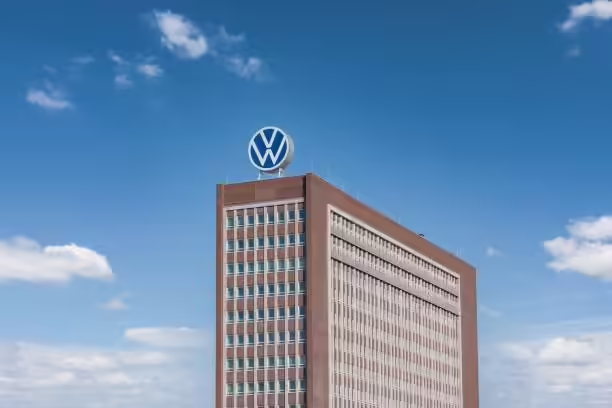
Volkswagen plans to eliminate 50,000 jobs and significantly reduce production capacity by 2030 as Europe's largest carmaker embarks on one of the most extensive restructuring programs in its recent history. The cuts, affecting operations across Volkswagen, Audi, Porsche, and software subsidiary Cariad, form part of a broader effort to streamline operations, reduce costs, and improve profitability as the global automotive industry navigates slowing demand, intensifying competition, and the costly transition to electric vehicles.
Speaking at the company's annual general meeting on June 18, CEO Oliver Blume said the automaker was reshaping itself into a leaner organization with fewer models, fewer platforms, and a manufacturing footprint better aligned with market realities.
The Scale of the Cuts
The restructuring is already well underway. Since the end of 2023, Volkswagen has reduced its global workforce by nearly 30,000 employees, from 654,400 to approximately 625,100. The reductions have hit Germany hardest, where the workforce fell from 275,400 to 257,700 during the same period.
According to the company, the 50,000 job reductions planned by 2030 include:
35,000 positions to be eliminated within Volkswagen AG alone
More than 28,000 departures have already been covered by binding agreements.
Cuts concentrated primarily in Germany, though the group's global operations are also affected.
Approximately 19,000 positions in Germany, including operations in Saxony and Osnabrück, are expected to be eliminated by the end of 2026 as part of the initial phase of the program.
Volkswagen has also drastically scaled back its production ambitions. Before the pandemic, the company's factory network was designed to produce more than 12 million vehicles annually. The new target is approximately 9 million, a 25% reduction in capacity. Over the past two years, the group has already removed the equivalent of 2 million vehicles of annual capacity from its European and Chinese operations.
Why Now? The Perfect Storm
The cuts come amid a convergence of pressures that Volkswagen describes as a "fundamentally different environment".
1. Financial Deterioration
Volkswagen's financial performance has deteriorated sharply. Operating profit fell 53% to €8.9 billion in 2025, while net profit dropped 44% to €6.9 billion. The group's operating margin compressed to 2.8%—its worst since the Dieselgate crisis—and fell further to 3.3% in the first quarter of 2026. Operating profit in Q1 2026 was down 14% year-on-year, and revenue fell 2.5% to €75.7 billion.
2. US Tariffs
The Trump administration's tariffs have cost the group billions. Volkswagen reported a 54% drop in pre-tax profits largely attributable to US tariffs, which cost the company $1.5 billion in the first half of 2025 alone. The tariffs also forced Volkswagen to stop production of the ID.4 crossover in the United States, which negatively impacted its performance.
3. Chinese Competition
Chinese manufacturers have eroded Volkswagen's position both in China—where it is now outsold by both BYD and Geely—and increasingly in Europe. Chinese automakers have gained significant market share with electric vehicles that are competitively priced and technologically advanced, making it difficult for German factories to compete on cost.
4. The EV Transition
The accelerated transition to electric vehicles has been both costly and challenging. Volkswagen's electric vehicle production costs remain high, and the company is forced to pay €400-500 million annually for exceeding carbon dioxide emission limits from 2025 to 2027. At the same time, EV demand has been softer than expected in key markets, leaving several factories operating below capacity.
5. Porsche's Costly Reversal
Porsche's costly reversal on electrification generated more than €3 billion in extraordinary charges, contributing heavily to the 2025 profit collapse. Porsche's operating profit nearly vanished in 2025, falling by 98% to just €90 million.
6. The Iran War
Geopolitical uncertainty, particularly the US-Israeli conflict with Iran, has added further pressure. Blume warned that while the war is not directly hitting Volkswagen's supply chain, it could affect demand for its premium marques, Porsche and Audi, in a region where margins are high but volumes are modest.
The Path Forward: 8% to 10% Margins by 2030
Volkswagen's restructuring program is built around ambitious financial targets. The company aims to:
Achieve an operating return on sales of 8% to 10% by 2030
Generate annual net savings exceeding €6 billion.
Achieve more than 60% of free cash flow relative to operating profit.
The company has already reported early progress. Production costs at German factories declined by more than 20% on average during 2025, and efficiency programs generated approximately €1 billion in sustainable savings. Volkswagen is also simplifying its product portfolio by reducing the number of vehicle models, model variants, and production platforms across the group.
The restructuring is hitting Germany, Volkswagen's home market, particularly hard. The cuts are concentrated in historic manufacturing centres, including Saxony and Osnabrück. There are concerns that plants may face closure. While Volkswagen has so far avoided compulsory redundancies, relying on natural attrition, early retirement, and voluntary departures, the company has acknowledged that "measures still need to be clarified" around the future of some facilities.
The Osnabrück plant, for example, faces the end of T-Roc production in mid-2027 with no confirmed successor model. Workers are reportedly concerned that the factory may be converted to supply components for Israel's Iron Dome defence system, a move that would represent a significant departure from vehicle manufacturing.
An Industry-Wide Reset
Volkswagen's announcement comes amid a wave of workforce reductions across the automotive industry. German automotive supplier Bosch has announced plans to cut thousands of jobs, while ZF Friedrichshafen continues to pursue workforce reductions. In the United States, several major automakers have slowed production targets, delayed factory projects, or adjusted hiring plans amid softer-than-expected demand for electric vehicles.
Industry analysts increasingly describe the sector's challenges as structural rather than cyclical. As one analyst noted, "The automotive industry is simultaneously funding two futures. Companies must continue investing in combustion-engine businesses that generate today's profits while financing electrification, software development, and next-generation mobility technologies".
Volkswagen's 50,000 job cuts represent one of the most significant restructurings in the company's recent history. The cuts reflect a recognition that the automotive industry has entered a new phase, one defined by slower demand, intensifying competition, rising costs, and a structural shift away from the volume-driven models that defined the past.
As Blume told shareholders, "After three intensive years of realignment within the Volkswagen Group, we are seeing tangible progress. At the same time, we are operating in a fundamentally different environment."
About the Creator
Mark Lim
Hi I am mark an automotive student and a car, tech and food enthusiast ! Im gonna try and post daily & hope you enjoy what I write and do share my page with people you know. I would gladly appreciate it! Cheers
Enjoyed the story? Support the Creator.
Subscribe for free to receive all their stories in your feed.
Comments
There are no comments for this story
Be the first to respond and start the conversation.