
Volkswagen Deepens Restructuring: 12,000 More Jobs to Go by 2030 Amid Rising Tensions
A Second Wave of Cuts Already Under Way "Socially Responsible" Approach Union Strikes Back Bargaining at a Crossroads The Wider Picture

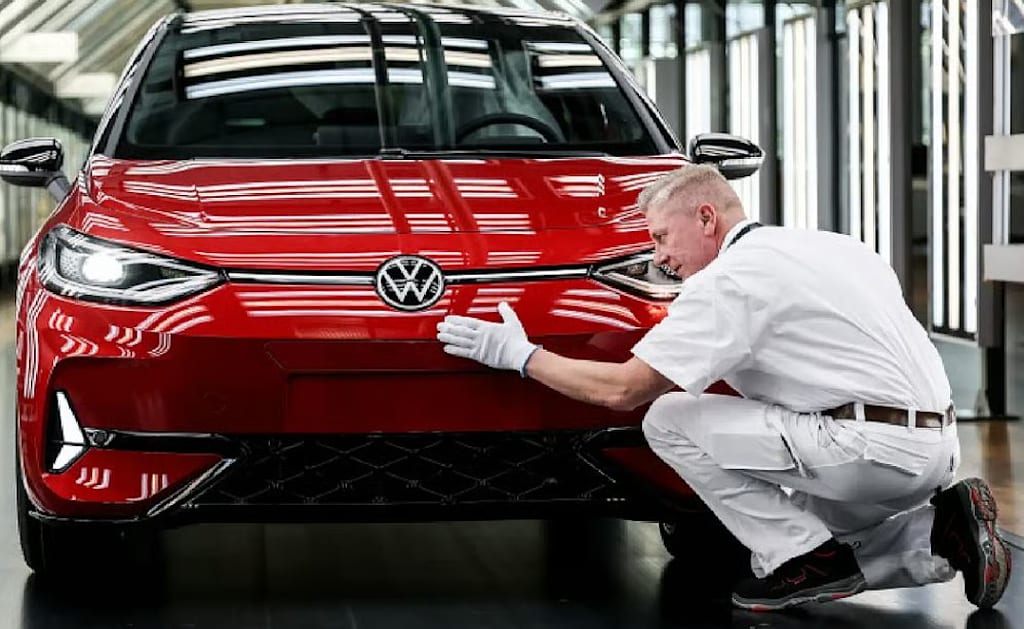
Volkswagen is preparing to eliminate an additional 12,000 jobs by 2030, according to reports from German newspaper Bild, pushing the total number of positions to be slashed beyond 47,000 in what has become one of the most sweeping restructurings in the history of the global automotive sector. The move comes as the company grapples with shrinking margins, fierce international competition, and the staggering costs of transitioning toward an electric future, but it has also triggered an angry response from organised labour, setting the stage for the most serious industrial conflict in decades.
A Deepening Cost-Cutting Drive
The newly reported cuts represent a significant escalation of measures already underway. They are not isolated, but rather an intensification of a broader programme intended to streamline operations, consolidate vehicle platforms, and restore profitability across Europe’s largest automaker. According to Bild, management believes these reductions are essential to safeguard the company’s long-term competitiveness, particularly as rivals from China gain ground and the expense of developing new technologies continues to mount. What began as targeted efficiency measures has evolved into a fundamental reshaping of Volkswagen’s workforce footprint, with consequences that will be felt across Germany and beyond.
Cumulative Cuts on an Unprecedented Scale
The scale of transformation is staggering. Even before this latest disclosure, Volkswagen had already approved plans to reduce its global workforce by more than 35,000 positions. Adding the additional 12,000 roles now being brought forward brings the total reduction to roughly 47,000 jobs by the end of the decade equivalent to eliminating the entire workforce of a major industrial city. These are not temporary layoffs or seasonal adjustments; they represent a permanent downsizing of the organisation, affecting production lines, engineering centres, administrative offices, and management structures alike. Communities that have depended on Volkswagen for generations are facing the prospect of diminished opportunity and rising local unemployment.
The Promise of "Social Responsibility"
In presenting the changes, management has emphasised its commitment to carrying them out in a “socially responsible” manner. Affected employees will be directed toward state-supported retraining programmes, designed to help them acquire new skills and transition into alternative roles whether within the company, elsewhere in the industrial sector, or into emerging fields such as renewable energy and digital technology. Early retirement, voluntary departure packages, and natural attrition are expected to form the backbone of the process, with the stated goal of minimising compulsory redundancies. Critics, however, question whether such programmes can absorb tens of thousands of workers, particularly older employees and those whose specialised manufacturing skills have limited transferability to other sectors.
IG Metall Draws a Hard Line
The IG Metall trade union, which represents hundreds of thousands of Volkswagen workers across Germany, has rejected the approach entirely and issued a stark warning: it is prepared to call strike action beginning in 2027 if the company proceeds with these latest reductions. The union argues that workers have already borne more than their share of sacrifices through wage restraint, longer hours, and flexible working agreements and that further cuts risk hollowing out Germany’s industrial foundation. Union leaders have pointed out that productivity remains high and that workers remain deeply committed to the company; the problem, they contend, lies elsewhere in strategic missteps, delayed modernisation, and an overreliance on outdated vehicle platforms.
The Countdown to Bargaining
The standoff is moving toward a critical and potentially explosive phase. Formal collective bargaining negotiations are scheduled to commence on November 24, bringing management and union leaders face-to-face to hash out the future of jobs, wages, and working conditions. For now, industrial action remains legally restricted under the terms of the existing “peace obligation,” an agreement that prohibits strikes and lockouts while negotiations are in progress. That protection expires on December 31, however, and from that moment forward, the union will be free to ballot its members and authorise work stoppages. Both sides are entering these talks from hardened positions, and compromise may prove difficult to reach.
Industry Pressures and a Shifting Landscape
Volkswagen is not acting in isolation. Automakers worldwide are confronting a perfect storm: the transition to electric mobility requires massive upfront investment while delivering lower margins than traditional internal-combustion vehicles; Chinese competitors are expanding rapidly into European and global markets with affordable, technologically advanced models; and shifting consumer preferences are forcing manufacturers to consolidate model lines and close less efficient plants. Volkswagen’s difficulties are among the most visible, but nearly every legacy automaker is wrestling with similar pressures, making the outcome of these negotiations a benchmark for labour relations across the entire industrial sector.
The weeks and months ahead will determine whether Volkswagen can modernise without fracturing the social compact that has long sustained it. Management insists these changes are unavoidable; workers insist they are unfair and unnecessary. There is truth in both perspectives: the company must adapt to survive, but the human cost of that adaptation must be shared equitably if trust is to be preserved. What happens at Volkswagen will reverberate far beyond its factory gates, influencing how other companies restructure, how governments respond to industrial decline, and whether Germany’s model of social partnership can endure in an era of rapid technological upheaval.
About the Creator
Mark Lim
Hi I am mark an automotive student and a car, tech and food enthusiast ! Im gonna try and post daily & hope you enjoy what I write and do share my page with people you know. I would gladly appreciate it! Cheers
Enjoyed the story? Support the Creator.
Subscribe for free to receive all their stories in your feed.
Comments
There are no comments for this story
Be the first to respond and start the conversation.