
Under the Hood of the Hybrid Market
Cost, Consumer Choice, and Honda’s Accord

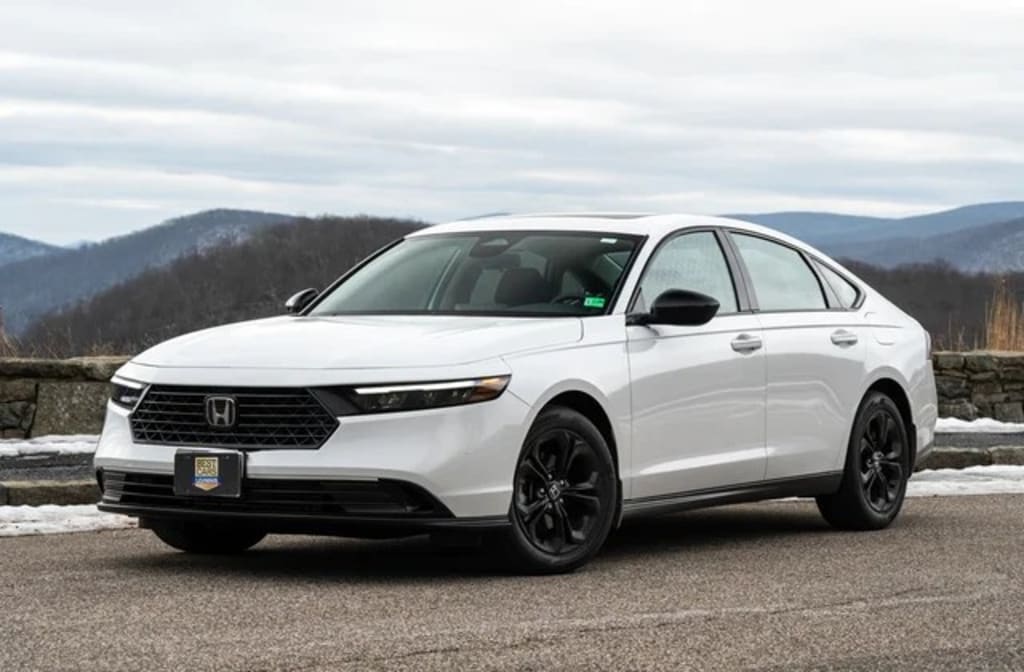
In 2007, the Energy Independence and Security Act was passed, which later led to many regulations being pushed out by the Environmental Protection Agency (EPA). These regulations were aimed at car manufacturers and would start the move toward cleaner and more fuel efficient vehicles in the future. With these new regulations putting pressure on the manufacturers, research and development increased on hybrid and electric vehicles, as opposed to the vehicles using the common internal combustion engines. This essay will focus on Honda’s practice of producing the Accord. This vehicle is produced with either an internal combustion engine or a hybrid option. The American Honda Motor Company should continue to produce the majority of their Accords with the internal combustion engine for the foreseeable future due to the production cost of hybrid vehicles drastically outweighing the consumer’s willingness to pay for the hybrid variant of the Accord.
To analyze Honda’s situation, there are many variables that need to be looked at. First being, the current cost of production of the internal combustion engine (ICE) and the hybrid engine. The second most important thing is to look at the price at which the vehicles are selling. This will be considered the price at which consumers are willing to pay for the product. After the current costs and prices are found, the projected future costs and prices will need to be analyzed. After all of this data is compiled, a proper analysis can be made for what direction Honda should take in the future.
The first variable needed is the cost of production. Unfortunately, the exact values are not available to the public. However, through a personal interview with a manager at Honda, I was able to get the difference in costs of the two Accord variants. For every Accord with an ICE, it costs $9,200.00 more to produce a Hybrid Accord. This was assumed since hybrid vehicles need to house a battery and generally cost more with the new technology. For a fully electric vehicle, the cost will be even more. However, when selling the vehicles, Honda can only sell the hybrid variant for $2,400.00 more dollars. The current numbers show that in the present day, the consumer's willingness to pay for hybrid Accords is lower than the overall cost of production. The next step in this analysis is to look at the future of this industry. In 2017, the EPA released the Regulatory Impact Analysis: Final Rulemaking for 2017-2025 Light-Duty Vehicle Greenhouse Gas Emission Standards and Corporate Average Fuel Economy Standards. This publication provides important projections for the future costs of hybrid technology, which is essentially the cost of the battery. The EPA provides this data for two different price baselines and five different EV ranges for the vehicles. For the Honda Accord, it is considered a standard car and has an EV range of roughly 45 miles. These specifications led me to use the table with the 2010 price baseline and the 40 mile EV Range. In 2019, the price is roughly $14,000 for the hybrid technology. For the next 5 years, until 2024 the cost will remain constant at around $13,000. Given that the cost of producing the hybrid technology is not decreasing a sizeable amount in the near future means that it will still be hard to make a profit on the hybrid Accord, even if the government is pushing to move toward the environmentally friendly option.
The cost of production for the hybrid Accord is higher than the willingness to pay and will continue to be this way for the approaching future. Due to this, the recommendation for Honda is to continue producing the majority of the Accords with the ICE. However, Honda should still produce the hybrid variant as it will eventually become the main seller, as increasing regulations make it harder for the production of vehicles with ICEs. Another reason to continue producing hybrids is that there are many sunk costs within the automobile industry from research and development on new forms of hybrid and electric vehicles. Vehicles with internal combustion engines will remain the highest purchased automobile due to lower prices and consumer taste. Until technology improves to lower the cost of producing hybrids or electrics, they will not be competitive.
Bibliography
Environmental Protection Agency. Regulatory Impact Analysis: Final Rulemaking for 2017-
2025 Light-Duty Vehicle Greenhouse Gas Emission Standards and Corporate Average Fuel Economy Standards. EPA-420-R-12-016 (Washington, D.C., 2012).
About the Creator
Sam Shroyer
I am an active-duty Engineer Officer in the US Army with a BS in Environmental Engineering from West Point. My previous positions include the following:
- Assistant Training Officer
- Sapper Platoon Leader
- Company Executive Officer
Enjoyed the story? Support the Creator.
Subscribe for free to receive all their stories in your feed.
Comments
There are no comments for this story
Be the first to respond and start the conversation.