
TUM Study Challenges the EU’s Approach to Vehicle Emissions
Researchers argue that tailpipe-only rules overlook much of a car’s climate impact and call for mandatory life-cycle carbon reporting

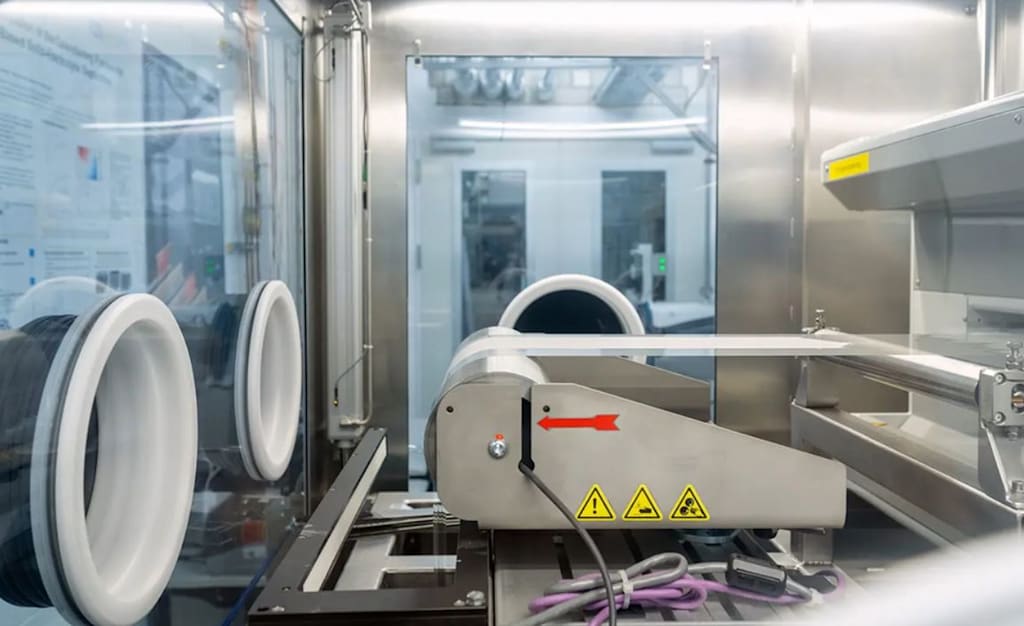
A new study from CirculaTUM, an interdisciplinary research network at the Technical University of Munich, has challenged the way the European Union measures vehicle emissions.
Presented at a press briefing in Munich on September 1, 2026, the study argues that current EU regulations provide an incomplete picture of a vehicle’s environmental impact because they focus almost entirely on tailpipe emissions.
According to the researchers, battery-electric vehicles reduce total life-cycle carbon dioxide emissions by an average of 41 percent compared with combustion-engine vehicles. However, under current European rules, fully electric vehicles are treated as producing zero emissions while driving and are effectively counted as 100 percent climate-neutral.
The difference arises because the EU’s existing framework does not fully account for emissions generated during vehicle production, electricity generation, raw-material processing, or end-of-life recycling.
The researchers say this approach hides major differences between vehicles and fails to recognize decarbonization efforts outside the powertrain itself.
Tailpipe Measurement Leaves Out Major Emissions
EU Regulation 2019/631 measures vehicle CO₂ emissions primarily through tailpipe testing. Under this method, a battery-electric vehicle produces no exhaust emissions while being driven, while a petrol or diesel vehicle produces measurable emissions.
However, a vehicle’s climate impact begins long before it reaches the road. Mining and processing raw materials, manufacturing steel and batteries, transporting components, assembling the vehicle, producing electricity, and recycling the car all generate emissions.
The CirculaTUM study examined the full life cycle of vehicles, from production and use through disposal. It drew on 19 studies and 47 modeled scenarios, making it one of the most extensive analyses of automotive climate emissions to date.
The findings show that the environmental advantage of electric vehicles varies considerably depending on factors such as manufacturing methods, battery production, electricity sources, vehicle size, driving patterns, and recycling performance.
Across the analyzed scenarios, battery-electric vehicles reduced life-cycle emissions by an average of 41 percent in approximately 92 percent of cases. However, the range extended from an 89 percent reduction to an increase of up to 21 percent compared with combustion vehicles. This variation is obscured by tailpipe-only accounting.
An electric vehicle produced using carbon-intensive electricity and emissions-heavy materials may have a very different environmental profile from one manufactured with low-carbon steel, cleaner battery production, renewable electricity, and effective recycling systems.
Other Decarbonization Efforts Go Unrecognized
The researchers argue that the current system also fails to reward manufacturers and suppliers for reducing emissions in areas beyond the vehicle’s powertrain.
For example, a manufacturer may use nearly carbon-neutral steel, a battery supplier may reduce emissions from cell production, or a recycling company may recover critical raw materials for reuse. Under the current system, these achievements may not improve the manufacturer’s official vehicle-emissions figure. As a result, companies have little regulatory incentive to invest in these measures at scale.
Professor Johannes Fottner of TUM said that the central problem is the European Commission’s exclusive focus on tailpipe emissions. Treating battery-electric vehicles as climate-neutral, he argued, overlooks the broader efforts required to reduce emissions across the automotive industry.
The researchers believe that regulation should recognize every verifiable reduction in fossil-carbon emissions, regardless of whether the reduction occurs during material production, vehicle assembly, operation, or recycling.
Concerns Over the EU’s 2030 Target
The study also raises concerns about the EU’s ability to meet its own climate targets. One of the studies reviewed by CirculaTUM, conducted by Tang and colleagues in 2023, estimates that the passenger-car sector could deliver only approximately 80 million tons of CO₂ reductions by 2030 under the electric-vehicle adoption rate targeted by the EU.
That figure would fall significantly short of the estimated 188 million tons of reductions required to meet the bloc’s target. The researchers suggest that the gap could exceed 100 million tons. They also expect combustion-engine vehicles to remain dominant in the overall vehicle fleet, accounting for approximately 78 percent of vehicles in 2030.
This projection suggests that the EU cannot rely solely on the growth of battery-electric vehicles to achieve its climate goals. Reducing emissions from manufacturing, improving the efficiency of the existing fleet, expanding low-carbon fuels, and increasing recycling could also be necessary.
Proposed Automotive Package May Not Be Enough
The European Commission included a reform of Regulation 2019/631 in its Automotive Package, presented in December 2025. A vote in the European Parliament is currently scheduled for November 23, 2026.
The proposed package includes credits related to steel and fuels. However, the CirculaTUM study concludes that these measures could cover no more than 10 percent of a manufacturer’s required CO₂ reduction.
According to the researchers, the proposed changes would therefore not close the gap between the EU’s climate ambitions and the emissions reductions likely to be achieved under current policies. They are calling for the introduction of a mandatory life-cycle-based standard alongside the proposed reforms.
Such a system would require emissions to be measured throughout a vehicle’s life rather than only at the exhaust pipe. It would also need credible verification methods to prevent exaggerated environmental claims and ensure that emissions reductions are real.
Life-Cycle Accounting Is Already Used in Europe
Professor Magnus Fröhling, from TUM’s Chair of Circular Economy and Sustainability Assessment, said that life-cycle assessment is not entirely new to European regulation.
Existing examples include the Ecodesign Regulation and the Carbon Border Adjustment Mechanism. These policies demonstrate that environmental impacts can be evaluated across production and supply chains. The challenge is to create a system that is accurate, transparent, and practical for manufacturers and regulators.
The researchers recommend a performance-based approach in which every ton of fossil carbon demonstrably avoided receives equal recognition, regardless of where the reduction occurs in the vehicle’s life cycle.
They identify steel as a suitable starting point because its emissions data are already relatively reliable and traceable. Improvements in steel production could therefore be measured and credited more easily than reductions in some other parts of the supply chain.
Supply Chains and Recycling Matter
Professor Fottner emphasized that progress is already being made in the development of traceable supply chains for low-carbon steel and in the recovery of materials from end-of-life vehicles.
However, current vehicle-emissions rules do not recognize these improvements. The researchers argue that failing to reward such progress may discourage companies from making further investments.
This is particularly important as the automotive industry becomes more dependent on materials such as lithium, nickel, cobalt, copper, and rare-earth elements. Recovering these materials can reduce the need for new mining and lower the environmental impact of future vehicle production. Improved tracking would also make it easier to verify whether manufacturers and suppliers are achieving the reductions they claim.
Political Debate Ahead
TUM President Professor Thomas F. Hofmann called on the European Parliament and the Council to introduce mandatory and verified life-cycle reporting during the revision of the Automotive Package.
He argued that the EU’s climate strategy cannot rely solely on tailpipe measurements if it intends to meet its own targets. In his view, scientific findings should play a central role in the upcoming legislative debate.
Professor Tim Büthe of TUM’s Chair of International Relations offered a more political perspective. He suggested that the main disagreement in the European Parliament may not be whether vehicle life cycles should be included in regulation, but how mandatory the system should be.
That distinction could be important in the coming months. A flexible reporting system may attract broader political support, while a strictly binding standard could deliver stronger emissions reductions but face greater resistance from industry and policymakers.
Toward More Complete Carbon Accounting
The CirculaTUM study does not argue that battery-electric vehicles are environmentally inferior to combustion vehicles in general. Instead, it demonstrates that their benefits vary and cannot be accurately described using tailpipe emissions alone.
A vehicle’s environmental performance depends on the entire system behind it: the materials used, the energy consumed during production, the source of electricity, the efficiency of the vehicle, the durability of its components, and the effectiveness of recycling. The researchers therefore support a life-cycle-based standard that recognizes all verified reductions in fossil-carbon emissions.
Such a system could encourage manufacturers to invest not only in electric powertrains but also in low-carbon steel, cleaner batteries, renewable energy, efficient production, durable components, and circular supply chains.
The debate comes at a crucial time for Europe’s automotive industry. With the 2030 climate targets approaching and the future of the sector under political discussion, the EU must decide whether its regulations should continue to focus on a vehicle’s exhaust or expand to reflect its complete environmental footprint.
According to the TUM researchers, accurate accounting is not merely a technical issue. It will determine which technologies receive investment, which industrial strategies succeed, and whether Europe can make meaningful progress toward its climate goals.
About the Creator
Mark Lim
Hi I am mark an automotive student and a car, tech and food enthusiast ! Im gonna try and post daily & hope you enjoy what I write and do share my page with people you know. I would gladly appreciate it! Cheers
Enjoyed the story? Support the Creator.
Subscribe for free to receive all their stories in your feed.
Comments
There are no comments for this story
Be the first to respond and start the conversation.