
The Tanjung Malim Question Mark: MITI Confirms No Official Word from BYD on Planned EV Plant
The Minister of Investment, Trade and Industry emphasizes that any decision to proceed, defer, or revise the investment is a commercial decision for the company.

Tanjung Malim, a small town in the state of Perak, has been the focus of Malaysia's electric vehicle (EV) aspirations for the past year. The planned investment by Chinese EV giant BYD to establish a completely knocked down (CKD) assembly plant there was widely seen as a cornerstone of Malaysia's vision to become a regional EV manufacturing hub. However, the much-anticipated project is now shrouded in silence.
Official Confirmation: The Wait Continues
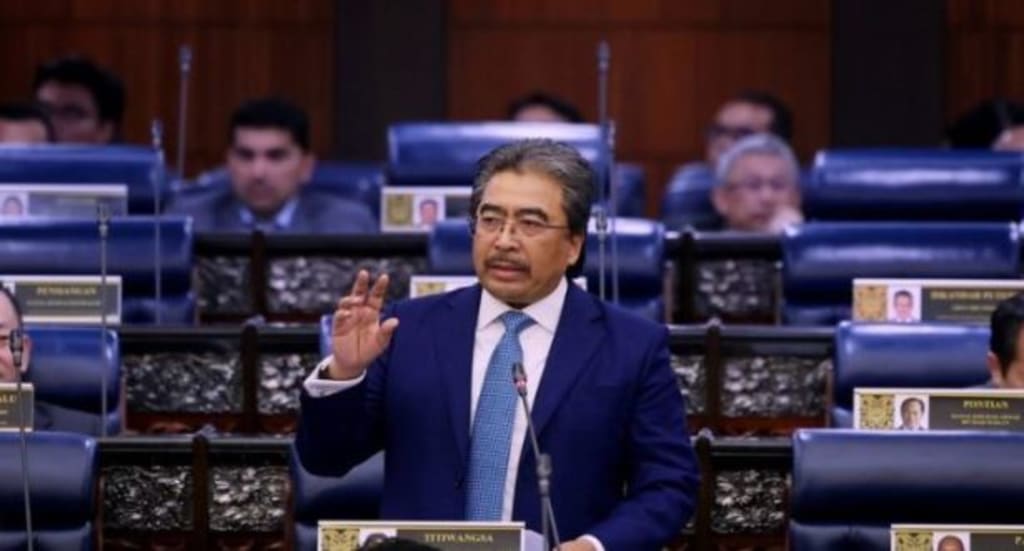
The Minister of Investment, Trade and Industry (MITI), Datuk Seri Johari Abdul Ghani, has clarified in the Dewan Negara (Senate) that the ministry has not received any formal notification from BYD regarding its investment plans in Tanjung Malim.
"Any decision to proceed with, defer, or revise its investment plans is a commercial decision for the company," Johari stated in response to a query from Senator Tan Sri Liew Vui Keong. Liew had sought an update on the status of BYD's proposed assembly plant and a list of manufacturers that have already made physical investments in Malaysia.
This statement confirms that the project's fate remains undecided, with no clear timeline, production plans, or location details having been officially communicated since the initial announcement in August 2025.
Policy Incentives and Commercial Considerations
Despite the uncertainty surrounding BYD's investment, the government's policy direction to encourage local EV assembly remains unchanged. Johari emphasized that the government continues to promote CKD assembly by offering incentives.
Currently, CKD EVs are eligible for 100% exemption on import duty, excise duty, and sales tax, a measure effective until December 31, 2027. However, he also cautioned that eligibility for these incentives is subject to compliance with the Customs Regulations 1988 and other conditions imposed by the government.
A Robust Local Assembly Base
In his response, Johari also highlighted the existing strength of Malaysia's automotive assembly and manufacturing base. In addition to Proton and Perodua, several international OEMs have established assembly facilities in the country, including:
Honda Malaysia Sdn Bhd (Melaka)
Assembly Services Sdn Bhd (Toyota, Selangor)
Volvo Car Manufacturing Malaysia Sdn Bhd (Selangor)
Tan Chong Motor Assemblies Sdn Bhd (Kuala Lumpur and Selangor)
Chery Corporate Malaysia Sdn Bhd (Selangor)
Stellantis Malaysia Sdn Bhd (Kedah)
Beyond these, Malaysia also has several third-party contract assemblers, including:
Inokom Corporation Sdn Bhd (Kedah)
Automotive Manufacturers (Malaysia) Sdn Bhd (Pahang)
Berjaya Assembly Sdn Bhd (Johor)
EP Manufacturing Bhd (Melaka)
"The list demonstrates that Malaysia has a strong automotive assembly and manufacturing base comprising national carmakers, international manufacturers, and third-party contract assemblers," Johari stated.
New Developments in the Supply Chain
Alongside the official statement, market observers have noted potentially significant developments. It has been reported that a BYD management team was recently photographed at the Inokom factory in Kulim, Kedah. This has fueled speculation that BYD might be shifting its strategy to collaborate with Inokom for CKD assembly.
If this proves to be the case, it would represent a major change to the original Tanjung Malim project. For BYD, partnering with a third-party assembler like Inokom could be a faster and more efficient way to enter the Malaysian market with locally assembled vehicles and benefit from the available tax incentives.
Uncertainty and Opportunity
While the future of the BYD Tanjung Malim project remains uncertain, the momentum of Malaysia's EV industry has not waned. The government continues to support local assembly through CKD incentives, and the country's robust industrial base provides an attractive entry point for new investors.
Johari emphasized that the government would continue to monitor the utilization of existing production capacity and ensure that every new investment contributes meaningfully to higher domestic value-added, the development of local vendors, technology transfer, the creation of high-skilled jobs, and stronger export activities.
For BYD, Malaysia remains an attractive market. The country's growing EV demand, supportive government policies, and strategic position as a gateway to the ASEAN market make it an important investment destination. However, the company's final decision will likely depend on balancing the government's localization requirements with its own commercial considerations.
The circus of Malaysia's automotive industry is always evolving. The BYD Tanjung Malim project may not be finalized yet, but this show is far from over.
About the Creator
Mark Lim
Hi I am mark an automotive student and a car, tech and food enthusiast ! Im gonna try and post daily & hope you enjoy what I write and do share my page with people you know. I would gladly appreciate it! Cheers
Enjoyed the story? Support the Creator.
Subscribe for free to receive all their stories in your feed.
Comments
There are no comments for this story
Be the first to respond and start the conversation.