
The Tactile Rebellion: Why Drivers Are Pushing Back Against All-Touchscreen Car Dashboards
Recent global research and updated 2026 safety standards highlight a growing consensus: while screens excel at complex tasks, physical buttons remain indispensable for safety, muscle memory, and everyday driving ergonomics.

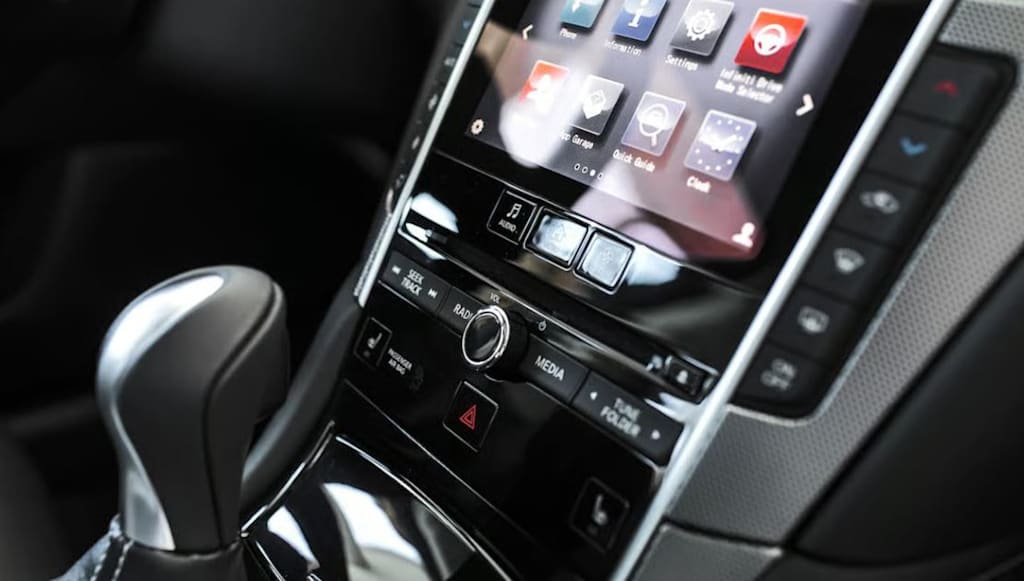
Once upon a time, adjusting the air-conditioning or changing the radio station meant blindly reaching for a familiar knob or pressing a tactile button. Today, in many modern vehicles, that same simple task requires navigating a labyrinth of touchscreen menus, hunting for the right icon, and taking your eyes off the road. While the sleek, minimalist dashboard has become a hallmark of contemporary automotive design, a growing body of evidence suggests that drivers are not quite ready to surrender the humble physical button.
The Data: Real-World Preferences Defy the Digital Trend
A comprehensive study published in July, which analyzed 669,493 real-world journeys across 79 countries, revealed a striking disconnect between automaker design trends and actual driver behavior. The research found that drivers interacted with physical controls far more frequently than with touchscreens. Physical buttons and knobs were used roughly once every 6.5 minutes, compared to touchscreen interactions, which occurred only about once every 10 minutes. Voice controls, often touted as the ultimate hands-free solution, lagged significantly behind, averaging just one interaction every 100 minutes.
This preference for tactile feedback was particularly pronounced in specific regions. Across East and Southeast Asia, more than two-thirds of recorded interaction sequences involved physical controls, compared to just 36.5% involving touchscreens. While researchers noted that the two types of controls do not always perform identical functions, making it an imperfect apples-to-apples comparison, the overarching conclusion was clear: physical buttons remain a vital, heavily relied-upon component of everyday driving and should retain a central role for frequently used functions.
The Cognitive Cost of the Tap
Adding weight to these findings, another study published in August directly compared driver performance when using touchscreen versus physical controls. The results were unequivocal: for tasks requiring more than a single interaction, touchscreens resulted in poorer overall task completion and degraded driving performance. Furthermore, touchscreens were associated with significantly greater cognitive and visual distraction, regardless of how many steps the task involved.
The distinction lies in human ergonomics and muscle memory. Operating a touchscreen almost always requires a driver to visually confirm the location of a virtual button before tapping it. In contrast, a familiar physical knob, switch, or button can be located and operated entirely by touch, allowing the driver to maintain focus on the road ahead.
This does not mean that every touchscreen is inherently unsafe, nor does it suggest that dashboards should regress to the cluttered, button-heavy designs of decades past. Screens are undeniably superior for information-dense tasks such as navigation, entertainment management, reversing cameras, and accessing infrequently used vehicle settings. The critical question is whether basic, time-sensitive controls such as windscreen wipers, hazard lights, or headlights should be buried within nested digital menus.
Regulatory Pushback: The Euro NCAP 2026 Standard
Recognizing this safety dilemma, regulatory bodies are stepping in to curb the excesses of digital minimalism. Euro NCAP, the independent European vehicle-safety assessment organization whose ratings heavily influence global car design, has taken a firm stance. Under its revised 2026 assessment programme, manufacturers are strongly encouraged to provide dedicated physical controls for critical, time-sensitive functions. These include signal lights, hazard lights, the horn, windscreen wipers, and headlights. Alternatively, if these functions are digital, they must occupy a permanently accessible, single-touch area of the display, bypassing complex menu structures entirely. This regulatory shift signals to the global automotive industry that safety must not be sacrificed at the altar of aesthetic minimalism.
The Malaysian Market’s Hybrid Approach
Closer to home, automakers are already adopting varied, pragmatic approaches to this design challenge, reflecting a local cultural preference for tactile feedback often summarized by the Malaysian phrase “suka tekan butang” (liking to press buttons).
For instance, the Proton e.MAS 7 integrates functions like air-conditioning temperature, drive modes, and driver-assistance settings within its central touchscreen. However, it thoughtfully retains a large, physical volume knob and four dedicated physical climate-control buttons for immediate access. Similarly, the 2025 Proton X50 keeps physical buttons for essential functions like the front demister and basic air-conditioning, while shifting more complex climate controls and drive-mode selections to the screen. Meanwhile, models like the Perodua Ativa maintain dedicated physical air-conditioning dials and door-lock buttons, illustrating the wide spectrum of dashboard design philosophies currently competing in the Malaysian market.
The Future of the Dashboard: A Balanced Compromise
Will touchscreens eventually disappear from cars? Highly unlikely. The trajectory of automotive design points not toward a regression, but toward a sophisticated compromise. The dashboard of the future will likely feature high-resolution screens for information-heavy, infrequent, or complex features, seamlessly complemented by dedicated, tactile controls for the functions drivers use most often and need to access instantly.
Ultimately, this balanced approach may not be a technological step backward at all. True innovation in user interface design does not mean forcing humans to adapt to machines; it means designing machines that intuitively accommodate human behavior. And sometimes, the most useful, safest, and most elegant innovation is simply a button you can find with your eyes closed.
About the Creator
Mark Lim
Hi I am mark an automotive student and a car, tech and food enthusiast ! Im gonna try and post daily & hope you enjoy what I write and do share my page with people you know. I would gladly appreciate it! Cheers
Enjoyed the story? Support the Creator.
Subscribe for free to receive all their stories in your feed.
Comments
There are no comments for this story
Be the first to respond and start the conversation.