
The Symphony of Systems: A Guide to Motor Vehicle Components
Every time you turn the key, press the accelerator, or steer around a corner, you are relying on thousands of components working together in perfect harmony.

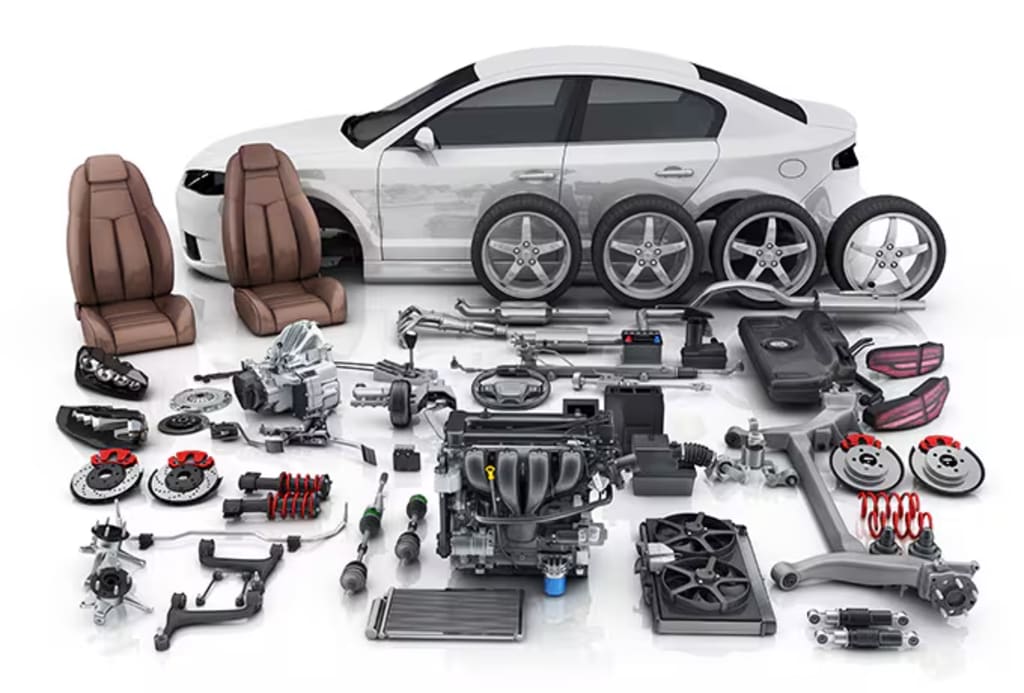
Every time you turn the key, press the accelerator, or steer around a corner, you are relying on thousands of components working together in perfect harmony. Most drivers never think about these parts until something breaks. Understanding the basic components of a motor vehicle is not just for mechanics. It helps you make informed decisions about maintenance, repairs, and even which car to buy. This guide explores the major systems that make a car move, stop, steer, and keep you comfortable.
The Engine: The Heart of the Vehicle
The engine is the power source. It converts fuel whether petrol, diesel, or electricity into mechanical energy that turns the wheels. While modern engines are incredibly complex, the basic principles remain the same.
In an internal combustion engine, cylinders and pistons form the core of the operation. The cylinders are chambers where fuel and air mix and burn, while pistons move up and down inside them, converting the force of combustion into motion. Spark plugs ignite the fuel-air mixture in petrol engines, though diesel engines use compression ignition instead. Valves control the flow of fuel and air into the cylinders and the exit of combustion gases, opening and closing thousands of times per minute. The crankshaft converts the up-and-down motion of the pistons into rotational motion that eventually turns the wheels, while the camshaft controls when the valves open and close, a timing process critical to engine performance. The timing belt or chain synchronizes the crankshaft and camshaft; if this component breaks, the engine can destroy itself. The oil pan holds the engine oil that lubricates all moving parts, making it one of the most important fluid reservoirs in the vehicle.
Electric vehicles operate on a different principle but achieve the same result. An electric motor converts electrical energy from the battery into rotational motion, and because this design has far fewer moving parts than an internal combustion engine, it is simpler and often more reliable. The traction battery pack stores the electricity that powers the motor and is usually located under the floor of the vehicle. A power inverter converts DC electricity from the battery to AC electricity for the motor, and a charge port provides the socket where you plug in to recharge the battery.
The Drivetrain: Transferring Power to the Wheels
The engine creates power, but the drivetrain delivers it to the wheels. This system includes several components that work together to get you moving.
The transmission changes the ratio between engine speed and wheel speed. It allows the engine to spin faster at low speeds for acceleration and slower at high speeds for fuel efficiency. Manual transmissions require the driver to shift gears, while automatic transmissions do this automatically. Continuously variable transmissions, or CVTs, use belts and pulleys instead of gears for seamless acceleration without the sensation of shifting.
The differential splits power between the two wheels on the same axle while allowing them to rotate at different speeds, a feature that is essential for turning corners where the outside wheel travels farther than the inside wheel. Axles are the shafts that connect the differential to the wheels, transmitting rotational force. In rear-wheel-drive and all-wheel-drive vehicles, the driveshaft transmits power from the transmission to the differential, while front-wheel-drive vehicles use a transaxle that combines the transmission and differential in one unit. In four-wheel-drive and all-wheel-drive vehicles, a transfer case distributes power between the front and rear axles, allowing the driver to select different drive modes for varying road conditions.
The Suspension System: Keeping You Comfortable and in Control
The suspension system performs two critical functions. It absorbs bumps in the road to keep passengers comfortable, and it keeps the tires in contact with the road to ensure stable handling.
Shocks and struts dampen the bouncing motion of the springs; without them, a car would bounce uncontrollably after every bump. Springs absorb the energy of road impacts, with coil springs being the most common design, though some vehicles use leaf springs or torsion bars. Control arms link the wheels to the vehicle frame, allowing the wheels to move up and down while keeping them properly aligned. Ball joints act as pivots between the control arms and the wheels, allowing both steering and suspension movement. The stabilizer bar, often called the sway bar, reduces body roll when cornering by connecting the left and right suspension components to keep the vehicle flat in turns. Rubber or polyurethane bushings reduce vibration between metal suspension components, contributing to a quieter, smoother ride.
The Steering System: Pointing Where You Want to Go
The steering system translates your input at the steering wheel into movement of the front wheels. Power steering makes this effort much easier than it was in older cars.
The steering wheel is your primary interface with the steering system. The steering column connects the steering wheel to the steering gear. The steering gear, typically a rack and pinion design, converts the rotational motion of the steering wheel into linear motion that moves the wheels left and right. Tie rods connect the steering gear to the wheels, pushing and pulling to change the wheel angle. The power steering pump provides hydraulic or electric assistance to make steering easier, with electric power steering becoming increasingly common because it is more efficient. The steering knuckle connects the wheel hub to the suspension and steering components, serving as a critical link between systems.
The Brake System: Stopping Safely
Brakes are the most important safety system in any vehicle. They convert motion into heat, slowing the vehicle, and modern cars have brakes on all four wheels.
The brake pedal is your input device; pressing it activates the entire brake system. The brake booster uses engine vacuum or hydraulic pressure to multiply the force of your foot, making braking easier. The master cylinder converts pedal motion into hydraulic pressure, which is then carried through brake lines to the brakes at each wheel. Disc brakes, the most common design on front wheels and increasingly on all four, use a caliper to squeeze a pair of brake pads against a rotating disc called a rotor. The friction slows the wheel. Drum brakes, still found on the rear wheels of some economy cars, use brake shoes that press outward against the inside of a rotating drum. The anti-lock brake system, or ABS, prevents wheels from locking up during hard braking, allowing you to steer while braking by using sensors and a pump to rapidly modulate brake pressure. The parking brake, also known as the emergency brake or handbrake, mechanically engages the rear brakes to hold the vehicle stationary when parked.
The Electrical System: Powering Everything
Modern vehicles are packed with electronics, and the electrical system provides power for everything from the starter motor to the infotainment screen.
The battery stores electrical energy to start the engine and power electronics when the engine is off. The alternator generates electricity while the engine runs, powering the vehicle's electronics and recharging the battery. The starter motor uses electricity from the battery to crank the engine until it starts running on its own. Fuses and relays protect circuits from overload; a blown fuse is often the cause of a non-working component like a radio or power window. The wiring harness is the network of wires that connects all electrical components, and it is the circulatory system of the vehicle's electronics. Electronic control units, or ECUs, are small computers that manage various systems, including the engine, transmission, ABS, airbags, and infotainment. Modern cars have dozens of ECUs. Sensors monitor everything from oxygen content in exhaust to wheel speed to tire pressure, providing data that ECUs use to adjust systems in real time for optimal performance and safety.
The Exhaust System: Managing Gases and Noise
The exhaust system routes harmful gases away from the engine, reduces noise, and treats pollutants before they exit the tailpipe.
The exhaust manifold collects exhaust gases from the engine cylinders and directs them into the exhaust pipe. Oxygen sensors monitor oxygen content in exhaust, and the engine computer uses this data to adjust the fuel mixture for optimal combustion and emissions. The catalytic converter contains precious metals such as platinum, palladium, and rhodium that convert harmful pollutants into less harmful gases. This component is expensive and is often targeted by thieves for its precious metal content. The muffler reduces engine noise using sound-dampening chambers and perforated tubes, while the resonator fine-tunes exhaust sound as an additional noise-control component. The exhaust pipe is the tubing that connects all components and carries gases to the rear of the vehicle. On diesel vehicles, a diesel exhaust fluid system injects a urea-based fluid into the exhaust to reduce nitrogen oxide emissions.
The Cooling System: Preventing Overheating
Engines generate enormous heat, and the cooling system removes this excess heat to keep the engine at its optimal operating temperature.
The radiator is a heat exchanger that transfers heat from coolant to the outside air; air flowing through the radiator fins carries heat away. Coolant, also called antifreeze, is the fluid that circulates through the engine and radiator, typically a mixture of water and ethylene glycol or propylene glycol. The water pump circulates coolant through the engine and radiator. The thermostat regulates coolant flow, staying closed when the engine is cold to allow it to warm up quickly and then opening to allow coolant to flow through the radiator. The cooling fan pulls air through the radiator when the vehicle is stopped or moving slowly, and modern electric fans are controlled by engine temperature sensors. Hoses connect the engine, radiator, and other cooling components, and rubber hoses can crack and leak as they age. The heater core is a small radiator inside the cabin; hot coolant flows through it, and a fan blows air across it to heat the interior of the vehicle.
The Fuel System: Delivering Energy
The fuel system stores fuel and delivers it to the engine in the correct mixture for efficient combustion.
The fuel tank stores the fuel, and modern tanks are typically made of high-density polyethylene to resist corrosion. The fuel pump delivers fuel from the tank to the engine, and in most modern cars, the pump is located inside the fuel tank. The fuel filter removes contaminants from fuel before they reach the engine; a clogged filter can restrict flow and reduce performance. Fuel injectors spray a precise amount of fuel into the engine cylinders, a design called direct injection, or into the intake air stream, known as port injection. The fuel rail distributes fuel to the injectors, and the fuel pressure regulator maintains consistent fuel pressure in the system. The throttle body controls the amount of air entering the engine, and the accelerator pedal is connected to the throttle either by cable or electronically through a drive-by-wire system.
The Exterior and Body Components
Beyond the mechanical systems, the body of the vehicle provides structure, protection, and aerodynamics.
The frame or unibody is the structural foundation. Body-on-frame construction, used for trucks and large SUVs, has a separate frame, while unibody construction, used for most cars and crossovers, integrates the frame into the body panels. Body panels such as doors, the hood, the trunk lid, fenders, the roof, and quarter panels provide shape and protection but are not structural in unibody vehicles. Bumpers absorb impact in low-speed collisions, and modern bumpers are designed to protect pedestrians and reduce repair costs. The windshield and windows are made of laminated glass for the windshield, which stays intact when broken, and tempered glass for side and rear windows, which shatters into small pieces for safety. Lights include headlights for low and high beam, taillights, brake lights, turn signals, reverse lights, and daytime running lights. Modern vehicles increasingly use LEDs for brightness, efficiency, and longevity. The grille allows cooling air to reach the radiator and also provides brand identity through distinctive designs. Aerodynamic components such as spoilers, air dams, and underbody panels reduce drag and improve fuel efficiency, especially at highway speeds.
The Interior and Comfort Systems
These are the components you interact with every time you drive. They make the vehicle usable, comfortable, and safe.
Seats provide support and positioning for occupants, and adjustable seats, heated seats, ventilated seats, and power adjustments are common on modern vehicles. The steering wheel is your primary control interface, and modern steering wheels often integrate controls for audio, cruise control, and driver assistance systems. The instrument cluster displays speed, fuel level, engine temperature, and warning lights, and digital clusters are replacing analog gauges in many vehicles. The infotainment system is the touchscreen interface for navigation, audio, smartphone integration, and vehicle settings. The climate control system includes the heater, air conditioner, vents, and controls, and automatic climate control maintains a set temperature without manual adjustment. The audio system consists of speakers, an amplifier, and a head unit, with premium systems from brands like Bose, Harman Kardon, and Bowers & Wilkins available as options.
Airbags deploy in a collision to protect occupants, and front airbags, side airbags, curtain airbags, and knee airbags provide coverage from multiple angles. Seatbelts are the primary restraint system; pretensioners tighten the belt in a crash, and force limiters allow controlled release to reduce chest injuries. Child safety locks prevent rear doors from being opened from the inside. Power windows and locks use electric motors to operate windows and door locks, and central locking allows the driver to lock or unlock all doors simultaneously with a single action.
Driver Assistance Systems
Modern vehicles are equipped with sensors and cameras that assist the driver and improve safety. These systems are collectively known as Advanced Driver Assistance Systems, or ADAS.
Forward collision warning alerts the driver to an imminent front collision, while automatic emergency braking automatically applies the brakes if the driver does not respond to warnings. Lane departure warning alerts the driver when the vehicle drifts out of its lane without a turn signal, and lane keeping assist gently steers the vehicle back into its lane. Blind spot monitoring alerts the driver to vehicles in the blind spot, and rear cross traffic alert warns of approaching vehicles when backing out of a parking space. Adaptive cruise control maintains a set distance from the vehicle ahead, automatically slowing and accelerating without driver input. The 360-degree camera system combines multiple camera views to show a bird's-eye view of the vehicle, making parking easier, and parking sensors use ultrasonic waves to detect obstacles when parking.
A motor vehicle is an assembly of thousands of components organized into systems. Each system has a specific job, and each component within a system must work correctly for the system to function. Understanding the basics of these systems helps you communicate with mechanics, recognize warning signs, and make informed decisions about maintenance and repairs.
You do not need to be able to rebuild an engine to be a responsible car owner. But knowing the difference between a shock absorber and a strut, or understanding why your transmission fluid needs periodic changes, empowers you to take better care of your vehicle. A well-maintained vehicle is safer, more reliable, and less expensive to own over its lifetime. The next time you turn the key, take a moment to appreciate the thousands of components working together to get you where you need to go. Then check your oil. Your car will thank you.
About the Creator
Mark Lim
Hi I am mark an automotive student and a car, tech and food enthusiast ! Im gonna try and post daily & hope you enjoy what I write and do share my page with people you know. I would gladly appreciate it! Cheers
Enjoyed the story? Support the Creator.
Subscribe for free to receive all their stories in your feed.
Comments
There are no comments for this story
Be the first to respond and start the conversation.