
The Strait of Hormuz Just Became Your Car's Worst Enemy
The Iran war is strangling shipping through one of the world's most critical waterways. Paint thinners are running out. Helium is scarce. And your next car might not be finished on time or might cost a lot more when it is.

You probably don't think about the Strait of Hormuz when you're shopping for a car.
You should.
The Strait of Hormuz is a 21-mile-wide passage of water between Iran and Oman. It's one of the most strategically important waterways on Earth. And right now, it's choking.
The Iran war, the U.S.-Israeli conflict that's been dragging on with no settlement in sight, has throttled shipping through that strait. Traffic has plunged. And suddenly, the global automotive supply chain is in crisis mode again.
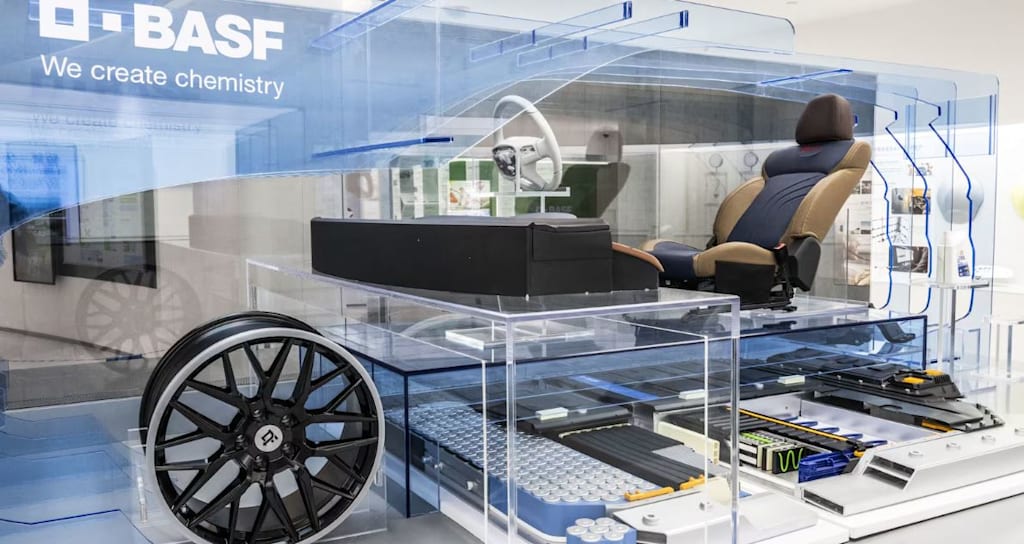
This isn't theoretical. It's happening now. BASF, one of the world's largest suppliers of coatings, plastics, battery materials, and chemicals, just warned that the second half of 2026 is going to be rough for automakers.
The problem: the Strait of Hormuz handles roughly 20% of the world's petroleum liquids, one-third of global helium supplies, and half of all sulfur shipments.
Lose access to that strait, and you lose access to the chemicals that make cars.
What Actually Happens When A Supplier Runs Out
Let me make this concrete.
In April, two months into the war, Toyota's suppliers started warning about delays. Katsumi Saito, president of Toyoda Gosei, specifically mentioned paint thinners.
Paint thinners.
That sounds trivial. That sounds like something you'd pick up at a hardware store and not think twice about.
But Saito made the point clear: "Without them, cars can't be finished."
Think about that. You manufacture a car. You've assembled the engine, the transmission, the frame, and the interior. Everything is ready. The car is 99% done.
Except you can't paint it.
Because the paint thinner that's supposed to come from suppliers relying on materials shipped through the Strait of Hormuz is stuck in a bottleneck. And without paint thinner, the paint doesn't cure properly. The car can't be finished.
So it sits. Unfinished. Unpainted. Waiting.
Multiply that across hundreds of thousands of cars. Multiply it across every supply chain disruption. And suddenly, the entire industry grinds.
The Ripple Effect (And Why It's Getting Worse)
This is a supply chain problem, which means it's invisible until it hits you.
BASF is warning about shortages of key materials like sulfur and helium. Volkswagen Group and Mercedes-Benz are trying to mitigate the damage. But Markus Kamieth, CEO of BASF, is blunt about the reality: "Choke points can be difficult to spot when they start deep in a complex supply chain, particularly with chemicals, metals, and other basic materials."
In other words, you can see a tire shortage coming. You can't see a paint thinner shortage until suddenly there isn't any.
And the timing is terrible. We're in the middle of a down year for auto sales. Inventories are already lean. The industry is already struggling with the transition to electrification. Western automakers are getting crushed by Chinese EV competitors. And now, on top of all that, basic materials are running out.
The China Problem (And Why It Matters For Everyone)
There's another layer to this that makes it worse.
The conflict is creating soaring oil prices. Soaring oil prices are curbing demand for gasoline models in China, the world's biggest new-car market.
For Western automakers like General Motors that lag rivals in electrification, this is catastrophic.
GM can't sell EVs in China because they don't have competitive EV products. They can't sell gasoline cars because oil prices make them unaffordable for Chinese buyers. So they're getting squeezed from both sides.
Meanwhile, Chinese EV makers are eating their lunch.
This is a geopolitical problem disguised as a supply chain problem. The Iran war creates shipping bottlenecks. Shipping bottlenecks create material shortages. Material shortages disrupt production. Meanwhile, oil prices spike. Oil prices kill demand for ICE vehicles. And suddenly, Western automakers who don't have good EV options are in existential trouble.
One Bright Spot (Because We Need It)
In the middle of all this doom, there's one piece of good news:
Novelis, an aluminum supplier, just brought its New York plant back online after multiple fires last year. The plant was making aluminum for Ford's F-Series, the nation's top-selling vehicle.
One production facility coming back online might sound trivial. But when you're dealing with a fractured supply chain, every capacity that comes back online is a relief.
The auto industry is running so lean that one bottleneck can ripple through everything. So one bottleneck being relieved is actually important.
What This Means For You
If you're buying a car in the next six months, understand what's happening in the background.
Manufacturers are rationing materials. They're prioritizing certain models. They're trying to finish cars with whatever materials they can get. And if something goes wrong, if they can't get paint thinner, if helium runs out, if sulfur gets scarce, your car gets delayed.
And delayed cars mean either you wait longer, or you pay more.
The industry is already dealing with inventory issues. The Iran war is making it worse. By the second half of 2026, we'll probably see either longer delivery times or higher prices (or both).
The Bigger Picture
This is what Malaysia's automotive policy discussion is actually about.
When you're trying to build automotive manufacturing capacity, you're not just thinking about assembling cars in your country. You're thinking about resilience. About building supply chains that don't depend on shipping through the Strait of Hormuz. About creating local sourcing for critical materials.
The automakers that survive geopolitical disruption aren't the ones betting on centralized global supply chains. They're the ones with redundancy. With local suppliers. With alternatives.
MITI's debates about Chinese EV companies aren't just about jobs or local content. They're about whether Malaysia can actually control its own automotive supply chain or whether it's just dependent on global disruptions it can't control.
The Strait of Hormuz bottleneck is answering that question in real time.
The Iran war is disrupting shipping through the Strait of Hormuz. The Strait handles 20% of global petroleum, one-third of helium, and half of sulfur. Without these materials, automakers can't finish cars.
BASF is warning of supply disruptions in H2 2026. Toyota suppliers are already reporting delays. Helium and sulfur are running out. Paint thinner is getting scarce.
Meanwhile, soaring oil prices are killing demand for gasoline cars in China, compounding problems for Western automakers already struggling with electrification.
The auto industry is about to get really uncomfortable.
And unless something changes in the Middle East, it's going to stay that way.
About the Creator
Mark Lim
Hi I am mark an automotive student and a car, tech and food enthusiast ! Im gonna try and post daily & hope you enjoy what I write and do share my page with people you know. I would gladly appreciate it! Cheers
Enjoyed the story? Support the Creator.
Subscribe for free to receive all their stories in your feed.
Comments
There are no comments for this story
Be the first to respond and start the conversation.