
The Roar of American Muscle: How Dodge Defines Power, Performance, and Legacy
From the classic Charger and Challenger to modern beasts like the Hellcat, Demon, Super Stock, and RAM TRX discover how Dodge defines raw power, American muscle heritage, and straight-line performance.

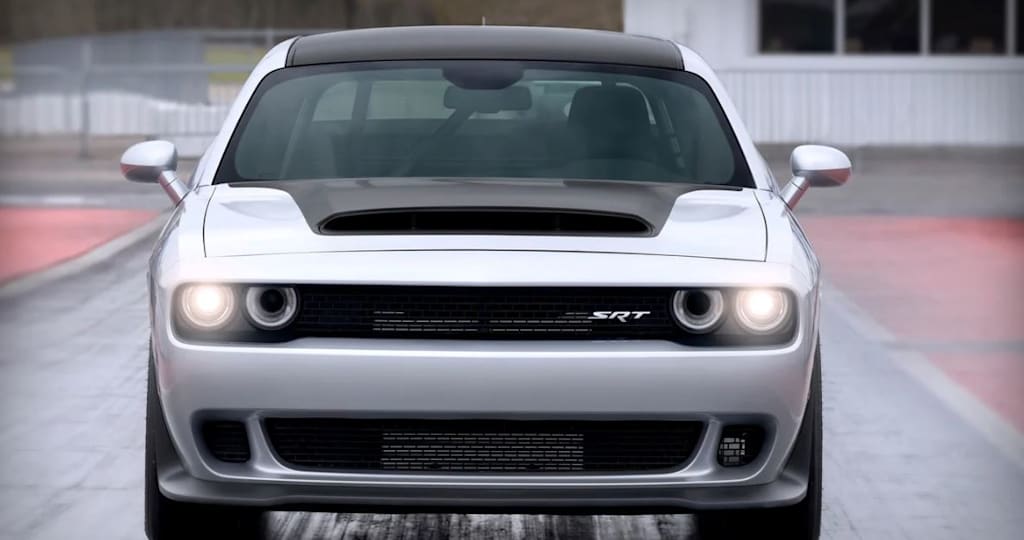
When you think of raw American muscle, one name stands out: Dodge. Known for its high-performance vehicles, aggressive styling, and unapologetic approach to power, Dodge has been a staple of American car culture for over a century. Whether it's the roar of a HEMI V8 or the unmistakable presence of a Charger on the street, Dodge has built a legacy that's impossible to ignore.
There's something primal about the sound of a Dodge V8 firing up. It's not just noise; it's a declaration. A statement that says power matters, that performance is worth pursuing, and that the joy of driving is something worth preserving. In an era where cars are becoming increasingly sanitized, electrified, and homogenized, Dodge remains a defiant outlier a brand that refuses to compromise on the visceral thrill that has defined American muscle for generations.
From Humble Beginnings to Automotive Giants
The story of Dodge begins in 1900, when brothers John and Horace Dodge started out manufacturing automobile parts in Detroit. They were machinists by trade, men who understood the importance of precision engineering and quality craftsmanship. Their parts were so well-made that they caught the attention of Henry Ford himself; the Dodge brothers became major suppliers to Ford, providing engines, transmissions, and axles for Ford's early vehicles.
By 1914, they were producing their own vehicles, quickly gaining a reputation for building reliable, durable cars that could withstand the rigors of the American roads. The Dodge Model 30, introduced that year, was a breakthrough vehicle. It featured an all-steel body, a 12-volt electrical system, and a 35-horsepower engine all innovations that set it apart from the competition.
Their cars were so well-engineered that they became the choice of the U.S. military during World War I, with Dodge vehicles serving as staff cars, ambulances, and supply vehicles. The brand's reputation for durability and reliability was firmly established.
Tragedy struck in 1920 when both Dodge brothers passed away, leaving the company in a state of uncertainty. John Dodge died of complications from pneumonia, and his brother Horace succumbed to liver cirrhosis just months later. The brothers had built an empire together, and their sudden passing left a void that would take years to fill.
However, Dodge persevered, eventually becoming part of Chrysler in 1928, which helped the brand expand its reach and solidify its place in the market. The acquisition brought financial stability and access to Chrysler's engineering resources, allowing Dodge to develop new models and technologies.
From practical sedans to powerful trucks, Dodge became synonymous with American ingenuity and resilience. During the Great Depression and World War II, Dodge continued to produce vehicles, including the iconic Dodge Power Wagon, a rugged military truck that would go on to inspire generations of off-road enthusiasts.
The Birth of Muscle
The 1960s and 70s were a golden era for muscle cars, and Dodge was right at the forefront of it all. The muscle car arms race was in full swing, with American automakers competing to produce the fastest, most powerful cars ever built. The streets became proving grounds, and the quarter-mile became the ultimate test of automotive prowess.
The Charger: A Legend Is Born
The Charger, introduced in 1966, became an instant classic with its sleek fastback design and potent V8 engines. It was a car that commanded attention, with its hidden headlights and distinctive rear taillights creating a silhouette that was unmistakably Dodge. The Charger represented the brand's vision of what a performance car should be: bold, aggressive, and unapologetically powerful.
But it was the 1968 Charger R/T that truly made history, thanks in part to its starring role in the Hollywood classic Bullitt and its unforgettable high-speed chase scene through the streets of San Francisco. The Charger's rivalry with the Mustang in that iconic scene captured the imagination of car enthusiasts everywhere, cementing the Charger's place in automotive folklore.
The second-generation Charger, produced from 1968 to 1970, is widely considered the definitive muscle car design. Its coke-bottle styling, flying buttress roofline, and hidden headlights created a look that was simultaneously aggressive and elegant. Under the hood, buyers could choose from a range of powerful V8s, including the legendary 426 HEMI, which produced 425 horsepower and was capable of quarter-mile times in the low 13-second range.
The Challenger: Dodge Answers the Call
Then came the Challenger in 1970 Dodge's answer to the Ford Mustang and Chevrolet Camaro. With its bold styling and an array of powerful engine options, including the legendary 426 HEMI, the Challenger carved its place in the muscle car hall of fame. It was larger and more luxurious than its competitors, offering a more comfortable ride without sacrificing performance.
The Challenger could be ordered with a wide variety of engine options, from the economical 225-cubic-inch slant-six to the monstrous 426 HEMI. The top-of-the-line Challenger R/T came standard with a 383-cubic-inch V8, but the optional 440 Six-Pack with its three two-barrel carburetors was the engine of choice for serious performance enthusiasts.
Dodge's "go big or go home" attitude resonated with a generation of gearheads hungry for speed and power. The brand had established itself as a purveyor of high-performance vehicles that delivered thrills behind the wheel and street cred beyond it.
The Daytona and Super Bee
The Charger Daytona, introduced in 1969, was a car built for one purpose: winning on the high-banked ovals of NASCAR. With its distinctive nose cone and massive rear wing, the Daytona was an aerodynamic masterpiece. It became the first car to break the 200 mph barrier on a closed course, and it dominated NASCAR racing in the early 1970s.
The Super Bee, introduced in 1968, was Dodge's entry-level muscle car. Based on the Coronet platform, it offered performance at an affordable price. The Super Bee's distinctive "bee" logo and bright yellow paint made it a standout on the streets, and its combination of value and performance made it a popular choice among young enthusiasts.
Dodge in Pop Culture
Over the years, Dodge vehicles have become more than just cars; they've become cultural icons. From the Dodge Charger's starring role in The Fast and the Furious franchise to the Daytona's domination on the NASCAR track, Dodge cars have always had a presence that's larger than life.
Perhaps one of the most recognizable Dodge cars in pop culture is the 1969 Charger, better known as the "General Lee" from The Dukes of Hazzard. Its bright orange paint, signature "01" on the doors, and ability to leap across rivers made it an enduring symbol of American muscle. The show was a phenomenon in the late 1970s and early 1980s, and the General Lee became one of the most famous cars in television history.
The Charger also featured prominently in the Fast and Furious franchise, where it was driven by the character Dom Toretto. The 1970 Dodge Charger R/T became Toretto's signature vehicle, representing his raw power and street credibility. The car's appearances in the films introduced a new generation of fans to the muscle car era, cementing the Charger's status as a cultural icon.
Beyond movies and television, Dodge vehicles have been featured in music, video games, and literature. Songs like "Little Red Corvette" and "Mustang Sally" celebrate the freedom and excitement of driving, while video games like Need for Speed and Forza allow players to experience the thrill of driving high-performance Dodge vehicles from the comfort of their living rooms.
Dodge has also been a fixture in the world of drag racing. The brand's drag racing heritage dates back to the 1960s, with legendary drivers like "Big Daddy" Don Garlits and "The King" Richard Petty piloting Dodge vehicles to victory. More recently, Dodge has dominated the NHRA Funny Car and Pro Stock categories, with teams like Don Schumacher Racing and Tony Stewart Racing campaigning Dodge vehicles on the nation's drag strips.
The Return of Muscle in the Modern Era
After the decline of the muscle car era in the late 1970s due to rising fuel costs and emissions regulations, Dodge made a triumphant return to its roots in the early 2000s. The rebirth of the Charger and Challenger brought muscle cars back to the streets with a modern twist—infusing retro styling with cutting-edge technology and monstrous horsepower.
The modern Charger, introduced in 2006, was a departure from the two-door muscle car of the 1960s and 1970s. It was a four-door sedan, a body style that had previously been the domain of family cars and luxury vehicles. But Dodge managed to imbue the sedan with the spirit of a muscle car, creating a vehicle that was practical and powerful.
The modern Challenger, introduced in 2008, was a faithful retro interpretation of the original 1970 model. Its design was a love letter to the original, with its long hood, short deck, and two-door coupe body. The Challenger's interior was designed to evoke the feel of a 1970s muscle car, with retro gauges and styling cues.
The Hellcat Lineup
Dodge made headlines with the release of the Hellcat lineup in 2015. The Charger and Challenger Hellcat models came equipped with a supercharged 6.2-liter HEMI V8, pumping out an astonishing 707 horsepower. This move cemented Dodge as the king of accessible horsepower, and enthusiasts couldn't get enough.
The Hellcat was a game-changer. It delivered supercar performance at a muscle car price, democratizing speed in a way that no production car had done before. The supercharged V8 produced a distinctive whine that was as recognizable as the roar of the engine itself, creating a symphony of power that announced the Hellcat's presence from blocks away.
The Hellcat name was inspired by the Vought F4U Corsair, a World War II fighter aircraft known for its power and agility. It was a fitting name for a car that delivered fighter-plane performance on the road.
The Hellcat lineup has evolved over the years, with each iteration offering more power and performance. The Hellcat Redeye, introduced in 2019, boosted horsepower to 797. The Super Stock, introduced in 2020, produced 807 horsepower and was specifically designed for drag racing.
The Demon: Pushing the Limits
And if the Hellcat wasn't enough, Dodge went even further with the Demon. The Challenger SRT Demon, introduced in 2018, pushed the limits of what a production car could do, boasting 840 horsepower and the ability to run a quarter-mile in under 10 seconds straight from the factory.
The Demon was, in Dodge's own words, "the world's first production car with a factory warranty that is capable of doing wheelies." It was a car built for the drag strip, with features like a dedicated drag mode, a TransBrake for launching, and a special air conditioning system that chilled the intake air for maximum power.
Only 3,300 Demons were produced, and they sold out almost immediately. The Demon became an instant collector's item, with some examples selling for well over $100,000 at auction.
The Redeye and Super Stock
The Redeye, introduced in 2019, offered a more street-friendly alternative to the Demon. It featured a 797-horsepower version of the supercharged HEMI V8, and it could run a quarter-mile in 10.5 seconds. The Redeye was more livable than the Demon, with a more comfortable suspension and more amenities.
The Super Stock, introduced in 2020, was specifically designed for drag racing. It featured an 807-horsepower V8, a TransBrake, and a differential that was optimized for launching. It could run a quarter-mile in 10.5 seconds, just like the Redeye, but it was more focused on the drag strip.
The Super Stock was not just a Challenger; it was a purpose-built drag racing machine. Its suspension, tires, and transmission were all designed to maximize straight-line performance.
The RAM TRX: Adding a New Dimension
While Dodge is best known for its cars, the brand's influence extends to its truck division. The RAM TRX is the ultimate off-road performance truck, featuring a supercharged 6.2-liter HEMI V8 that produces 702 horsepower and 650 lb-ft of torque. It can accelerate from 0 to 60 mph in 4.5 seconds and can conquer any terrain with its advanced suspension system.
The TRX is built to dominate the desert, with a suspension that can absorb massive bumps and a body that is designed to handle the rigors of off-road driving. It is the most powerful production truck ever built, and it represents Dodge's commitment to performance in every category of vehicle.
The TRX's off-road capabilities are unmatched in the truck world. Its suspension, developed by the same engineers who designed the suspension for the Hellcat, is designed to handle the most extreme off-road conditions. The TRX can jump over dunes, plow through mud, and scale rocky terrain with ease.
Dodge and the Future of Performance
Despite the looming shift toward electric vehicles and stricter regulations, Dodge has made it clear that it's not backing down from its performance roots. The brand recently announced its electric muscle car concept, the Charger Daytona SRT, which aims to blend the soul of traditional muscle cars with modern electric technology.
The Charger Daytona SRT concept, introduced in 2022, features a tri-motor electric powertrain, a 400-volt system, and a "Fratzonic Chambered Exhaust" system that mimics the sound of a HEMI V8. The concept car is designed to be the ultimate electric muscle car, with a sleek, aerodynamic body and distinctive Stellantis styling cues.
The name "Daytona" pays homage to the 1969 Charger Daytona, one of the most iconic aero cars in automotive history. The new concept car features a bold, futuristic interpretation of the original Daytona's design, with a massive rear wing and a dramatic nose section.
While the transition to electric power may seem like a departure from the gas-guzzling beasts Dodge is known for, the brand is committed to keeping the spirit of muscle alive promising thrilling performance, aggressive styling, and that signature Dodge attitude. The Charger Daytona SRT is expected to be the first in a line of electric muscle cars from the brand, representing the future of American performance.
Final Thoughts
Dodge has never been a brand that plays by the rules. From its humble beginnings as a parts supplier to becoming a cultural phenomenon, Dodge has always been about power, performance, and pushing limits. Whether it's the classic roar of a 426 HEMI or the whine of a supercharged Hellcat, Dodge continues to inspire those who crave the thrill of raw American muscle.
In a world where efficiency and practicality often take center stage, Dodge stands as a reminder that sometimes, it's all about the joy of driving and doing it with a whole lot of horsepower. The brand's commitment to performance is unwavering, and its willingness to embrace new technologies while staying true to its heritage is a testament to the resilience of American muscle.
As the automotive industry continues to evolve, Dodge's influence will likely continue to be felt. The brand's focus on performance and innovation ensures that the spirit of American muscle will endure for generations to come.
Dodge has built a legacy that is impossible to ignore. From the streets of Detroit to the drag strips of America, the brand has left an indelible mark on the automotive world. And as it looks to the future, Dodge promises to continue its tradition of creating vehicles that inspire passion, exhilaration, and the unquenchable thirst for speed.
About the Creator
Mark Lim
Hi I am mark an automotive student and a car, tech and food enthusiast ! Im gonna try and post daily & hope you enjoy what I write and do share my page with people you know. I would gladly appreciate it! Cheers
Enjoyed the story? Support the Creator.
Subscribe for free to receive all their stories in your feed.
Comments
There are no comments for this story
Be the first to respond and start the conversation.