
The Most Unreliable European Cars That We'd Still Drive: A Love Letter to Mechanical Masochism
Peak drivers cars

There is a certain breed of car enthusiast for whom reliability is not a virtue but a bore. They do not seek the predictable hum of a Toyota or the steadfastness of a Honda. They seek something else entirely: drama, character, the thrill of not knowing whether the next startup will be accompanied by a check engine light or the sweet symphony of a V10 at full chat. These are the people who look at a list of catastrophic failure points and see not a warning, but a challenge.
This is for them. Here are some of the most notoriously unreliable European cars ever built and why, despite everything, we would still drive every single one of them.
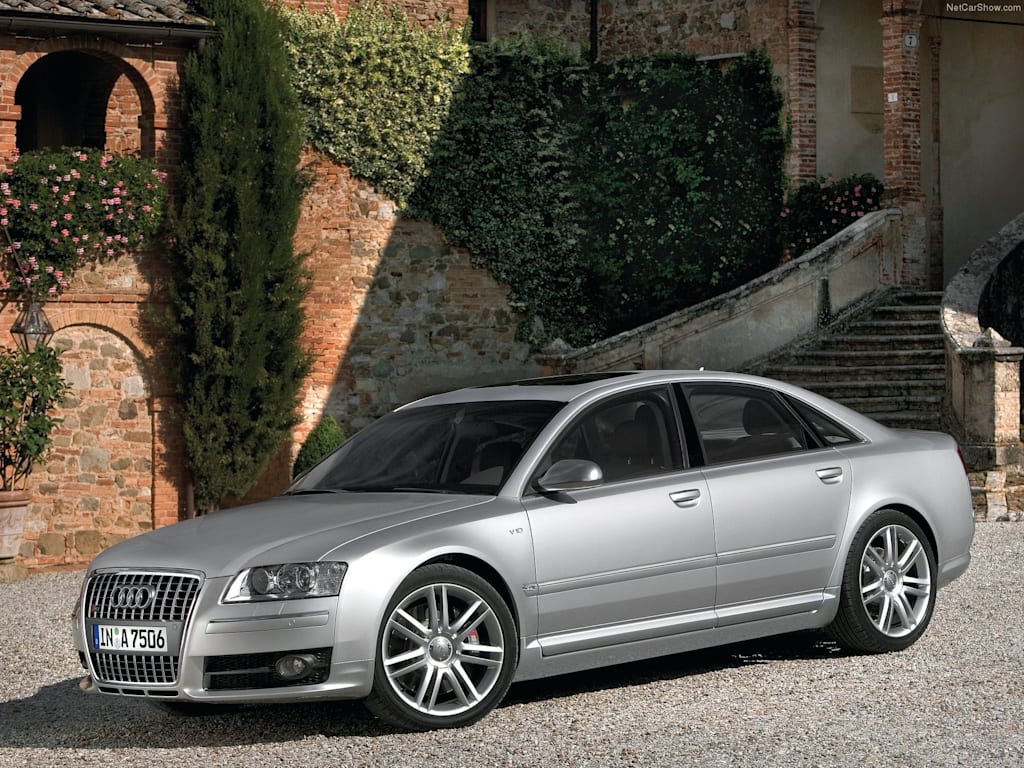
Audi D3 S8: The V10 Sedan That Demands Sacrifice
Ferdinand Piech had an incredible run leading the Volkswagen Group, culminating in an era of legendary machinery. There was the Mk4 Golf R32 with its warbling VR6, the B6 S4 with a high-revving V8, a Passat with a W8, and the Bugatti Veyron with its quad-turbocharged W16. Everywhere you looked, there was something you hadn't seen before.
Not to be left out, Audi engineers decided their flagship S8 needed something larger than its outgoing V8. In went a brand new 5.2-liter FSI V10 . It was a marvel for its time, but two decades later, the big engine and peak luxury have left many owners with enormous repair bills.
The D3 S8 is a conundrum. It rides on an all-aluminum chassis, is adorned with the latest technology of its day, and can rocket its 4,600-pound frame to 60 mph in 5.1 seconds figures that remain respectable even now. You can find these cars for well under $20,000, sometimes nearly half that. There is a reason for the bargain pricing.
The FSI V10 is notoriously difficult to keep healthy. Direct injection leads to carbon buildup that can cause misfires within 30,000 miles of the last cleaning. The intake manifold features active flaps that become brittle from heat and oil exposure, sometimes breaking entirely and requiring replacement of the whole unit. Oil leaks are common at the front and rear main seals, the oil filter housing, and elsewhere and the V10 is so long that reaching many of these points requires removing the engine from the car.
Electronic issues abound. A dead battery can trigger a Component Protection nightmare that only Audi can resolve. Clogged sunroof drains can flood the interior and cause electrical gremlins. The list goes on.
And yet. There isn't another Audi like the D3 S8. A naturally aspirated V10 in a four-door executive sedan? That combination does not exist anymore, and it is unlikely to return. If you can make one right, you will be riding around in something you cannot replicate. For some, that makes all the heartache worth it.
Land Rover Range Rover (L322): The British Masochist's Choice
British cars have long earned their infamous reputation for unreliability. Even when acquired by outside firms, they often find a way to stick to their roots. BMW had a crack at breaking the stigma in the early 1990s when it absorbed the Rover Group, but even after selling Land Rover to Ford, the Bavarians remained involved in developing the next-generation Range Rover.
The L322 was a smash hit upon debut and has since become a cult classic. Its balance of opulent luxury and off-road capability is a benchmark for the segment, and if you can keep one running, they are stunning modes of transportation. But that is a significant "if."
The standard air suspension is notorious for failing in multiple ways: struts, valve blocks, compressors all common failure points. Replacing just a couple of struts and a compressor costs nearly $2,000 in parts before you even pay someone to reprogram the suspension module. Later models can have issues with the electronic parking brake module, another four-figure component.
The engines have their own problems. BMW's M62 V8 was phased out in favor of Jaguar's AJ-series V8s, which offered more power and better reliability but both were plagued with cooling system and timing chain issues. The timing problems require major engine disassembly at high cost. Cooling issues are often discovered only after the engine has already overheated at least once.
And yet. The L322 Range Rover offers a driving experience that few SUVs can match. It is equally at home on a city street or a muddy trail. Its interior is a genuinely pleasant place to spend time. For those willing to do their homework, find a well-cared-for example, and spend time in the forums learning from thousands of dedicated owners, the capability and comfort of the L322 might just be worth the cost.
BMW E60 M5 & E63 M6: The V10 Time Bomb
The E60 M5 and E63 M6 are among the most famous M cars ever to leave Munich. Packed with Formula 1-derived technology and modern luxury comforts, they should have been among the best sports sedans and coupes of their era. Instead, chronic issues with components large and small have plagued nearly every owner, regardless of how well the car was treated.
The defining characteristic is the S85 V10 . A 5.0-liter, naturally aspirated masterpiece that produces 500 horsepower and revs to 8,250 rpm, it won International Engine of the Year awards and was the darling of the motoring press. Fifteen years later, it has become infamous as a time bomb.
The connecting rod bearings are too weak. Owners regularly spin bearings, sending metal bits throughout the oiling system. In a best-case scenario, the bearings can be replaced to the tune of over $10,000. In a worst-case scenario, a new engine is required. Alongside the bearings are the VANOS pumps and high-pressure feed lines, which fail regularly. Throttle actuators are over $650 apiece, and there are two of them.
The SMG-III transmission fitted to most examples is nearly as problematic. Pump failures, pump motor failures, accumulator failures the complex hydraulic system lets the gearbox down at nearly every opportunity. None of the components is inexpensive, and most fixes require opening the gearbox.
And yet. The E60 M5 and E63 M6 represent a peak of BMW M's ambition. A sedan that can carry four adults in comfort while revving past 8,000 rpm to the sound of a naturally aspirated V10 is not something that will ever be built again. There is a healthy aftermarket and plenty of informative forums offering improved parts and years of insight. For those who proceed with caution—and a healthy repair budget the experience can be unforgettable.
Volkswagen Passat W8: The Forgotten Eight
Volkswagen had never put an eight-cylinder in one of its cars before the W8. When it finally did, it dove straight into the deep end with a funky, unique design that is shorter than a traditional V8 and fits under the Passat's hood. With 270 horsepower and 273 lb-ft of torque, the 4.0-liter W8 could push the sedan to 60 mph nearly as quickly as a contemporary Mustang GT. And yes, for a few glorious years, you could get one with a six-speed manual.
The W8's issues are legion. Camshaft adjuster solenoids fail, and the small screens meant to keep debris out break up and become that very debris, clogging oil passages and damaging bearings. The torque converter on automatic-equipped cars is almost guaranteed to fail. Fuel senders are faulty, and the fuel pump control module sits in the spare tire well where water collects, frying the W8-exclusive module. Seat heaters can burn holes through the seats.
And yet. The W8 Passat is as unique as it gets. The engine makes a wonderful noise that balances out its foibles. The B5.5 chassis has aged beautifully, featuring understated but handsome lines, standard bi-xenon headlights, and exclusive wheels. The interior is clad in Nappa leather with wood and chrome trim everywhere. For well under $10,000, few cars can match its uniqueness and cool factor. Just be sure you can take on the challenge.
Volkswagen Phaeton W12: The $100,000 Volkswagen
Ferdinand Piech's upmarket push was championed by an all-new model developed in tandem with the Bentley Continental and Flying Spur, sharing many parts and systems. The Phaeton was as big as a Mercedes S-Class and meant to rival it, too. But a lack of marketing and poor judgment of its segment meant it never sold well—which might be a good thing, as the Phaeton has become synonymous with challenging ownership.
The W12 engine was well-developed and relatively reliable, but the car around it was a technological tour de force that proved too complex for its own good. Hidden vents, a four-zone climate control system, massaging seats, double-pane insulated glass all of it was cutting-edge, and all of it was prone to failure.
The electrical system used more than a handful of different computers to monitor every part of the car. If they did not all see eye to eye, codes would be thrown, rough running was possible, and the vehicle might not start. Transmission issues became common, with slipping in the first three gears being the main complication.
Each Volkswagen dealership was required to have a Phaeton-trained technician, but that did not help much. Cars could be stuck in service for weeks while technicians and VW threw parts at them in hopes of a cure. Parts support has been abysmal, leading the most serious owners to keep multiple parts cars ready to be cannibalized.
And yet. When functioning correctly, the Phaeton is as refined as any luxury sedan of its day, if not more so. The W12 engine is surprisingly robust, and it is not uncommon for them to make it well beyond 100,000 miles with proper care. The Phaeton would be an incredible value for money if modern and proven electronics could replace the old stuff. Someone get working on that.
None of these cars make sense on paper. They are expensive to maintain, prone to failure, and likely to leave you stranded at the least convenient moment. But they are also unique, characterful, and increasingly rare. They represent an era when automakers were willing to take risks to shove V10s into sedans, to develop W8s and W12s, to build Bentleys with Volkswagen badges.
Each of these models is unreliable, but not in any beneficial way. And that is okay. Just because they cause financial and emotional pain does not mean they should not be celebrated. With funky drivetrains and luxurious complexity, they deserve a bit of love. Not too much, though, or you will likely find yourself stranded and moneyless.
Would we drive them? Yes. Every single one. Just... not without a backup plan. And a healthy repair budget. And perhaps a second car for when these inevitably leave you walking.
But the smile they give you, if you can get them right, will be worth the adventure. Or so we tell ourselves, as we wait for the tow truck. Again.
About the Creator
Mark Lim
Hi I am mark an automotive student and a car, tech and food enthusiast ! Im gonna try and post daily & hope you enjoy what I write and do share my page with people you know. I would gladly appreciate it! Cheers
Enjoyed the story? Support the Creator.
Subscribe for free to receive all their stories in your feed.
Comments
There are no comments for this story
Be the first to respond and start the conversation.