
The Man Who Drew the Machines: Remembering Jiro Yamada, Master of the Automotive Cutaway
For decades, his ink-and-airbrush illustrations revealed the hidden beauty inside the world's greatest cars. Now, his legacy lives on.

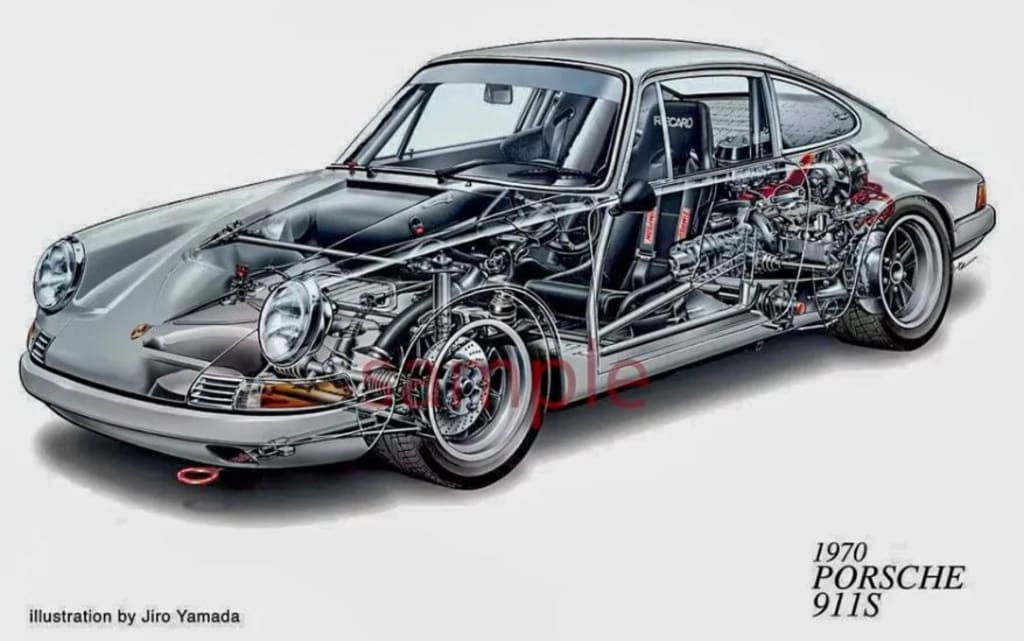
For any car enthusiast who's ever flipped through the pages of Road & Track magazine and other imported car publications back in the day, I'm sure you've probably spent time looking at the awesome automotive cutaway illustrations of Jiro Yamada that accompanied most car reviews and other noteworthy classic vehicle features. Not only did it make the article more engaging to read, but it also served as a primary lesson in automotive engineering. A highly detailed cutaway illustration can ignite the imagination, revealing everything from the engine and transmission to the suspension layout. It offers readers a rare glimpse beneath the bodywork, showing not only how a car is built, but how it actually works.
A Life Devoted to Precision and Beauty
Although Yamada died of pancreatic cancer in August 2025, it was only recently that the automotive world learned of his passing, following a prolonged period out of the public eye and what appears to have been a deliberate effort by his family and perhaps Yamada himself to maintain privacy. The news has been met with an outpouring of tributes from enthusiasts, collectors, and fellow artists who grew up studying his work with the same reverence others might reserve for the cars themselves.
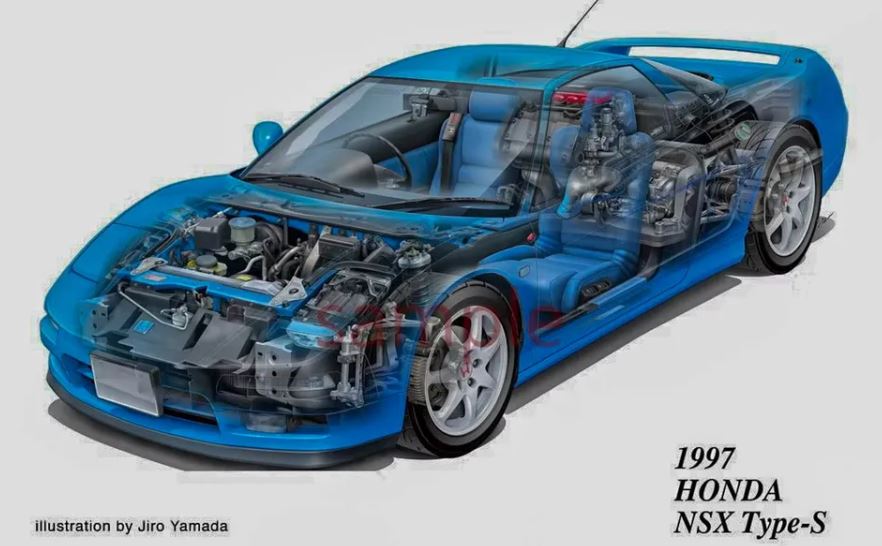
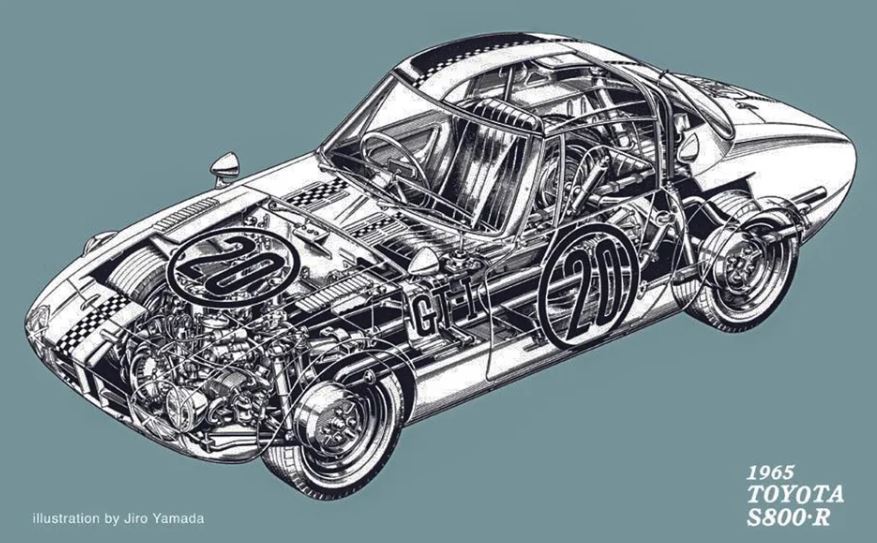
Yamada discovered his talent for blending technical precision with artistic beauty at a young age and began illustrating professionally in 1979. Working in ink and airbrush, he spent countless hours perfecting each drawing. His work became a staple of various car magazines and a favorite among collectors. This brought him widespread recognition, and by the late 1980s, his name appeared in the 1988 Gran Turismo guidebook, where he is credited for the illustrations.
Yamada described his work as an effort to capture both the rationality and beauty of machines, a philosophy shared by fellow hand-drawn cutaway masters David Kimble and Jim Hatch. His approach was meticulous: before drawing a single line, Yamada spent weeks studying photographs, blueprints, and technical manuals, mastering a car's mechanical anatomy before rendering it with remarkable precision in ink and airbrush. His studio was a sanctuary of reference materials, filled with manufacturer schematics, detailed photography, and his own extensive notes on chassis architecture, engine configurations, and drivetrain layouts.
The Transition to Digital
It wasn't until the turn of the century that Yamada transitioned to digital tools. It allowed him to add more to the drawings, sometimes creating layers and full renderings of components that would even be seen in the final product. Yamada shared his digital process using a Porsche 906 as an example. His adoption of digital tools was not a rejection of traditional methods but an expansion of his capabilities, allowing him to achieve levels of detail and complexity that would have been nearly impossible with ink and airbrush alone. He maintained his distinctive aesthetic the interplay of light and shadow, the sense of depth and mechanical logic while embracing the precision that digital tools afforded.
A True Enthusiast
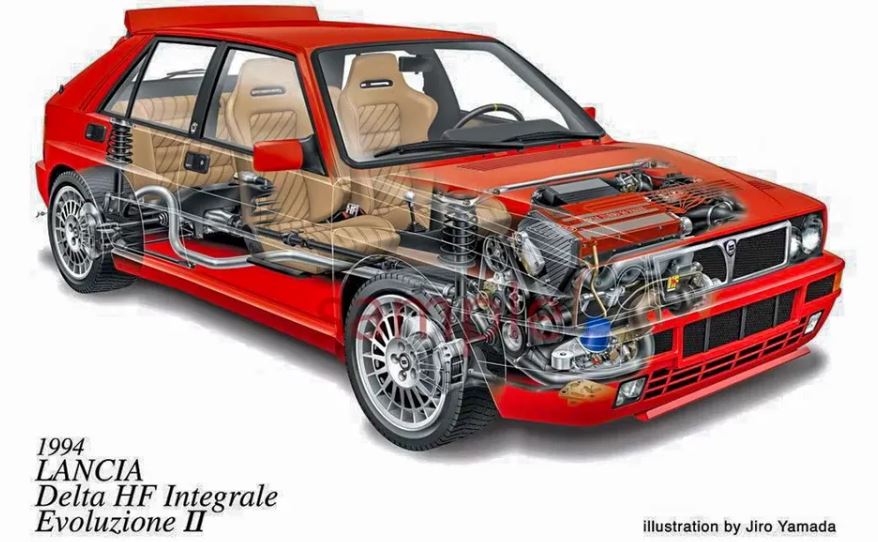
When he wasn't busy at the drawing board, Yamada was a true car enthusiast, favoring cars that embodied mechanical purity and engineering beauty. He had an affinity for lightweight classics like Lotuses, Fiats, rally-bred Lancias, as well as Japanese staples like the Mazda Roadster and Toyota AE86. His personal car collection included a Honda Beat and his beloved Siberia Blue Autozam AZ-1. His passion for these cars was not merely academic; he drove them, maintained them, and understood them in a way that only a true enthusiast could. This firsthand experience informed his illustrations, giving them an authenticity that resonated with readers who shared his love for the machines.
The Enduring Legacy
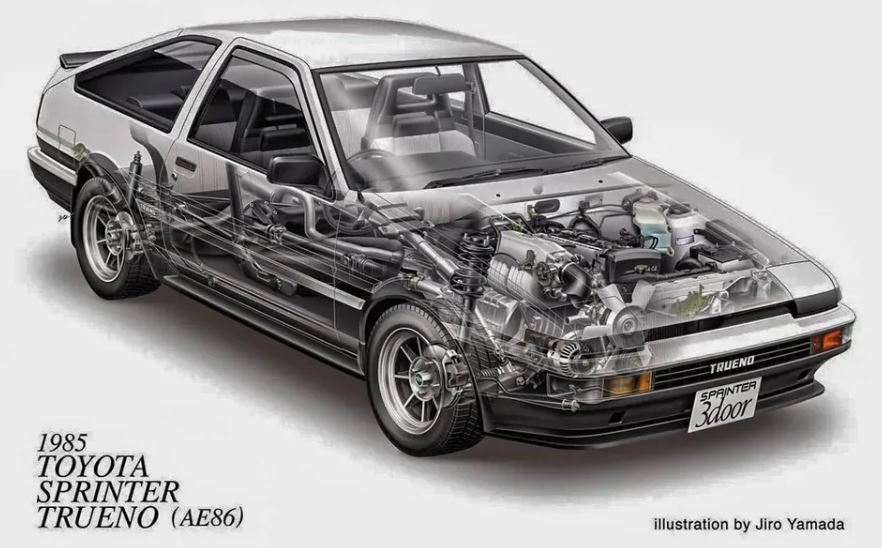
Though Yamada is no longer with us, his work endures. Before his death, he entrusted his archive and legacy to the Museo Della Cinquecento in Nagoya, where enthusiasts can continue to explore his celebrated cutaway illustrations. Those who wish to own one of his cutaways can purchase prints at the official museum store. His archive includes not only his finished illustrations but also his sketches, reference materials, and the digital files that document his creative process. It is a treasure trove for historians and enthusiasts alike, offering insight into the mind of a man who saw beauty in the mechanical.
Combining technical precision with unmistakable artistry, Yamada's work goes beyond mere diagrams to become educational resources and enduring sources of inspiration. He leaves behind a remarkable legacy that will continue to captivate automotive engineers, historians, and enthusiasts for generations to come. His illustrations have been reprinted in books, displayed in museums, and studied by students of automotive design. They are a bridge between the technical and the aesthetic, a reminder that the best engineering is also an art form.
A Quiet Tribute to a Quiet Artist
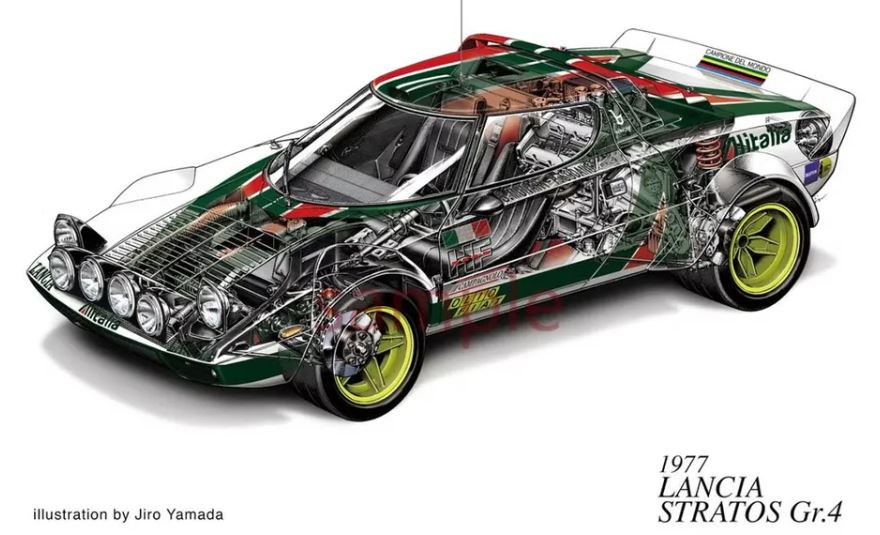
Jiro Yamada was not a man who sought the spotlight. He let his work speak for itself, and it did so with extraordinary eloquence. His passing, though private, has left a void in the automotive community. But the work he left behind those intricate, beautiful cutaways continues to educate and inspire. For anyone who has ever marveled at the hidden architecture of a car, his illustrations are a gift that will endure for generations. As Yamada himself once said, his goal was to capture both the rationality and beauty of machines. In that, he succeeded beyond measure.
About the Creator
Mark Lim
Hi I am mark an automotive student and a car, tech and food enthusiast ! Im gonna try and post daily & hope you enjoy what I write and do share my page with people you know. I would gladly appreciate it! Cheers
Enjoyed the story? Support the Creator.
Subscribe for free to receive all their stories in your feed.
Comments
There are no comments for this story
Be the first to respond and start the conversation.