
The Greenest Car You Can Drive Is the One Already on the Road
There is a quiet irony at the heart of the classic car world that rarely gets acknowledged.

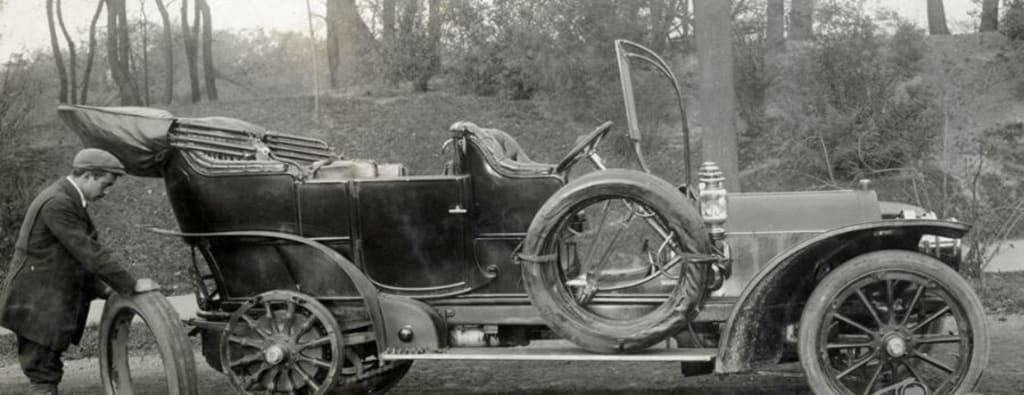
There is a quiet irony at the heart of the classic car world that rarely gets acknowledged. In an era of sustainability targets, carbon calculations, and the relentless push toward new technology, the people spending their weekends in driveways with grease on their hands and a parts catalogue from 1952 may be practising one of the most genuinely sustainable habits going.
The greenest car, as the saying goes, is the one already built.
Manufacturing a new vehicle, any vehicle, electric or otherwise, carries an enormous environmental cost before it turns a single wheel. Steel, aluminium, rubber, rare earth metals, factory energy, shipping logistics: the carbon debt of a new car is substantial, and it takes years of use before the ledger begins to balance. A car that already exists, that has already paid that debt, that simply continues to run, that is, in the most literal sense, a form of preservation.
What the Pre-War World Got Right
The cars that pre-war enthusiasts spend their lives maintaining were built in an era when sustainability was not a philosophy or a marketing position. It was just how things were done. You built something well because it needed to last. You repaired it because replacing it was not a casual option. The culture of disposability that defines so much of modern manufacturing, the assumption that things have a lifespan and then a skip, was not yet the default.
A car from 1930 that is still running in 2025 has survived not through luck alone, but because generations of owners decided it was worth the effort. Worth the sourcing of obscure components. Worth the hours of careful work. Worth passing on to someone who would continue the process. That accumulation of human effort across decades is not separate from the car's value; it is the car's value.
A Love of Mechanics, Not Consumption
What distinguishes the classic car community from most other hobbies is the orientation toward repair rather than replacement. When something fails, the instinct is not to discard but to understand, to find the fault, find the part or make one, and return the thing to working order. This is not nostalgia performing as virtue. It is simply what the hobby requires, and it produces a mindset that runs directly counter to the throwaway culture that surrounds it.
There is something worth sitting with in that contrast. We live in a world of products engineered with planned obsolescence, of devices that cannot be opened and components that cannot be replaced. The pre-war car exists at the opposite end of that spectrum, repairable almost by definition, because it was built before the idea of irreparability had been invented.
Pass It On
On World Environment Day, the reflection is not really about emissions or fuel types or the specific carbon footprint of a 1934 engine. It is about something simpler: the value of keeping good things alive. Of maintaining rather than discarding. Of recognising that quality, craftsmanship, and longevity were once considered ordinary virtues and that the people who still hold them are, in their own quiet way, making a case for a different relationship with the objects we own.
Cherish old, well-made things. Maintain them. Use them. Pass them on.
The car that lasts a century does so because someone, in every generation, decided it was worth the effort. That decision, repeated often enough, is its own kind of answer to the question of what we leave behind.
About the Creator
Mark Lim
Hi I am mark an automotive student and a car, tech and food enthusiast ! Im gonna try and post daily & hope you enjoy what I write and do share my page with people you know. I would gladly appreciate it! Cheers
Enjoyed the story? Support the Creator.
Subscribe for free to receive all their stories in your feed.
Comments
There are no comments for this story
Be the first to respond and start the conversation.