
The Fork in Tech Carmaking: Why “Lead Everything” and “Enable Only” Sit One Accident Apart
Banma, Jiyue, Afeela, Fisker, and Apple hit the same wall. Wenjie’s handover shows why brand control and legal liability cannot stay in separate hands for long.
In 2015, Alibaba and SAIC each put RMB 500 million into Banma Technologies. By 2025, Banma had lost more than RMB 3.6 billion over three years. Its 2025 loss alone was RMB 1.896 billion, including an RMB 1.841 billion impairment on operating-system intellectual property injected in 2020. Jiyue, the Baidu-Geely venture, sold about 14,000 vehicles in the first 11 months of 2024, roughly 1,200 a month. It collapsed in December when funding stopped. Afeela, the Sony Honda Mobility project, reached pre-production at Honda’s Ohio plant and opened showrooms in California. It was terminated in March 2026 with zero customer deliveries. Fisker, which had Magna build the Ocean in Austria, delivered about 4,700 vehicles in 2023 and filed for bankruptcy in 2024. Apple spent ten years and more than $10 billion on Project Titan and shipped no car.
Different countries, contracts, and technologies. One shared endpoint: the party that led the brand and the experience was not the party that carried the production license, the manufacturing assets, and the final recall liability.
Three ways to fail while leading lightly
Banma is still operating, which makes its case easy to miss. The Roewe RX5 gave “internet car” a brief market label. Alibaba became the largest shareholder in 2019. Revenue moved from RMB 872 million in 2023 to RMB 861 million in 2025. R&D spending fell from RMB 1.123 billion to RMB 725 million over the same period, during years when smart-cabin competition demanded the opposite. Nearly 40% of revenue still came from SAIC, and Alibaba’s ecosystem remained a dominant procurement channel. Banma proved that a tech company could define a layer of the car. It did not prove that the layer could become an independent, self-sustaining business while the car brand belonged to someone else.
Jiyue lost funding before it lost a product fight. Baidu supplied technology. Geely supplied manufacturing. Neither was short of resources. Neither treated Jiyue as a core P&L line. Sales stayed near 1,200 vehicles a month. Funding stopped in late 2024. There was no single owner willing to write the next check. The brand was a joint venture. The losses were a joint venture. The obligation to backstop the brand sat in two priority lists and ranked below other items on both. Jiyue ran out of air in a structure where final responsibility had no home.
Afeela pushed the contradiction to its limit. Sony designed the experience. Honda would build the car. The 50-50 venture got as far as pre-production. Then Honda pulled back on its EV strategy, and the project was terminated before the first customer car left the line. Sony had no manufacturing entity and no independent path to build the vehicle. When the manufacturer changed its mind, the experience designer lost the body. Afeela failed on a single point of dependency that the contract could not remove.
The timing gap inside HarmonyOS Smart Mobility
HarmonyOS Smart Mobility went further than any of them. Wenjie reached its one-millionth vehicle in about 46 months, from the SF5’s entry into Huawei stores in 2021 to the milestone in January 2026. That is the strongest evidence the “smart selection” model has produced. The model also carried a split from day one. Huawei led product definition, channels, and sales. The “Huawei-produced” halo traveled with the brand. The automaker held the production license, the plant, and the recall obligation.
The Zunjie V800 brake-pedal incident turned that split into a public ledger entry. In October 2026, a Dongchedi test video showed three Zunjie V800s undergoing 100 km/h-to-zero emergency braking, with the brake-pedal bracket fracturing. JAC Motor’s shares fell by the daily limit. About RMB 6.2 billion of market value was erased that day. The public responses came from JAC and the Zunjie brand. Huawei’s HarmonyOS Smart Mobility response was: “The test was commissioned by JAC Motor.”
That sentence is legally coherent. The manufacturer is JAC. The test was commissioned by the manufacturer. The brand premium and the share-price punishment did not sit in the same place. “Huawei-produced” brought trust into the sale. The stock market’s penalty landed on JAC. In 2024, Huawei had already transferred the “Jie” trademarks to the automakers, citing the regulatory requirement that the brand and the manufacturer be the same entity. The Wenjie trademark went to Seres for RMB 2.5 billion. The trademark transfer acknowledged the legal rule. The Zunjie incident showed the commercial version of the same rule: the party that can be sued is the party that pays.
Wenjie’s graduation
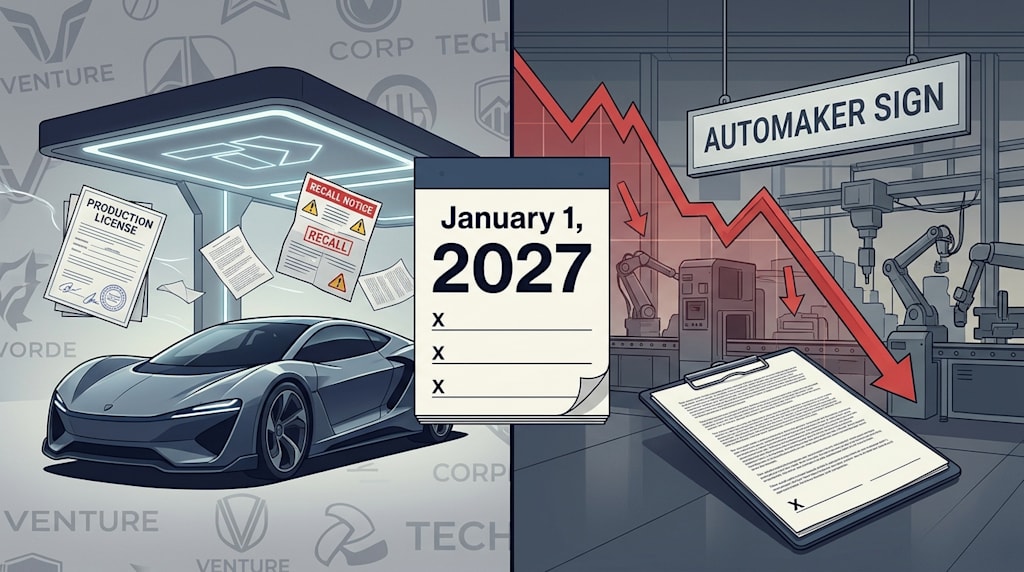
On September 15, 2026, HarmonyOS Smart Mobility and Wenjie announced that product definition, design, brand marketing, channel retail, and service would be led by Seres. Huawei would move to an “enablement” role, asset-light, with the formal handover set for January 1, 2027. Seres shares fell more than 5% that afternoon. The direction did not change.
The P&L explained why the handover was not a free gift. Seres reported RMB 57.49 billion in revenue for the first half of 2026, down 7.87% year on year, and a net loss of RMB 1.717 billion, against a net profit of RMB 2.941 billion in the same period a year earlier. Marketing expenses and store operating costs that Huawei had carried would now enter Seres’s own income statement. Taking back the brand also meant taking back the cost of running it.
That is what an incubator looks like at the end of its term. Huawei pushed Wenjie from a marginal brand to a million-unit run rate. It used channels, brand pull, and product definition to fill gaps Seres could not fill alone. Once Wenjie had independent brand recognition and channel reach, control returned to the company that already held the license, the plant, and the legal liability. Huawei could then shift resources from running one brand end to end toward supplying technology and enablement to several brands. The incubator can build a brand. It cannot permanently hold a brand whose qualification, manufacturing, and legal responsibility sit somewhere else.
Xiaomi’s control group
Xiaomi’s 2025 numbers make the contrast concrete: 411,000 vehicles delivered, RMB 103.3 billion in revenue, RMB 900 million in operating profit, and a 24.3% gross margin. Per vehicle, gross profit was about RMB 63,000. Operating profit was about RMB 6,081. The margin is thin. The structure is simple. Brand, manufacturing, channels, after-sales, and final liability sit in the same legal and financial entity. A recall does not trigger a negotiation between a brand owner and a manufacturer. A marketing bill does not have to be allocated across a partnership. A bad month lands in one P&L.
That model is heavy. It requires capital, factories, and the willingness to absorb ramp-up costs. It also removes the timing gap. There is no “Huawei-produced” halo on one side and a JAC share-price limit-down on the other. There is one company that can be praised, sued, and repriced.
After January 1, 2027
The date to watch is the first working day after the Wenjie handover. After that date, three signatures will matter more than any model description: who signs off product definition for a new Wenjie; whose P&L carries the marketing and store costs; whose name appears on the accident statement when a vehicle is involved in a serious crash.
The cases above end in a sequence of dates, filings, and statements. Banma’s impairment was a date on a financial statement. Jiyue’s collapse was a funding stop. Afeela’s termination was a project cancellation before delivery. Zunjie’s brake-pedal test was a video, a limit-down, and a one-sentence response. Wenjie’s handover is a January 1 switch.
After January 1, 2027, the question is who holds the pen for those three signatures.
About the Creator
Jin
Writer of reamstories
https://reamstories.com/jin
Enjoyed the story? Support the Creator.
Subscribe for free to receive all their stories in your feed. You could also become a paid subscriber, letting them know you appreciate their work.
Comments
There are no comments for this story
Be the first to respond and start the conversation.