
The Engine That Won Everything: Nissan's VQ V6
Sixteen mentions on Ward's 10 Best Engines list. Thirty-plus years in production. One very underrated legacy.


When people talk about legendary engines, the usual suspects show up quickly. Honda's B-series. Toyota's 2JZ. Ford's Coyote V8. General Motors' LS. These are the names that dominate enthusiast conversations, that earn the magazine covers, that get swapped into everything from track cars to pickup trucks by people who want proven, celebrated hardware under the bonnet.
Nissan doesn't usually make that list. And yet, quietly, persistently, and with a level of consistency that most engine families never approach, Nissan built what is statistically the most awarded engine family in automotive history.
It's called the VQ, it's a V6, and it deserves considerably more credit than it typically receives.
Where It Came From
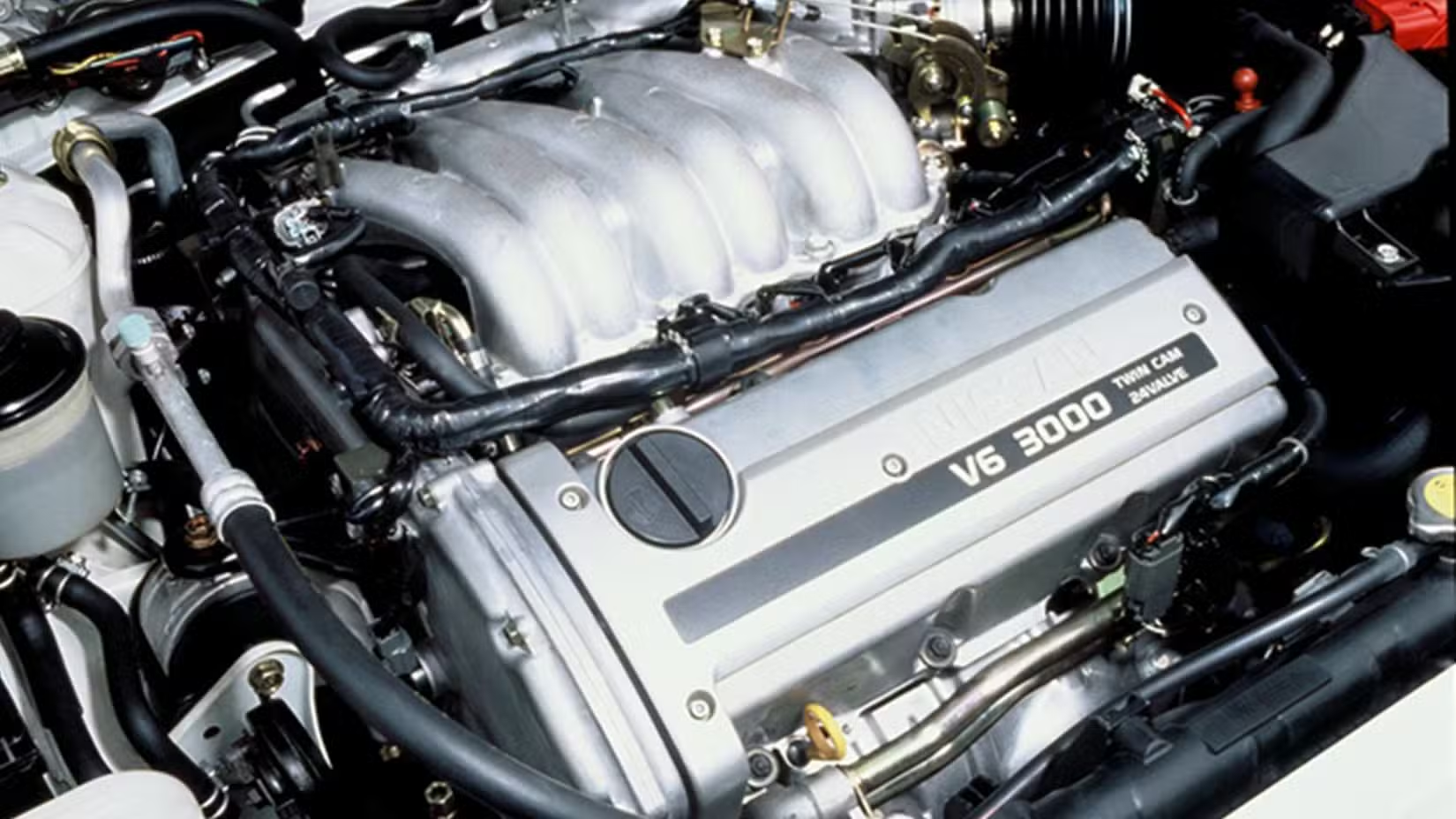
The VQ engine series arrived in the early 1990s as a family of V6s ranging initially from 2.0 to 3.0 litres in displacement. By the time the full family matured, it would span roughly 17 different variations across a displacement range from 2.0 to 4.0 litres each, tuned for different applications, different outputs, and different priorities, but sharing a common architecture and a common reputation for durability.
The engine didn't take long to announce itself. One year after debuting in 1994, the VQ30DE, the 3.0-litre version, earned its first mention on Ward's 10 Best Engines list. That was 1995. The VQ30DE would continue appearing on that list every single year through 2001. Seven consecutive years. Right out of the gate.
That kind of run doesn't happen by accident.
The Streak That Defined a Legacy
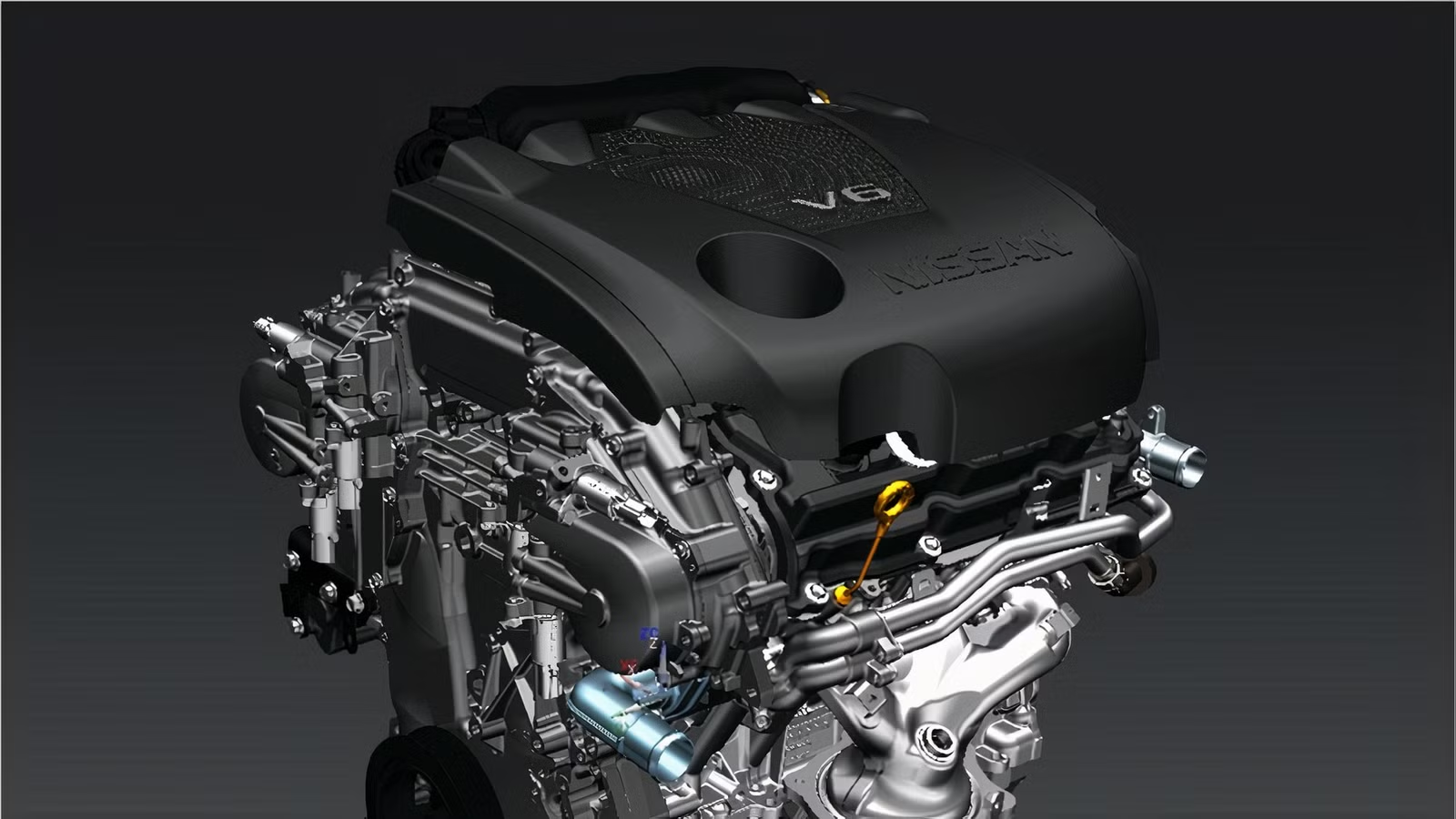
What makes the VQ story genuinely remarkable is the length and consistency of its recognition. After the VQ30DE's seven-year run on Ward's list, the baton passed to the VQ35DE, the 3.5-litre version most famously associated with the Nissan 350Z, which picked up five consecutive mentions from 2002 through 2006. An updated version, the VQ35HR, continued the streak in 2007. The VQ37VHR, featuring variable valve event and lift technology and 330 horsepower, earned recognition in 2008.
Then a hybrid variant won in 2012, and the VQ35DE returned for a final mention in 2016.
The total across all variants: 16 mentions on Ward's 10 Best Engines list. That is the single highest figure achieved by any engine family in the award's history. No other engine family, not Honda's, not Toyota's, not any of the American V8 legends has accumulated that number.
Why It's Actually That Good
Awards are one thing. The engineering behind them is another, and the VQ series earned its reputation through a combination of design decisions that prioritised longevity and performance in equal measure.
All VQ engines use timing chains rather than timing belts. This matters because chains are metal and belts are not. Chains withstand more strain and last longer under normal operating conditions, reducing the risk of the catastrophic failure that a snapped timing belt can cause. The VQ's timing system has a reputation for occasional noise, but not for failure.
The engine block and cylinder heads are aluminium, which keeps weight down, and the bottom end features a bed plate design that provides additional support for the main bearings, a component that takes significant stress during hard use. The oil pan is designed with more baffling than typical engines, which prevents oil starvation under hard acceleration, braking, and cornering. Oil sloshing away from the pickup under those conditions can starve the engine of lubrication and cause catastrophic seizure. The VQ's design specifically addresses that risk.
In the VQ35DE, specifically the 350Z engine, the bottom end features a one-piece forged steel crankshaft and forged connecting rods. Forged components are shaped under pressure from solid metal, which produces a denser, more durable part than cast components made by pouring molten metal into a mould. Combined with low-friction molybdenum-coated pistons, the VQ35DE's internals were built for longevity well beyond typical passenger car requirements.
The Problems It Had and How Nissan Fixed Them
The VQ's history isn't entirely without blemish. Early versions suffered from higher-than-normal oil consumption, caused by a combination of faulty piston rings, elevated crankcase pressure pushing oil past those rings into the combustion chamber, and a PCV system that wasn't adequately equipped to handle the pressure involved.
Nissan identified the causes, redesigned the PCV system, and made modifications to the oil gallery gasket, the component that seals the timing system and prevents oil from leaking back into the pan. These weren't minor cosmetic changes; they were substantive engineering revisions that addressed the root causes rather than the symptoms. The improved versions largely resolved the issue, and the engine's long-term reliability record reflects those corrections.
The Notable Variants Worth Knowing
The VQ35DE is the engine most people associate with the VQ name, and for good reason. In its most potent form, it produced up to 300 horsepower and 274 lb-ft of torque, with a 2005 revision adding variable exhaust valve timing, a higher rev limit, and a revised oil pump with improved flow rate. In the 350Z, it turned a relatively affordable sports car into a genuine driver's machine, and its tunability made it a favourite in the enthusiast community.
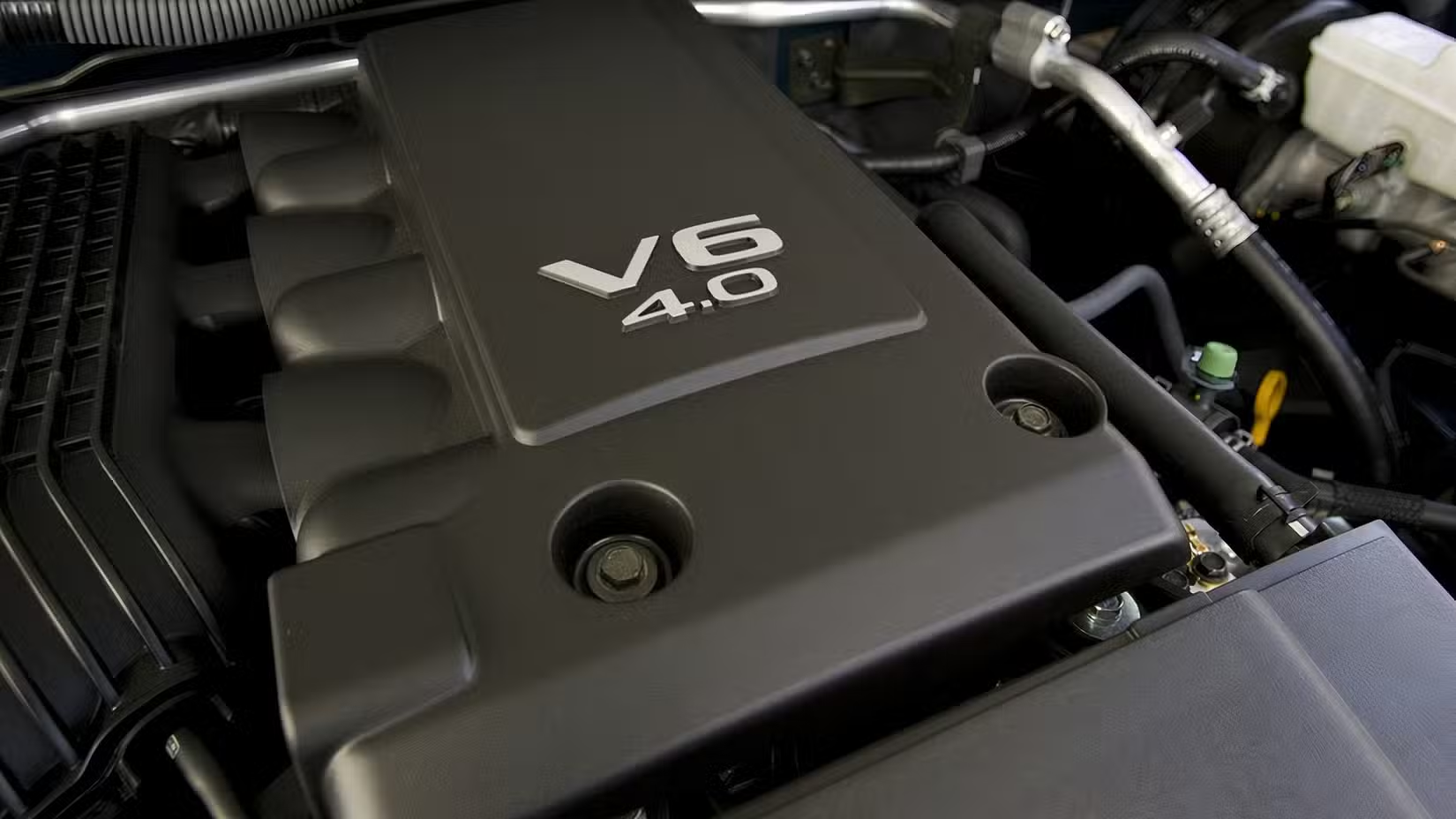
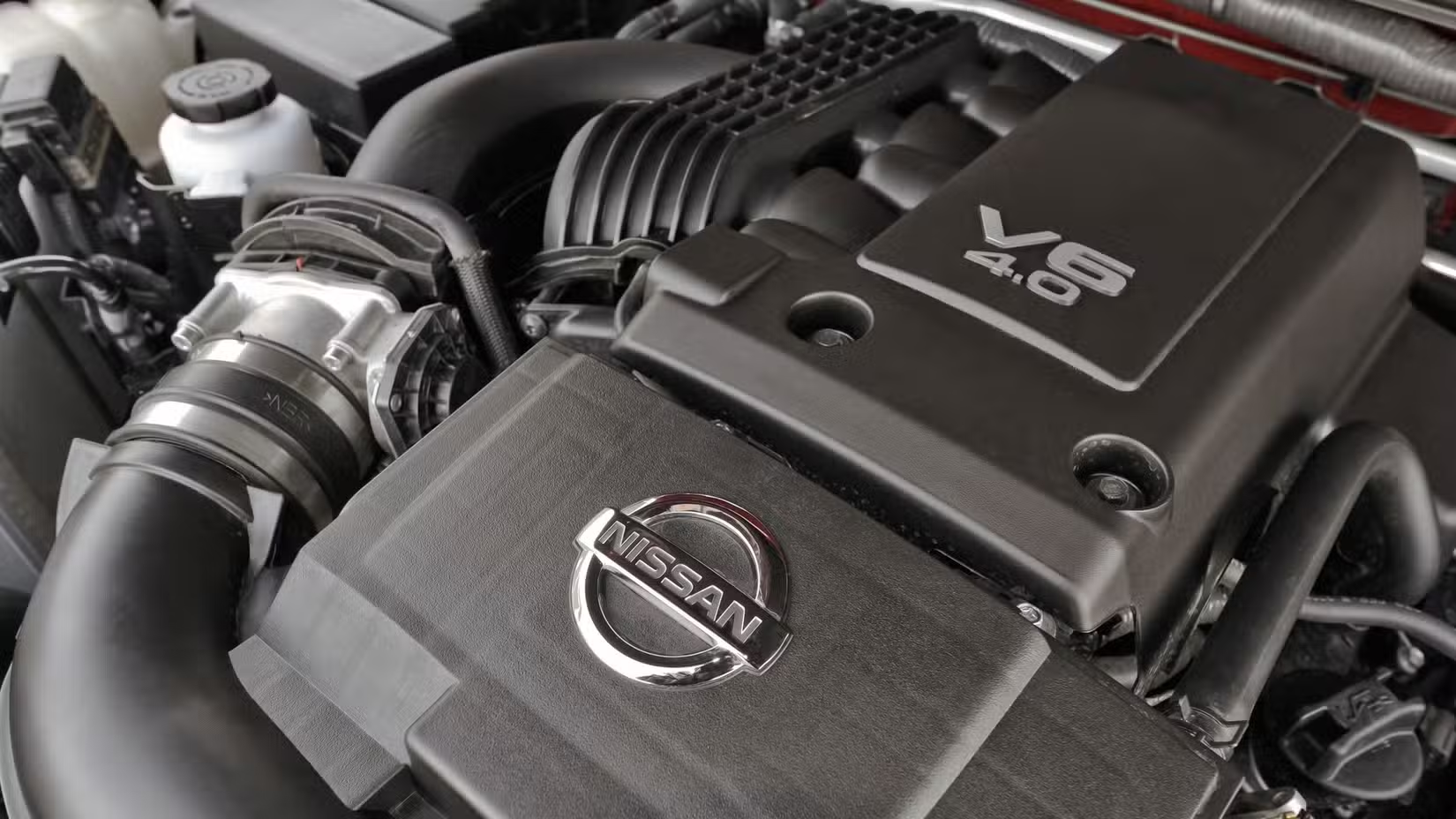
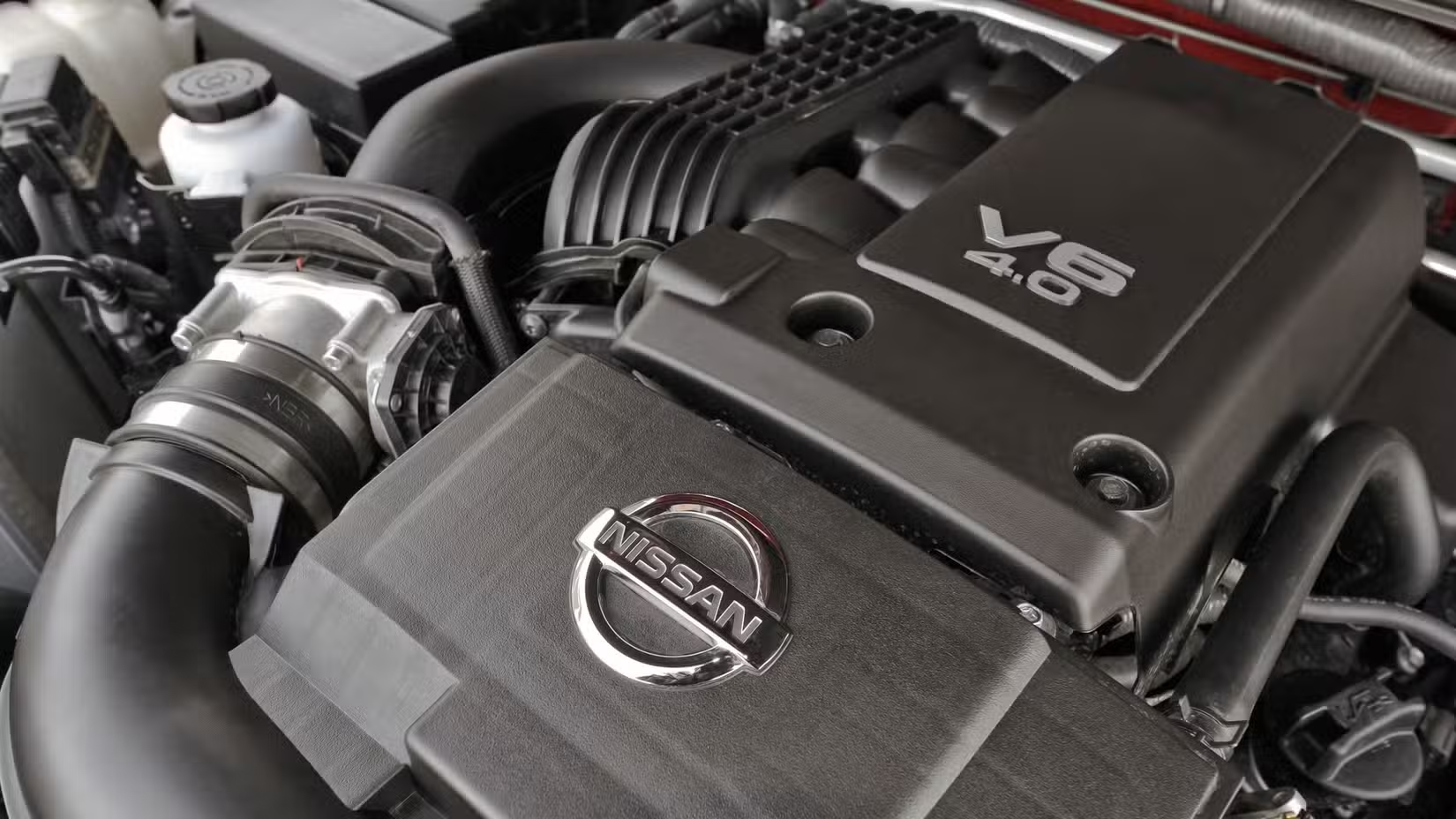
The VQ40DE is the largest member of the family at 4.0 litres and tells a different story. Where the 35DE prioritises a balance of performance and efficiency, the 40DE was purpose-built for trucks and SUVs, prioritising torque through an increased piston stroke. It arrived with variable valve timing and a variable length intake manifold from launch, and found its home in the Nissan Frontier and Pathfinder vehicles, where pulling power matters more than high-rpm excitement.
Where It Stands Today
Three decades on from its debut, the VQ engine hasn't entirely disappeared. Two variants remain in production: the VQ35DD in the current Nissan Pathfinder and the VQ38DD in the Nissan Frontier, one of the most consistently reliable midsize trucks on the American market. The engine also lives on in the Nissan Patrol in non-US markets.
That longevity is its own kind of endorsement. Engines get retired when they no longer meet emissions standards, performance expectations, or efficiency targets. The VQ has outlasted most of its contemporaries by continuing to meet those benchmarks while maintaining the durability record that built its reputation in the first place.
The Takeaway
The Nissan VQ V6 is proof that legendary engine status doesn't require the loudest marketing or the most famous application. It requires doing the fundamentals right, strong internals, smart oil management, a timing system built for longevity, and the willingness to identify problems early and fix them properly.
Sixteen Ward's 10 Best mentions. Thirty-plus years in production. An engine family that spans everything from a 2.0-litre passenger car unit to a 4.0-litre truck engine built for hard use.
Nissan doesn't always get the credit it deserves in the engine conversation. The VQ is the argument for why it should.
About the Creator
Mark Lim
Hi I am mark an automotive student and a car, tech and food enthusiast ! Im gonna try and post daily & hope you enjoy what I write and do share my page with people you know. I would gladly appreciate it! Cheers
Enjoyed the story? Support the Creator.
Subscribe for free to receive all their stories in your feed.
Comments
There are no comments for this story
Be the first to respond and start the conversation.