
The E39 Dilemma: When Your Dream Car Doesn't Fit a Baby Seat
A deep dive into one Malaysian builder's jaw‑dropping 1JZ‑swapped BMW—why the internet tore it apart, and whether petrolhead passion can survive parenthood.
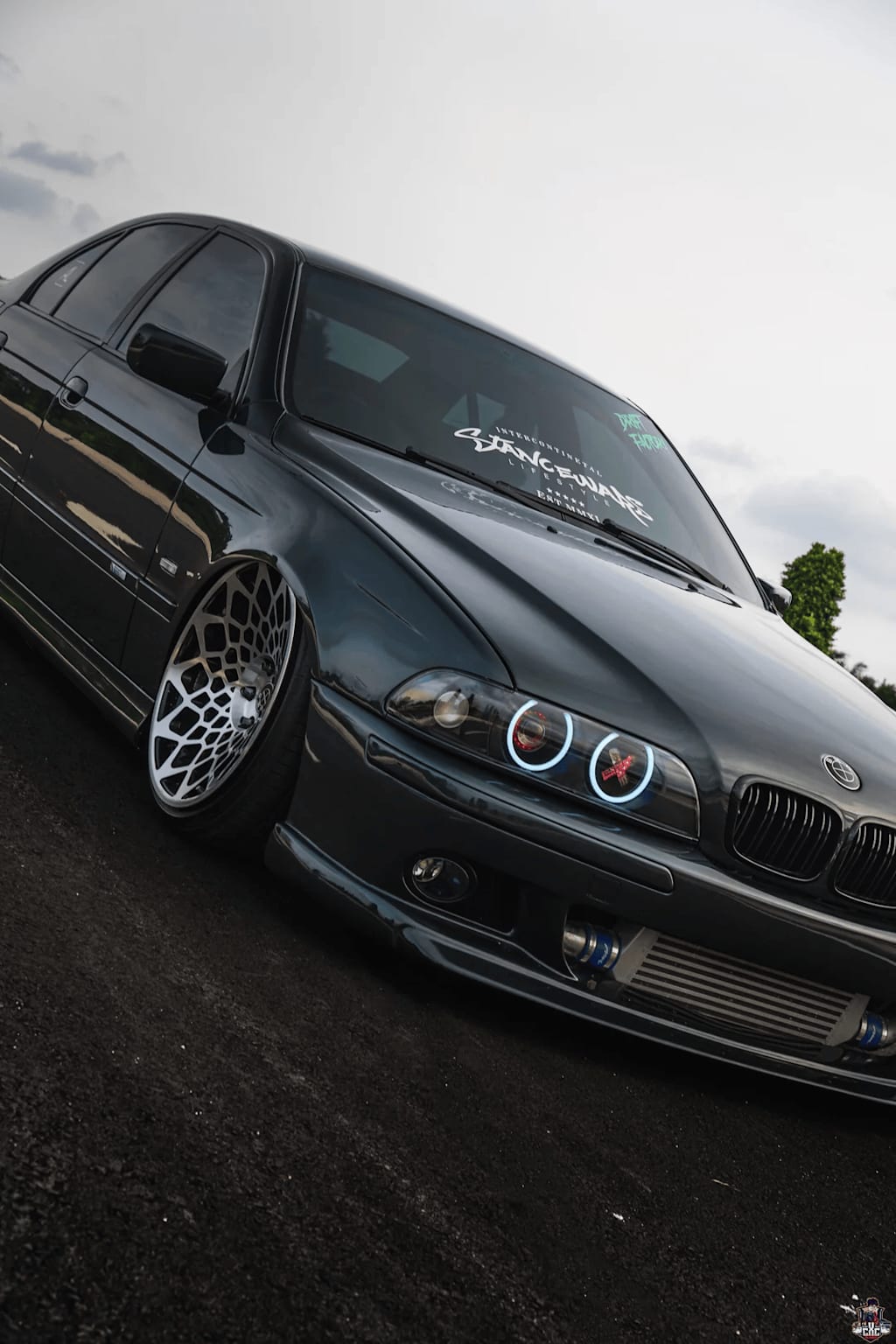
The E39 That Defies Convention: A 1JZ‑Swapped, Stanced Family‑Man Dilemma
In Southeast Asia—especially Malaysia—you never really know what hides under the bonnet of a classic German saloon until someone pops it. When a BMW E39 5‑Series gets a Toyota 1JZ‑GTE VVTI engine, air suspension, and oversized dished wheels, it stops being the elegant executive sedan Bavarian engineers intended. It becomes a loud statement of its owner’s will.
Recently, one owner posted his Oxford Green E39 online, along with a detailed build sheet and a question: “I want to start a family—should I sell it or keep it?” The comments exploded. Some called it “the ultimate Ah Beng mobile.” Others quietly admired it as a “Need for Speed refugee.” I’m not here to pick sides. Instead, I’ll break the build into three parts—mechanical reality, visual choices, and daily livability—to see what this hybrid actually delivers.
1. Hardware: A 1JZ in an E39 – Clever or Crazy?
Start with the parts list. Swapping a 1JZ VVTI into an E39 is not a weekend bolt‑on. The owner upgraded to a 2JZ oil pump and water pump (a common fix for high‑RPM oil starvation), ACL race bearings, a 1.5‑mm Cometic metal head gasket, and a MaxxEcu Race standalone ECU. Add a GTX3076R turbo with a 0.63 A/R housing, and you get well over 500 wheel horsepower on moderate boost.
The driveline matches: an RB25 gearbox (from the Nissan Skyline, known for its strength) with a TJ twin‑plate clutch—chosen to handle the torque. The rear axle is welded, a Walbro 255 pump feeds 1000‑cc Bosch injectors, and the exhaust grows from 3 to 4 inches. Every part points to one fact: this car is not a showpiece; it’s a track‑day or drag‑strip machine. The owner also changes AMS 5W‑50 racing oil every 8,000 km—a sign of real care.
From an engineering view, this is a successful cross‑brand transplant. You lose the original BMW straight‑six’s sound and linear feel. In return, you get the Toyota 1JZ’s legendary durability, huge aftermarket support, and lower maintenance costs than a finicky S62 or M54. In Southeast Asia, these “Jap‑German” mash‑ups are common because parts are easy to find, local tuners know them, and the results are reliably brutal. On performance alone, this build is a textbook example of how to extract maximum fun.
2. Looks: Stance, Stretched Tyres, and Stickers – Who Gets Offended?
The harshest comments targeted the visuals. The 19‑inch, 10J front and 11J rear forged wheels, with stretched Powertrac tyres, sit on four‑way air suspension that drops the chassis nearly to the ground. The front lip likely scrapes on a standard kerb. For the younger “stance” crowd, that’s attitude. For BMW purists, it’s sacrilege. The E39, designed by Chris Bangle, is often called one of the most beautiful 5‑Series ever; lowering it to the floor and fitting oversized wheels can feel like vandalising a classic.
The windscreen decals—loud brand names—drew particular anger. Many rightly pointed out that they block visibility, especially at night or in rain. Locally, such stickers are often associated with the “Ah Beng” stereotype—flashy, sometimes tasteless young enthusiasts. Yet not everything outside is half‑baked. The fresh Oxford Green paint, M‑Sport bumpers, custom front lip, and Brembo GT6/GT4 big‑brake kit (380 mm front, 355 mm rear) show the owner didn’t skimp on quality. If we ignore the stickers and extreme negative camber, the car underneath is remarkably clean.
My view: aesthetics are subjective, but safety is not. A ride this low not only ruins daily drivability; it accelerates wear on drive shafts and bushings. Those stickers genuinely hinder forward vision. If the owner wants to keep the stance look while improving practicality, he could raise the default air‑suspension height, move stickers to side or rear windows, and dial back the camber. That way, the car stays sharp without becoming a rolling hazard.
3. Family vs. Fire‑Breather: Can This Four‑Door Monster Be a Dad‑Wagon?
Now the core question: “Should I sell it when I start a family?” Let’s be honest. This car’s current setup is the opposite of family‑friendly:
Clutch – The twin‑plate competition clutch is heavy and grabby. In city traffic, your left leg will ache.
Ride – Even with air suspension, the large wheels and low‑profile tyres transmit every bump to passengers’ spines. Kids would hate it.
Fuel – With 1000‑cc injectors and an aftermarket ECU, urban fuel consumption easily exceeds 20 L/100 km. You’d visit the petrol station more than the grocery store.
Space – The rear seats may be partially occupied by air‑tank hardware or a roll cage (not listed, but plausible). Even without that, fitting a child seat with heavily bolstered front buckets is awkward.
So the rational answer: this car is not suitable as the sole family vehicle. If the budget allows, keep it as a weekend toy or solo commuter, and buy a cheap second car—a Perodua Myvi, Axia, or old Toyota Camry—for school runs, grocery trips, and rainy errands. Selling it would recover some cash, but modified cars rarely fetch a price that reflects the owner’s labour and passion. Unless money is tight, “keep” is more emotionally rewarding than “sell.”
4. Why the Hate? And Why Some Secretly Like It
Scroll through the dozens of comments, and you see a pattern: the loudest critics rarely own heavily modified cars themselves. They stand on the high ground of “originality” or “practicality,” but they miss the core of car culture—individual expression. The joke about “using the wheels to sieve noodles” is witty, yet it betrays a lack of understanding of wide‑rim aesthetics. The purist who insists “my 5‑Series must stay stock” has likely never felt the brutal shove of a large turbo spooling at full boost.
A few commenters offered measured advice: “Enjoy it until family responsibilities truly arrive.” That’s mature. Cars are both tools and toys; family is a harbour, not a cage. The conflict isn’t irreconcilable; it just needs clear boundaries.
5. Final Advice – For the Owner and Every Enthusiast
Owner, if you’re reading this: your mechanical skill and financial commitment already exceed what most keyboard warriors will ever achieve. This E39 is a physical monument to your youthful energy; every bolt carries late‑night tuning sessions. Don’t let strangers’ harsh words shake you.
But be clear‑eyed: starting a family shifts your priorities. You could garage the car once the baby arrives, taking it out only on seasonal weekends. Or you could “detune” the looks—swap air suspension for adjustable coil‑overs at a saner height, fit smaller wheels, remove the windscreen stickers, and restore angel‑eye headlights—while keeping the fearsome powertrain. A wolf in sheep’s clothing can be just as captivating.
And to everyone else: car culture is about inclusion. We don’t have to love every build, but we should respect the owner’s right to choose. As one netizen said, “At least he dares to make his car different.” In an era where even architecture looks increasingly uniform, that boldness is rare.
Epilogue
This E39 will never please everyone—but it perfectly embodies “I build, therefore I am.” Whether it stays in the garage or finds a new owner, it will remain the loudest exhaust note of that season of life. To every enthusiast, I hope you find your own balance between family dreams and petrol‑headed passions—because the laughter of the passenger and the giggles from the back are, ultimately, the sweetest music of all.
About the Creator
Jin
Writer of reamstories
https://reamstories.com/jin
Enjoyed the story? Support the Creator.
Subscribe for free to receive all their stories in your feed. You could also become a paid subscriber, letting them know you appreciate their work.
Comments
There are no comments for this story
Be the first to respond and start the conversation.