
The Dirt Track Dream
From Go-Karts to Glory: Climbing America's Racing Ladder

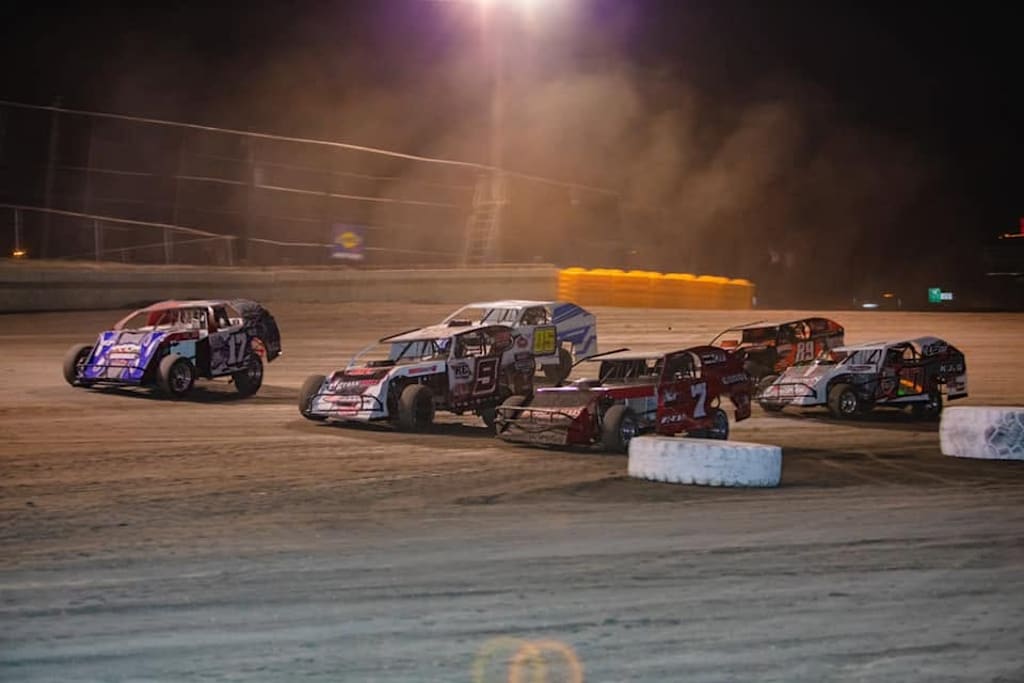
It's a warm Saturday night in July. Wheat sways in the summer breeze just beyond the track entrance, a reminder that this corner of western Kansas still belongs to the prairie. Cicadas hum in the trees as the smell of race fuel and dry Kansas dirt hangs in the air. Fine dust trails behind every passing side-by-side, settling over trailers, toolboxes, and lawn chairs alike. Impact guns chatter from open trailers, broken only by the occasional holler for a wrench that has somehow grown legs and disappeared. Families laugh. Kids weave between trailers on bicycles. One by one, the grandstands begin to fill as another evening at the dirt track comes to life.
Then the loudspeaker crackles.
"Attention in the pits... Rookie Karts to the staging area. Rookie Karts to staging."
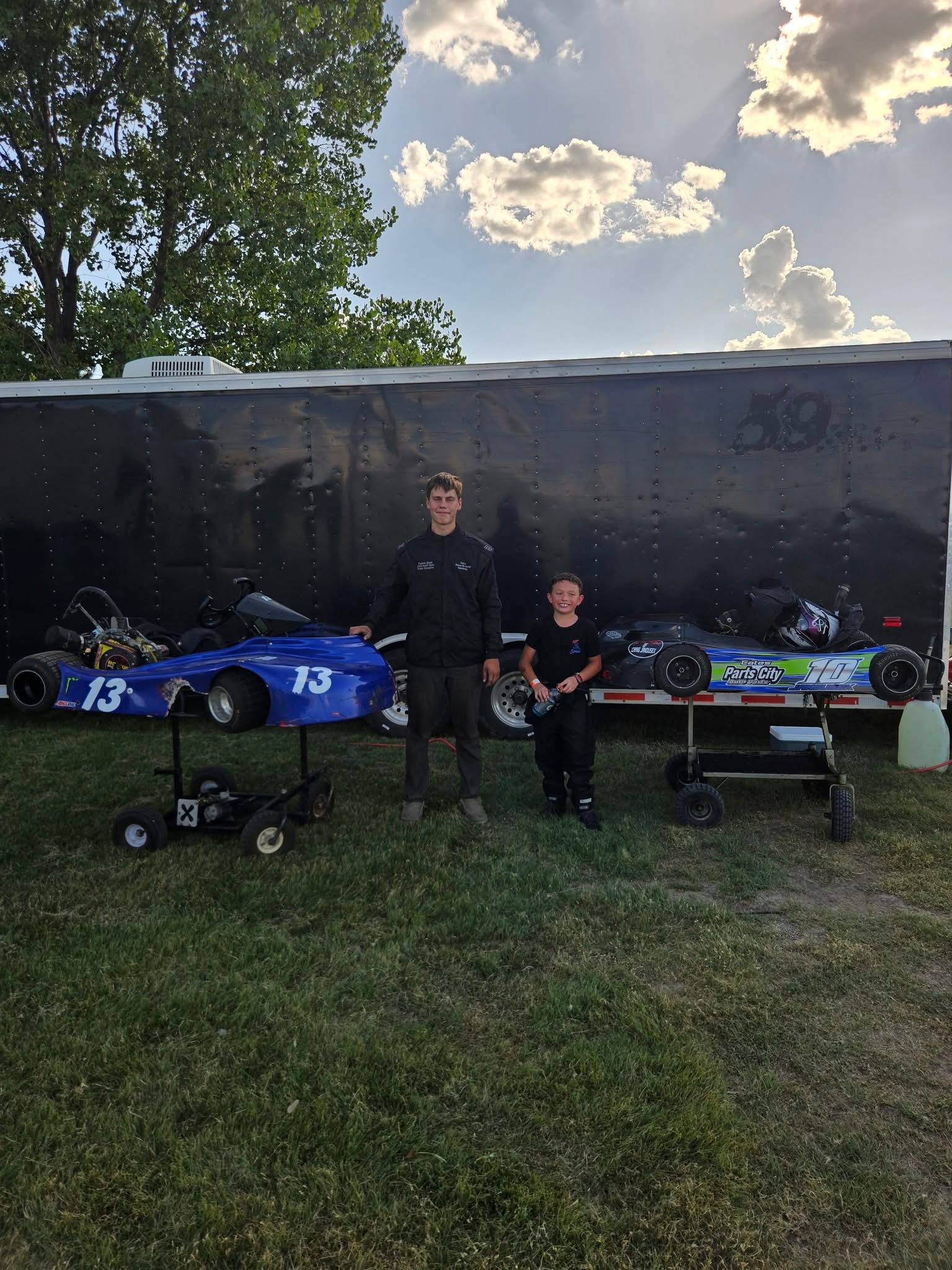
Immediately, parents make their final checks. Helmet straps are tightened. Gloves are adjusted. Tiny engines sputter to life as nervous young drivers inch toward the staging lane.
Nine-year-old Sammy has been waiting for this moment since eight o'clock that morning. Now he's sitting on the pole, eyes locked on the track ahead.
Back at the trailer, Prycen isn't headed to staging just yet. He's making one last adjustment before the Open division is called. As one of the youngest drivers in the class, he'll line up beside racers with years more experience. Once the green flag waves, though, age doesn't matter. Preparation does. Confidence does.
Watching the two of them on the same race night tells the story of dirt-track racing better than any history book ever could.
Sammy is just getting started. Prycen is beginning to make a name for himself. Everybody starts somewhere, and on any given Saturday night, you'll find racers at every stage of the journey.
Long before there were Rookie Karts, Modifieds, or Late Models, there was a simple question.
"How fast will it go?"
Truth be told, people have been asking that question for centuries. We raced horses across open fields. We sailed ships across oceans. We climbed mountains simply because they were there. It was only a matter of time before someone looked at one of those newfangled automobiles, grinned at the fellow beside him, and said, "I bet mine's faster."
The first racers didn't have purpose-built speedways waiting for them. They used horse tracks, county fairgrounds, and dusty little ovals because that's what they had. Before long, crowds started showing up just to see whose car was the fastest.
Families packed the grandstands. Mechanics spent late nights chasing one more horsepower. Drivers spent all week thinking about Saturday night and all winter thinking about next season.
The cars have changed. The feeling hasn't.
As the sport grew, someone finally admitted it could probably use a few rules. In 1915, the International Motor Contest Association, better known as IMCA, was founded to help organize a rapidly growing pastime. More than a century later, it's still doing exactly that.
History added another chapter during Prohibition, when moonshine runners built surprisingly fast cars to outrun the law on winding back roads. Many of those same drivers eventually found themselves racing on local dirt tracks, helping shape the stock-car culture that would later influence NASCAR.
After World War II, another generation picked up the torch. Returning veterans brought home mechanical skills. Affordable production cars gave everyday Americans a chance to build race cars of their own. Garages became workshops. Friends became crew members. Saturday nights became family nights.
For many racers, it begins in a go-kart. Not because karting is "kids' racing," but because it teaches lessons that stay with a driver for life. Patience. Racecraft. Respect. Some racers spend entire careers in karts. Others eventually move into full-sized race cars.
From there, every racer finds a different path.
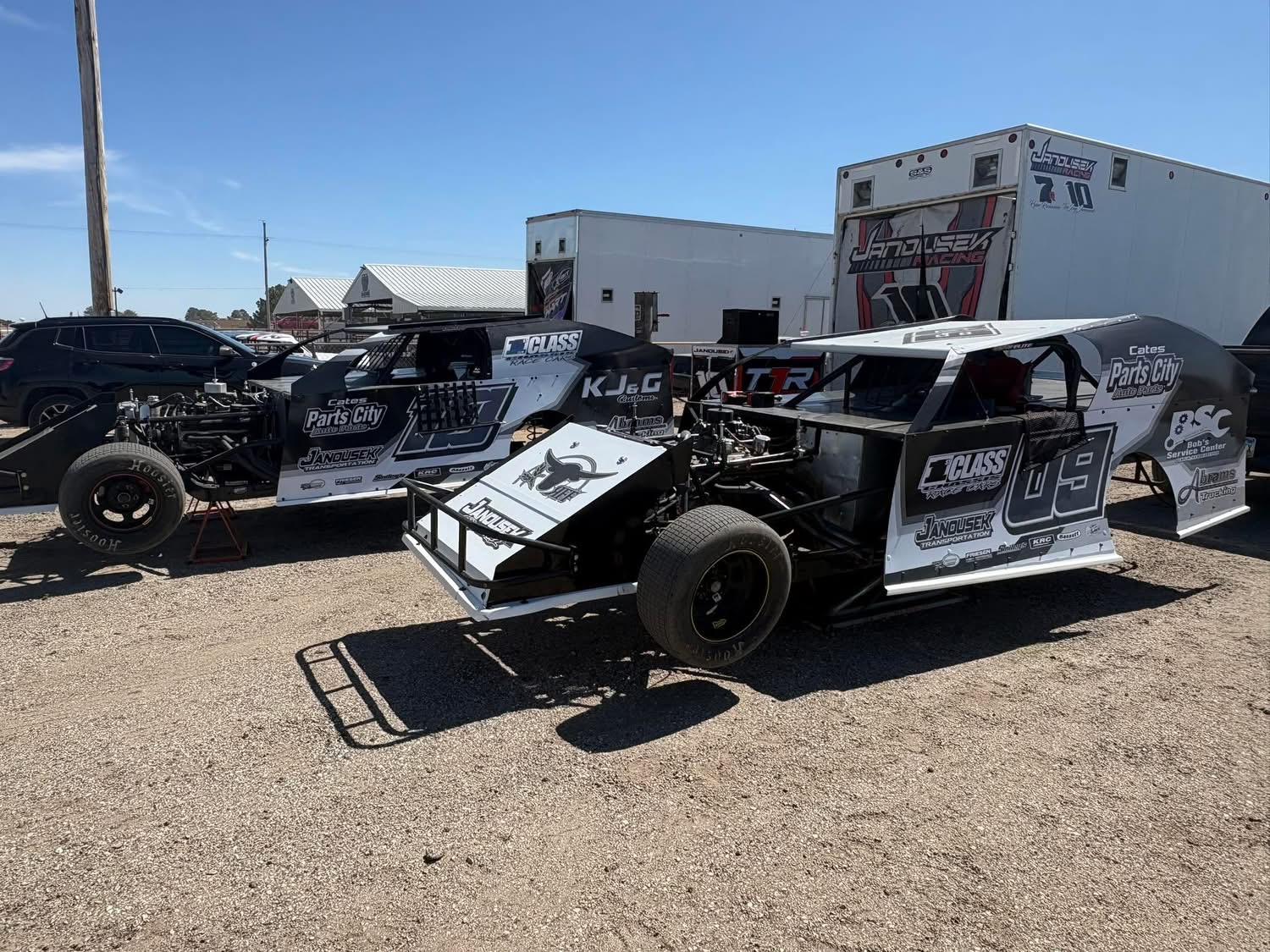
Some build careers in Sport Compacts or Hobby Stocks. Others climb into Stock Cars, carrying on a tradition that stretches back to the earliest days of grassroots racing. Many eventually find themselves behind the wheel of a Modified, a machine that rewards quick hands, sharp instincts, and just enough courage to leave your foot in the throttle a heartbeat longer than feels comfortable.
And then there are the Late Models.
They're the cars little kids point at from the grandstands. Wide, low, and purpose-built, they seem to glide across the dirt while throwing rooster tails into the Kansas night. For many drivers, climbing into a Late Model is something they've worked toward for years.
But here's the funny thing. Ask almost anyone in the pits about their favorite memory, and chances are it won't be about the fastest car they ever drove.
It'll be about the people they spent Saturday nights with. The late nights in the shop. The long drives home after the races were over. The stories they still laugh about years later.
Walk through the pits today, and you'd recognize the same spirit that built the sport more than a century ago. Families still fill the grandstands. Friends still wander through the pits borrowing tools they promise they'll bring back. Kids still stand against the fence dreaming about the day they'll get their own chance to race.
Most weekends, our family heads in two different directions. At WaKeeney Mini Speedway, Jason is helping Sammy and Prycen through another night of kart racing. Between Rookie Karts and the Open division, he's answering questions, lending a hand where it's needed, and passing along the kind of knowledge that can only come from years spent at the track. The racing doesn't start with the green flag. For Sammy and Prycen, it starts in the pits beside Jason.
Meanwhile, the rest of the team is at Salina Speedway.
Teejay is impossible to miss. If you've ever been around him at the races, you know he's probably talking to somebody. Whether it's another driver, a fan in the pits, or someone who stopped by the trailer just to catch up, he's never met a stranger. Spend five minutes around Teejay and you'll probably meet half the people in the pits. Somewhere between the conversations and the laughter, though, the joking stops. The helmet goes on, the belts get tightened, and his attention turns to the Late Model.
Ryan's Modified is parked nearby.
He's still learning every time he straps into the seat, but you'd never know it by the way he approaches race day. He's usually the first one checking tire pressures, topping off fuel, or making sure the car is ready before anyone else has finished unloading. While Teejay is tossing around another wild setup idea, Ryan is the one asking the practical questions that keep the team grounded. It isn't flashy work, but it's the kind that keeps a race team moving. Somewhere along the way, teammate stopped being the right word. He's family now.
Then there's Paxton.
Every race team has a young gun, and ours is no different. He started the season just trying to keep up, learning as he went. Since then, he's quietly worked his way into the mix with some of the fastest drivers around, turning in top-three finishes on a regular basis. He's still chasing a little more speed every Saturday night, but these days, he's making everyone else work a little harder for a win.
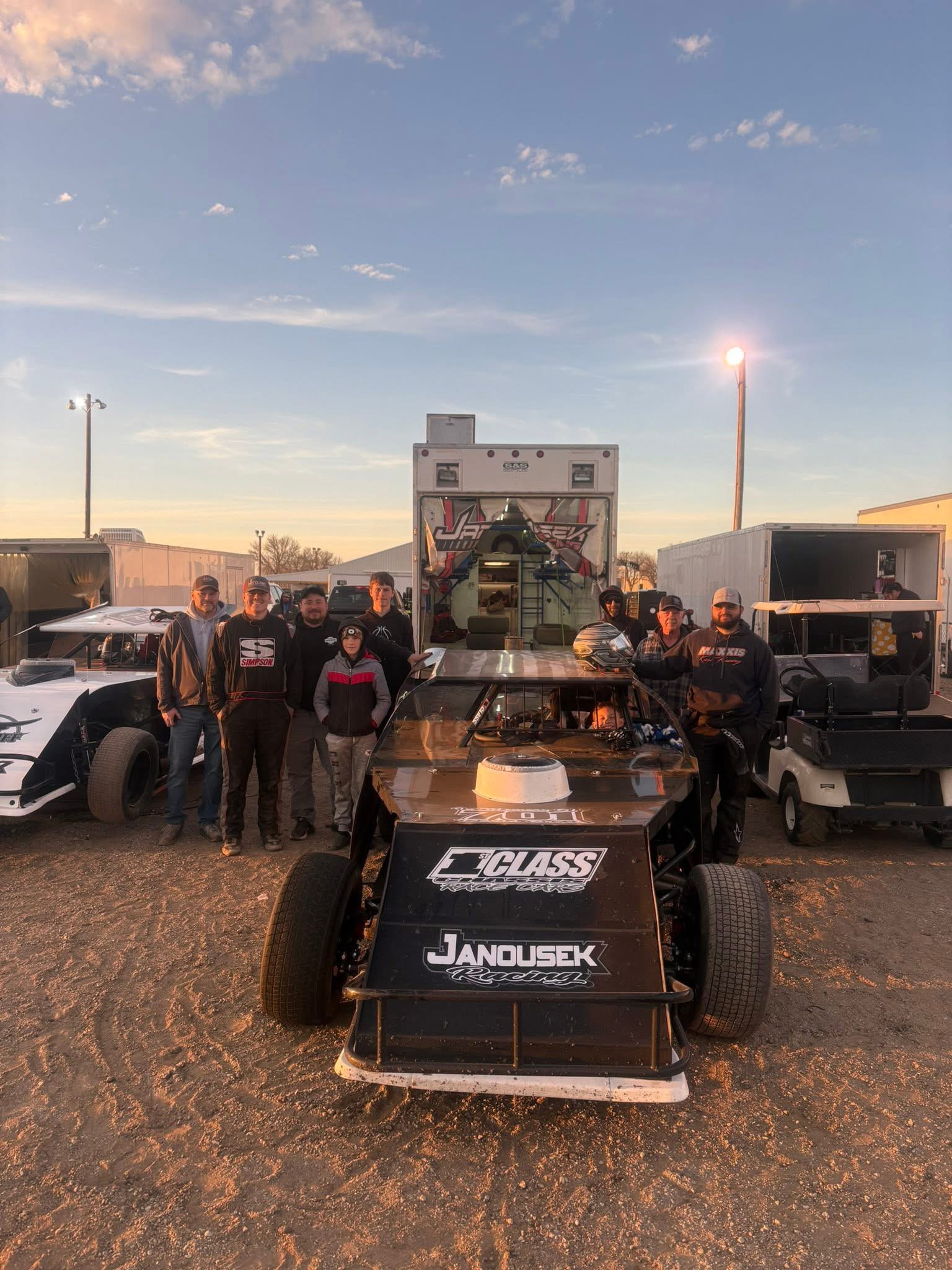
By the time the trailers are pointed toward home, everybody has a different story to tell. For some, it's finally finding a little more speed. For others, it's wondering what they should have changed before the feature. A few head home with trophies. Most head home already thinking about next weekend.
Dirt-track racing may not be everyone's passion, but you'll be hard-pressed to find a more welcoming place once you pull through the pit gate.
By Monday morning, the dirt has been washed off the cars. The firesuits are hanging back in the trailer, and somebody has finally found the wrench that disappeared Saturday afternoon. Before long, a message pops up in the group chat.
"Who's racing this weekend?"
Pretty soon, the trailers are getting hooked up again. Fuel jugs get filled. Tires get checked one more time. Somewhere, another kid climbs into a go-kart for the first time. Another veteran climbs back into a car he's driven for years. Friends spend another evening giving each other a hard time between races, and families settle into lawn chairs behind the trailer.
Before you know it, the loudspeaker crackles to life once more.
"Attention in the pits..."
Sources
International Motor Contest Association. History of IMCA. https://www.imca.com/about/history/
NASCAR. History of NASCAR and the sport's early roots. https://www.nascar.com/
History.com. Prohibition in the United States. https://www.history.com/topics/roaring-twenties/prohibition
Historical information was compiled from the sources above and combined with the author's firsthand experiences in grassroots dirt-track racing.
If this story meant something to you, I'd be honored if you shared it with someone who loves racing.
About the Creator
Megan Janousek
Writer and history lover rooted in western Kansas. Writing about forgotten places, complicated people, history, home and what it means to be human.
Enjoyed the story? Support the Creator.
Subscribe for free to receive all their stories in your feed.
Comments
There are no comments for this story
Be the first to respond and start the conversation.