
The Chrysler Pacifica: The Minivan That Refuses to Be Embarrassing
Nobody grows up dreaming of owning a minivan. And yet, here we are.

A Quick Word on Chrysler
Before we get into the car itself, let's acknowledge the elephant in the room. Chrysler once one of America's Big Three automakers has been through the wringer. The 2008 financial crisis hit the company harder than most, leading to an acquisition by Fiat, a rebrand to Fiat-Chrysler, and eventually absorption into the Stellantis conglomerate. Today, the entire Chrysler brand essentially survives on the back of one vehicle the Pacifica plus whatever unsold Chrysler 300 sedans are still floating around in dealership lots.
That's a remarkable fall from grace. But it also tells you something interesting: the Pacifica must be genuinely good enough to justify keeping the nameplate alive at all.
What Is It?
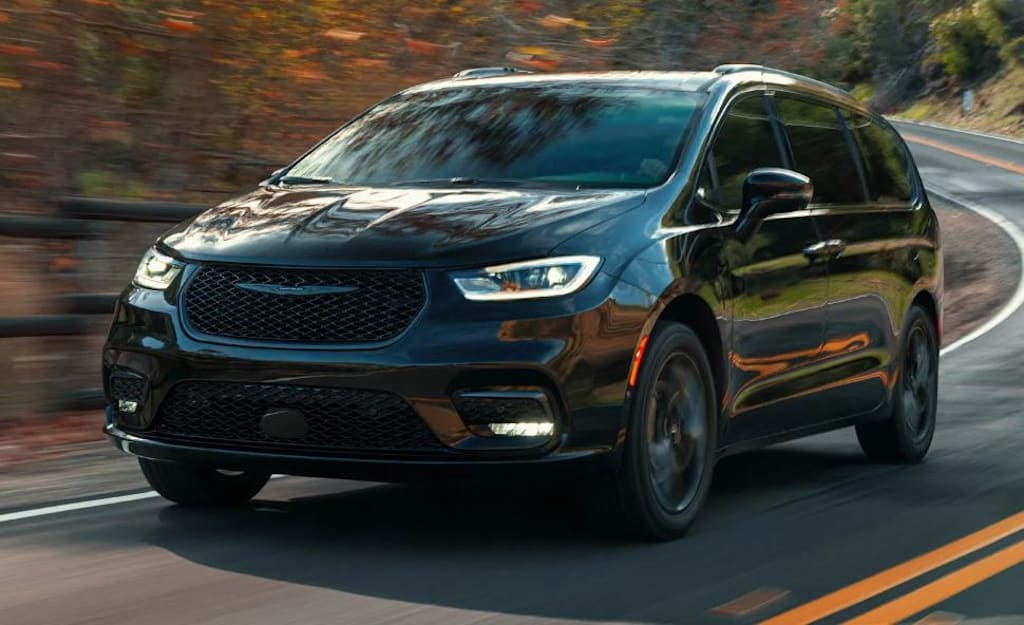
The Pacifica is a three-row minivan — a proper one, unashamedly so powered by a 3.6-litre V6 engine producing 287 horsepower, sent through a nine-speed gearbox to either the front or all four wheels depending on which trim you go for. It's a big, people-moving machine built specifically for families who have given up pretending they don't need exactly this kind of vehicle.
There was until very recently also a plug-in hybrid version a 3.6-litre V6 paired with two electric motors for a combined 260 horsepower, a 16kWh battery pack, and an estimated range of around 520 miles at roughly 83mpg. It was pretty good, not perfect it lacked selectable driving modes, which felt like an odd omission but it was a genuinely useful family tool. Unfortunately, Stellantis has axed the PHEV across most of its brands, so the hybrid Pacifica is now gone. A few new ones slipped out the door before the decision was finalised, so if you find one, consider yourself lucky.
How It Drives
Here's where the Pacifica genuinely surprises you, and it's worth dwelling on this for a moment.
Minivans carry a stigma. They're the automotive equivalent of sensible shoes practical, unfashionable, and driven by people who have fully surrendered to the demands of family life. You don't expect them to be enjoyable to drive. You expect them to be appliances.
The Pacifica, somehow, isn't that. Its handling is genuinely car-like responsive, composed, and far more confidence-inspiring than its size and reputation would suggest. It won't make you feel like a racing driver, and nobody is taking it out for a Sunday morning blast through country roads for the fun of it. But when you need to move with purpose threading through traffic, picking up pace on a motorway on-ramp, navigating a tight car park it doesn't fight you. It just gets on with it.
The ride is neutral and settled in everyday driving, the steering is light enough to manage the bulk without feeling disconnected, and the nine-speed gearbox shuffles through ratios smoothly enough that you rarely think about it. The 287 horsepower is modest for a vehicle this size, but it's more than adequate for the job it's been given. You might even surprise the driver of the slightly sportier car next to you at the lights. Just don't tell them what you're driving.
The Clever Bits
What really sets the Pacifica apart from a basic people carrier is how thoughtfully it's been engineered around the reality of family life because whoever designed this car clearly has children and has clearly suffered for it.
There's a built-in camera system a "fam cam" that lets the driver check on individual seats from the front, so you can keep an eye on the back row without turning around. There's a Blu-ray player and streaming connectivity to keep everyone distracted on long journeys. There are charging ports and inputs dotted throughout the cabin. There's an umbrella gutter by the door so wet brollies don't drip everywhere. There are more storage cubbies than you'll ever actually need.
And then there's the headline feature a built-in vacuum cleaner. An honest-to-goodness integrated vacuum, right there in the car, for dealing with crumbs and general child-related debris on the spot. It sounds like a gimmick. It is absolutely not a gimmick.
Most of the seat-folding functions also work one-handed, which sounds trivial until you're standing in a car park holding a toddler and a bag of shopping and trying to configure the load space. The non-hybrid models also get stow-and-go floor compartments for securing bags so they don't roll around in the boot. Small things. Big difference.
The Not-So-Great Bits
It's not all perfect. The Pacifica is expensive, sitting at a price point where it starts to overlap with large SUVs that offer similar passenger capacity plus more off-road capability for those who actually need it. The automatic emergency braking sensors are reportedly a touch over-sensitive, occasionally intervening when you don't really need them to. And the exterior styling is, to put it charitably, apologetic it looks like a vehicle that knows exactly what it is and has made peace with it, but hasn't done anything to make itself more interesting in the process.
The Verdict
The Chrysler Pacifica is the best argument for minivans that anyone has made in years and it makes that argument not by being flashy or surprising, but by being quietly, thoroughly excellent at the one job it exists to do.
It hauls families and their considerable quantity of stuff with grace, intelligence, and a level of practical ingenuity that most SUVs simply cannot match. And then it drives better than it has any right to, which is the cherry on top of what is ultimately a very sensible cake.
Minivans will never be cool. But the Pacifica is about as good as uncool gets and for the right family, that's more than enough.
About the Creator
Mark Lim
Hi I am mark an automotive student and a car, tech and food enthusiast ! Im gonna try and post daily & hope you enjoy what I write and do share my page with people you know. I would gladly appreciate it! Cheers
Enjoyed the story? Support the Creator.
Subscribe for free to receive all their stories in your feed.
Comments
There are no comments for this story
Be the first to respond and start the conversation.