
The Car That Built a Nation's Automotive Dream And Lasted 22 Years Doing It
The first generation Proton Saga was more than a car. It was a statement of what Malaysia believed it could become.

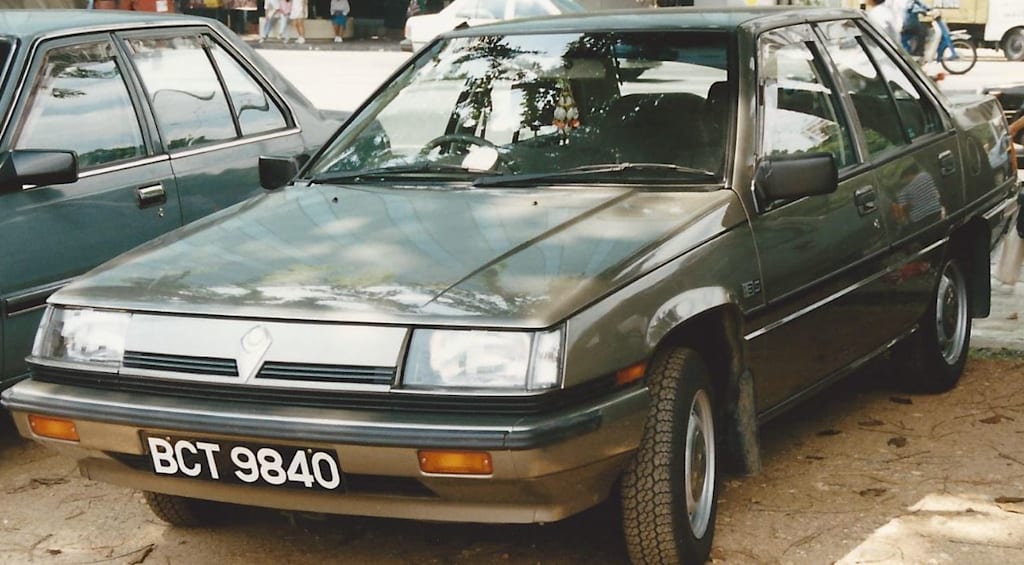
On the morning of 9 July 1985, Prime Minister Mahathir Mohamad stood before a car that Malaysia had built with its own hands almost. The Proton Saga rolled off the production line in Shah Alam and into history, becoming the first automobile ever produced by a Malaysian manufacturer. The crowd that greeted it was not just celebrating a new model. They were celebrating an idea: that a developing nation could manufacture its own car, sell it to its own people, and eventually take it to the world.
That idea took a long time to arrive. And the journey to get there is as interesting as the car itself.
How It Began: A Prime Minister's Vision
The concept of a Malaysian national car was not born in an engineering workshop. It was born in a political speech.
Mahathir Mohamad, then serving as Minister of Trade and Industry, first articulated the idea in 1979. The vision was straightforward in its ambition and enormously difficult in its execution: Malaysia would build its own car, develop its own automotive industry, and reduce its dependence on foreign assembly of foreign designs. It was part of a broader philosophy that Mahathir would later call the Look East Policy, a deliberate turn toward Japan and its industrial model as a template for Malaysian development.
The National Car Project was formally approved in 1982. The company that would build the car, Perusahaan Otomobil Nasional, or Proton, was established on 7 May 1983. HICOM held a 70% stake, with Mitsubishi Motors and Mitsubishi Corporation holding 15% each. The technological foundation would come from Japan; the ambition was entirely Malaysian.
Mitsubishi prepared two prototypes in Japan by January 1983, and the design that eventually entered production was based on the 1983 Mitsubishi Lancer Fiore platform. The engine options were the 1.3-litre 4G13 and the 1.5-litre 4G15 Orion II, both reliable, proven Mitsubishi units. The first car to roll off the Shah Alam production line is now preserved at the Muzium Negara, treated with the reverence that a founding artefact deserves.
The Launch and the Immediate Problem
The Saga was officially launched on 9 July 1985. Only 700 vehicles had been produced in time for the event. They sold out almost immediately, and Proton found itself in the unusual position of having created a product that the public wanted more than the factory could supply.
By mid-1986, the Saga had captured 64% of the domestic market share in the below-1600cc segment. The 10,000th Saga was produced that same year. The car had not just succeeded, it had dominated, in a way that nobody outside Mahathir's circle had expected.
Within a year of launch, Proton began looking at export markets. Bangladesh received the Saga in December 1986, followed by New Zealand, Brunei, Malta, and Sri Lanka in 1987. The ambition was real and expanding. Malaysia wanted its car in the world, not just at home.
The American Misadventure
The most fascinating and most painful chapter of the early Saga story involves a man named Malcolm Bricklin and a plan that collapsed spectacularly before it properly began.
Bricklin was an American automotive entrepreneur, the kind of larger-than-life figure who had previously imported the Yugo into the United States. Mahathir was reportedly introduced to him through Henry Kissinger, who had previously taught Mahathir at Harvard. Sales were planned to begin in October 1988. The Saga would enter the world's most important car market and announce Malaysia's industrial arrival.
It did not happen. Shortly after the first Sagas were imported into the United States, Bricklin revealed that he had not obtained the necessary importation approvals and that the car had not passed American emissions testing. The venture collapsed. The financial losses were significant. The embarrassment was greater.
The aftermath was complicated further by the suspicion widely held at the time that Mitsubishi had deliberately worked to sink the deal. Proton was, in effect, selling a lower-priced clone of a Mitsubishi product into a market where Mitsubishi had its own interests to protect. Whether that suspicion was accurate or not, the result was the same: Mitsubishi replaced Proton's existing management with Japanese executives who scaled back the company's export ambitions significantly.
It was a setback. But it was not the end.
The UK Launch: Fastest Selling New Make Ever
While America remained closed, Europe opened. Proton made its European debut in Ireland in March 1988, launching both saloon and hatchback models at prices between £8,999 and £10,799. Ireland was chosen for its deliberately smaller market, less stringent regulatory requirements, and a chance to refine the approach before tackling the much larger UK.
That UK launch came in March 1989, and the results were extraordinary. Proton set the record for the fastest-selling new make of car ever to enter the United Kingdom, exceeding its 12-month sales target within six months. The Saga had been through 400 modifications to pass UK safety and emissions regulations, undergone a 1,000-mile trial on British roads, and been subjected to quality, safety, and emissions testing across the board. The slogan Proton used in the UK market, "Japanese Technology, Malaysian Style," was not inaccurate. It was, if anything, understated.
At the 1988 British International Motorshow, the Saga won two gold medals and one silver for quality coachwork and ergonomics, and was voted among the top ten best cars at the show. By 1991, Fortune magazine had ranked Proton as the 29th largest automobile company in the world, a ranking achieved entirely on the strength of a single model.
Evolution Over 22 Years
What is perhaps most remarkable about the first-generation Proton Saga is not any single moment in its history, but the sheer duration of its production run. The same basic platform introduced in 1985 remained in production until 2008. Twenty-two consecutive years. Three distinct iterations.
The Saga Iswara arrived in 1992, bringing a restyled exterior designed by a British firm, slimmer headlights, new bumpers, and fuel injection for export markets meeting Euro I standards. It became the default taxi of 1990s Malaysia, a near-inescapable presence on every road, many of them converted to NGV fuel for greater economy. A UK export variant of the Iswara even appeared in an episode of Mr. Bean, achieving a modest footnote in British television history.
The Saga LMST arrived in 2003, bringing a completely redesigned interior with Lotus-influenced ride and handling as a consequence of Proton's acquisition of the British sports car manufacturer. The digital instrument cluster, new dashboard, red-on-black interior panels, and revised exterior were a genuine modernisation of a platform that was already nearly two decades old. The final iteration of the LMST, updated in 2006, extracted 90 horsepower from the same 1.3-litre 4G13 engine that had powered the original 1985 Saga, making it the fastest and most powerful variant the first generation had ever produced.
The farewell edition came in 2007, timed to coincide with Malaysia's 50th Merdeka celebrations. Proton released the LMST 50th Merdeka Anniversary Edition at a discounted price of RM26,999, down from RM33,240, as a gesture of gratitude to the customers who had bought Sagas for more than two decades. That year, the Saga was the second best-selling car in Malaysia, behind only the Perodua Myvi. It was finally succeeded by the all-new second-generation Saga in early 2008.
What the Numbers Say
1.2 million units of the first-generation Saga were sold. A 64% market share was captured within a year of launch. The fastest-selling new make in UK automotive history. The 29th largest car company in the world achieved this with a single model. Fortune rankings. British Motorshow gold medals. Exports to Bangladesh, New Zealand, Brunei, Malta, Sri Lanka, Singapore, Jamaica, Malawi, Pakistan, Ireland, and the United Kingdom.
These are not the numbers of a car that was merely adequate. They are the numbers of a car that meant something to the people who bought it, to the industry it created, and to the country whose name it carried into the world.
The first-generation Proton Saga is now a classic. Enthusiasts restore them, preserve them, and drive them with the particular pride that comes from owning something that carries genuine historical weight. The first-ever Saga to roll off the Shah Alam production line sits in a national museum, which is exactly where it belongs.
But the Saga's legacy is not primarily a museum piece. It is the foundation of an entire automotive ecosystem, the supply chains, the engineering knowledge, the manufacturing culture, and the national confidence that came from proving, against considerable scepticism, that Malaysia could build a car and sell it not just at home but in the most demanding markets in the world.
Mahathir conceived the idea in 1979. The car was launched in 1985. It ran for 22 years. And it is still, by any reasonable measure, Proton's most successful model ever produced.
Not bad for a dream that started in a trade minister's office.
About the Creator
Mark Lim
Hi I am mark an automotive student and a car, tech and food enthusiast ! Im gonna try and post daily & hope you enjoy what I write and do share my page with people you know. I would gladly appreciate it! Cheers
Enjoyed the story? Support the Creator.
Subscribe for free to receive all their stories in your feed.
Comments
There are no comments for this story
Be the first to respond and start the conversation.