
The BMW B58 Engine: Is It Really One of the Best Engines BMW Has Ever Made?
From the BMW 340i to the Toyota Supra, the B58 has become one of the most celebrated modern petrol engines. But is its reputation for performance, reliability and tuning potential actually deserved?

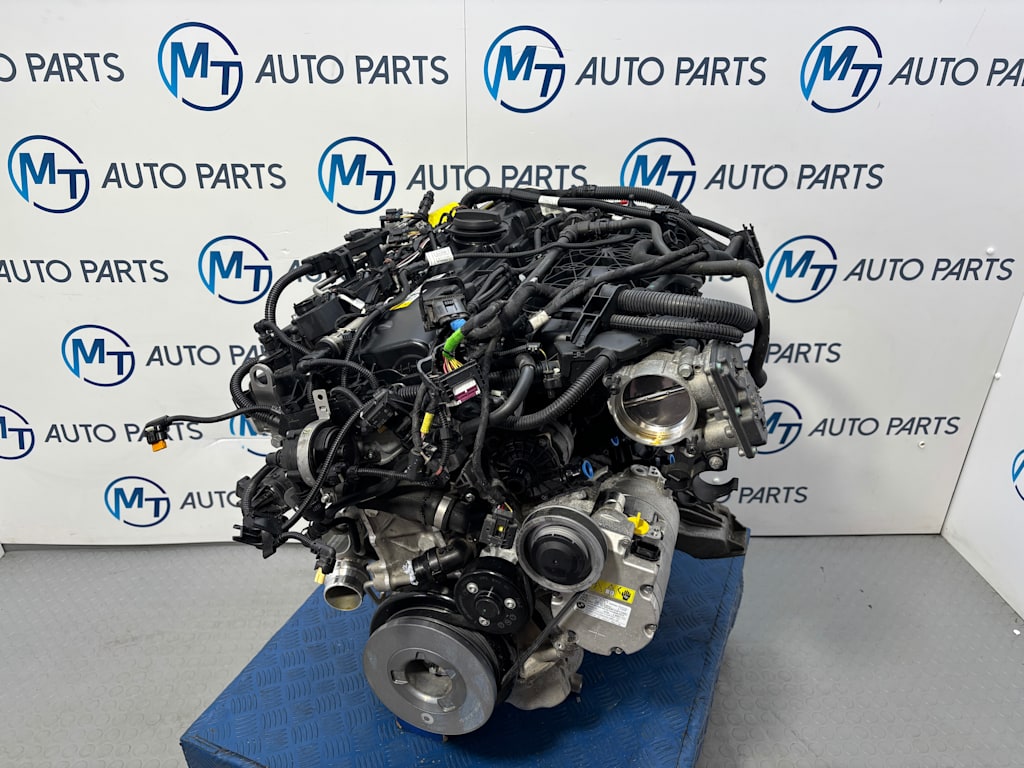
There are certain BMW engines that enthusiasts never stop talking about. The M20. The M54. The legendary S54. And, of course, the N54, which helped establish BMW's reputation for building turbocharged straight-six engines with enormous tuning potential. But there's a newer engine that has quietly joined that conversation.
The BMW B58.
Introduced in 2015 as the successor to the N55, the 3.0-litre turbocharged straight-six has become one of the most respected engines in BMW's modern lineup. It powers everything from relatively understated executive saloons to performance-focused M Performance models, and even the Toyota GR Supra. It's powerful. It's smooth. It responds remarkably well to tuning. And, perhaps most importantly, it has developed a reputation for being a genuinely dependable engine. But is the B58 really one of the best engines BMW has ever made? Or has the internet turned a very good engine into something approaching automotive mythology?
What Makes the BMW B58 Different?
The B58 is a 2,998cc, turbocharged, six-cylinder petrol engine. It uses BMW's familiar inline-six layout, with six cylinders arranged in a straight line. That configuration is a big part of what makes the engine so appealing. An inline-six is naturally well balanced, producing smooth power delivery and relatively little vibration. BMW has spent decades refining this layout, and the B58 represents a particularly accomplished example of that engineering tradition.
However, the B58 is much more than a traditional straight-six with a turbocharger attached. BMW developed it as part of its modular engine family, introducing a number of engineering changes over the preceding N55. These included a closed-deck aluminium crankcase design, a water-to-air charge cooling system and a redesigned cooling arrangement. The result was an engine capable of delivering substantial torque across a broad rev range while remaining refined enough for everyday driving. In its original specification, the B58 produced 320hp and 450Nm of torque in the BMW 340i. Those figures were already impressive for a relatively conventional executive saloon.
Later versions pushed output considerably higher. The 2020 BMW M340i, for example, used an updated B58 producing 382hp and 500Nm in European-market specification, depending on the exact version.
That is serious performance from an engine that still feels perfectly comfortable in a daily driver.
The B58 Is Not Just About Horsepower
One of the biggest reasons the B58 has earned such a strong reputation is the way it delivers its performance. Some turbocharged engines feel sluggish at low revs, only becoming interesting once the turbocharger has built sufficient boost. The B58 is different. Its substantial torque output means it can accelerate strongly without requiring the driver to constantly chase the rev counter. In a BMW 340i or 540i, that translates into effortless motorway performance. In an M340i or M240i, it creates a much more engaging driving experience. The engine is also remarkably smooth. There is a reason BMW continues to use inline-six engines in its larger and more expensive models. They deliver a level of refinement that is difficult to replicate with a smaller four-cylinder engine. The B58 manages to combine that traditional BMW character with modern turbocharged performance. And it does so without demanding the compromises associated with some high-performance engines.
Which BMW Models Use the B58?
The B58 is one of BMW's most widely used modern six-cylinder petrol engines. Depending on the version and market, it can be found in:
BMW 340i and M340i
BMW 440i and M440i
BMW 540i
BMW 640i and 740i
BMW M240i
BMW M140i
BMW X3 M40i
BMW X4 M40i
BMW X5 xDrive40i
BMW Z4 M40i
The engine also powers the six-cylinder Toyota GR Supra, demonstrating just how highly regarded the B58 has become beyond BMW's own lineup. However, not every B58-powered BMW delivers the same experience. A 340i and an M340i may share the same engine family, but their power outputs, supporting components, software and wider vehicle specifications can differ. That distinction becomes particularly important when buying a used BMW or considering modifications.
Is the BMW B58 Really That Reliable?
This is where the B58 becomes particularly interesting. BMW has produced some exceptional engines over the years, but its history is not without problems. The N47 diesel became notorious for timing chain concerns. Certain N20 petrol engines developed their own timing chain reputation. And the N54, despite its enormous tuning potential, became associated with several expensive ownership issues. The B58 has generally developed a much more positive reputation. That does not mean it is indestructible. Like any modern turbocharged engine, it relies on a complex collection of cooling, lubrication, fuel delivery and electronic systems. The B58 also evolved considerably throughout its production life. BMW introduced technical updates that revised areas such as the cooling system, cylinder head, timing chain and fuel delivery. Consequently, the engine in an early 340i is not identical to the later version found in an M340i. That matters when evaluating reliability. A well-maintained B58 can be an excellent long-term ownership proposition, but condition, service history and the exact engine variant still matter enormously. The engine code alone does not guarantee that a particular used BMW will be trouble-free.
The Common B58 Problems Owners Should Know About
The B58 is not known for one catastrophic, universal engine defect. However, there are several areas worth checking, particularly on higher-mileage vehicles.
1. Oil filter housing and coolant leaks
The oil filter housing and associated sealing components can develop leaks over time. On some B58 applications, the housing is integrated with parts of the cooling system, which means a failure can involve both oil and coolant. A coolant leak should never be ignored. The B58 relies on effective temperature management, and continued driving with insufficient coolant can lead to serious engine damage.
2. Water pump and cooling system issues
The B58 uses an electronically controlled cooling system, with components that can wear or fail as mileage increases. Water pumps, thermostats, expansion tanks and coolant connections are all worth inspecting on an older or higher-mileage example. Look for dried coolant residue, unexplained coolant loss and warning messages.
3. PCV and valve cover problems
The crankcase ventilation system is another area that deserves attention. Depending on the engine version, ventilation components can be integrated into the valve cover assembly. Failures may result in oil leaks, unusual noises or abnormal engine behaviour.
4. Fuel system and electronic components
Modern B58 engines rely on sophisticated fuel delivery and electronic management systems. Faults involving sensors, fuel system components or engine control systems can occur, particularly as vehicles age. The important distinction is that these issues do not automatically make the B58 a bad engine. They are reasons to inspect the complete vehicle carefully rather than assuming that a highly regarded engine will be trouble-free.
Why Tuners Love the B58
The B58's reputation extends far beyond standard BMW ownership. It has become one of the most popular modern engines for performance modifications. The combination of a strong engine architecture, turbocharging and sophisticated engine management makes it an attractive platform for tuning. A relatively modest software calibration can deliver a noticeable improvement in performance, while more extensive modifications can take the engine considerably further. The B58 has also gained attention through motorsport and specialist engine-building projects. Its appearance in the Toyota GR Supra has helped introduce it to an entirely different enthusiast audience.
However, there is an important distinction between an engine that can produce impressive power and one that will reliably deliver that power for years. Modifications increase demands on the engine, cooling system, transmission and drivetrain. A tuned B58 with a questionable service history is not necessarily a better purchase than a completely standard example. If you're buying one used, it is worth finding out whether the car has been modified, whether the original software is still installed and whether supporting maintenance has been carried out.
Is the B58 Better Than the Legendary 2JZ?
The comparison was almost inevitable. When Toyota introduced the GR Supra with a BMW-sourced six-cylinder engine, enthusiasts immediately began comparing the B58 with the legendary 2JZ-GTE. The Toyota 2JZ became famous for its durability and enormous tuning potential. It remains one of the most celebrated engines in Japanese performance-car history. The B58 offers a different interpretation of the same basic appeal. It combines strong internal engineering, turbocharged performance and tuning potential with modern emissions requirements, fuel efficiency and everyday refinement. But the two engines belong to different eras.
The 2JZ was developed in a time when emissions regulations, electronic engine management and vehicle efficiency requirements were very different. The B58 has to satisfy much more demanding modern requirements while still delivering the performance enthusiasts expect. Calling the B58 a direct replacement for the 2JZ might be stretching the comparison. But the fact that enthusiasts are making it at all says something about how highly regarded the BMW engine has become.
Which B58 BMW Should You Buy Used?
For buyers considering a used BMW, the B58 offers a compelling combination of performance and practicality. The best choice depends on what you want from the car.
BMW 340i (F30)
A particularly appealing option for enthusiasts who want a traditional BMW driving experience. The 340i combines rear-wheel-drive availability, a relatively compact body and the original B58 engine.
BMW M340i (G20)
A more modern performance saloon with updated technology, improved refinement and higher power output in many versions. It is arguably one of the most complete all-round BMWs of its generation.
BMW 540i (G30)
A strong choice for drivers who prioritise comfort and long-distance performance. The B58 makes the 5 Series feel effortless without requiring an M5-sized budget.
BMW X5 xDrive40i (G05)
The B58 also works exceptionally well in a larger SUV. It provides enough performance for a substantial vehicle while retaining the refinement expected from a premium family car.
Before buying any of these models, check the service history, coolant system, oil leaks, diagnostic records and any evidence of previous tuning. A car that has been maintained properly is usually a much better proposition than one with a lower mileage but an incomplete history.
The Verdict: Is the B58 One of BMW's Best Engines Ever?
There is a reason the B58 has become such a favourite among BMW enthusiasts. It delivers the smoothness of a traditional inline-six, the performance of a modern turbocharged engine and a generally strong reputation for reliability. It is also remarkably versatile. The same engine family can power a comfortable 5 Series, a sporty M340i, a performance-focused Z4 or a large X5. Few modern engines manage to cover such a wide range of vehicles so successfully. BMW's B58 has also received considerable industry recognition. Its 382hp version was named a Wards 10 Best Engine and Propulsion System winner in 2020, following previous awards for earlier versions. But the most important point is this: the B58 is not a magic engine that eliminates maintenance or guarantees trouble-free ownership. It still needs proper servicing. Cooling system problems still matter. Oil leaks still need attention. And a heavily modified example can carry considerably more risk than a standard car. For buyers who want a modern BMW with genuine performance, everyday usability and a strong engineering foundation, the B58 is one of the most compelling options available. Is it the best engine BMW has ever made? That is a matter of opinion. But it has certainly earned its place in the conversation.
Disclaimer: This article provides general automotive information and is not a substitute for professional diagnosis. Engine specifications, performance figures and common issues vary by model, production date and engine variant. Always verify compatibility using the vehicle's VIN and the relevant part number.
About the Creator
MT Auto Parts – BMW Specialists from the UK
We break down the world of BMW — from engines and interiors to history and culture. If you’re passionate about Bavarian engineering, you’ll feel at home here.
Enjoyed the story? Support the Creator.
Subscribe for free to receive all their stories in your feed.
Comments
There are no comments for this story
Be the first to respond and start the conversation.