
The Auto Industry's Future Is Here, And It's Nothing Like What You Think It Is
A major Deloitte study predicts the automotive mobility market will nearly double by 2035. But the winners won't be the companies making cars. They'll be the companies managing fleets, data, and the entire ecosystem around ownership.

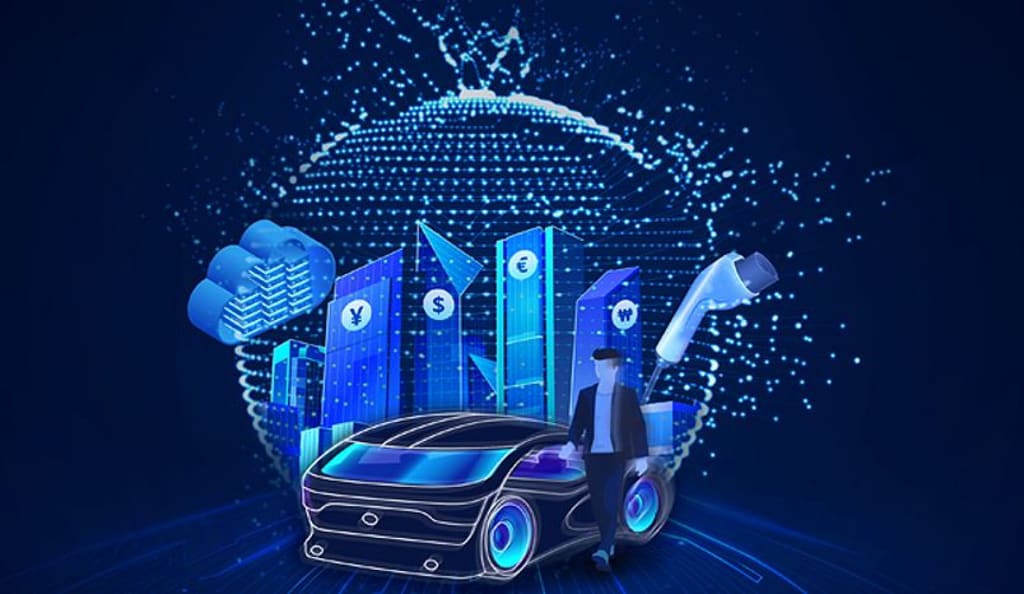
The automotive industry is about to transform in a way most people haven't considered.
You think the big shift is electric vehicles. Or autonomous driving. Or Chinese competition. And those are all part of it.
But Deloitte's new "Future of Automotive Mobility to 2035" study suggests something more fundamental is happening: the value in automotive is moving away from making cars and toward managing mobility.
The report predicts the U.S. automotive mobility market will nearly double in size by 2035. The European market will probably follow. Growth is coming.
But the growth isn't where most people think it is.
The Shift That Nobody's Talking About
For a hundred years, the value in automotive came from manufacturing. Build a car. Sell it to a consumer. Profit.
That's still how most people think about the business.
But the Deloitte study identifies "eleven shifts in profit pools expected in the coming decade." And most of them aren't about cars anymore. They're about the ecosystem around cars.
Leasing companies. Fleet management. Rental operations. Mobility platforms. Data services. Subscription models. The companies that manage vehicle lifecycles instead of just making vehicles.
In other words, the future of automotive value isn't in Detroit or Stuttgart or Shanghai. It's in the companies that own fleets, manage data, and control the customer relationship.
This is a fundamental restructuring of who makes money in automotive.
Why The Market Is Growing, But Car Companies Are Struggling
Here's the paradox that Deloitte's study highlights:
The automotive mobility market is forecast to nearly double by 2035. That's massive growth. That's a huge opportunity.
But traditional automakers Volkswagen, Mercedes, Ford, and GM are cutting jobs and closing plants. Their profits are falling. They're losing market share to Chinese competitors. They're struggling with the transition to EVs.
How can the market be growing if the traditional players are declining?
Because the growth is happening in places automakers haven't historically played. In mobility services. In data services. In fleet management. In the entire ecosystem that has emerged around vehicles, instead of just making vehicles.
This is why Chinese companies are winning. They understand that selling cars is commoditized. The real money is in owning fleets, managing data, and controlling the entire customer lifecycle.
Tesla understood this decades ago. Tesla doesn't just make cars. Tesla is building a mobility platform. Insurance products. Energy products. A data company that also happens to make vehicles.
Traditional automakers are still thinking in terms of "how do we sell more cars?" Chinese companies are thinking, "How do we own the entire mobility experience?"
The Six Things That Matter (According To The Study)
Deloitte's six key findings are basically a roadmap for what succeeds in automotive by 2035:
1. Position yourself in the value chain today. Don't make cars. Manage the ecosystem. Own the relationships.
2. Master asset management across vehicle lifecycles. Own the fleet. Control the entire lifecycle from purchase to disposal.
3. Focus on growth-oriented profit pools. Don't compete on manufacturing. Compete on services and data.
4. Develop mobility platforms and subscription models. Sell mobility as a service, not cars as products.
5. Pursue decarbonization. Meet climate targets. This isn't optional anymore.
6. Watch autonomous vehicles. Self-driving fleets are coming. Be positioned to own them.
Every single one of these points is about control. About owning relationships. About positioning yourself to capture value from the ecosystem instead of just making a product.
What This Means For Traditional Automakers
Traditional automakers are in trouble because they're still competing on manufacturing. On making better cars. On having superior engineering.
But Chinese competitors are making good cars now. Better than good, they're competitive with German engineering at half the price.
So German and American automakers can't win on that basis anymore. They need to compete on platform control. On ecosystem ownership. On data and services.
Mercedes can't out-engineer BYD. But Mercedes could theoretically build a better fleet management platform. Could build better subscription offerings. Could control more of the customer lifecycle.
But they're not. They're cutting worker benefits and closing plants. That's a manufacturing-focused response to a platform-competition problem.
That's why they're losing.
What This Means For Consumers
If the automotive industry shifts from "making cars" to "managing mobility," what changes for you?
You probably own a car less often. You subscribe to mobility services instead. You don't worry about maintenance, that's handled by the company managing your fleet.
Your commute might be autonomous. Or it might be a shared robotaxi. Or it might be a subscription vehicle that changes every month.
The vehicle is still a vehicle. But how you interact with it changes completely.
And more importantly, the company providing that mobility captures all your data. Where do you go? How often. What time. What route. Everything.
That data is worth more than the car itself.
The Malaysian Context (Why This Actually Matters)
Malaysia's automotive policy debates are happening in the shadow of this shift.
When MITI debates whether to attract Chinese EV assembly plants, they're not just deciding on local manufacturing. They're deciding whether Malaysia will be a manufacturing hub or a mobility services hub.
If Malaysia hosts Chinese EV manufacturing, it will become a supplier. Factories produce cars. Jobs are factory jobs. The value captured is manufacturing margin.
But if Malaysia wanted to position itself as a mobility services hub as the company managing fleet operations, data services, and customer relationships across Southeast Asia, that would be a different kind of value capture.
That would mean hosting not just manufacturing, but the entire ecosystem. Platform development. Data analytics. Fleet management. Insurance products.
That's more valuable than manufacturing. That's where Deloitte's growth predictions are actually coming from.
Deloitte predicts the automotive mobility market will nearly double by 2035. But the growth isn't in traditional car manufacturing. It's in the ecosystem around vehicles: leasing, fleet management, data services, mobility platforms.
Traditional automakers are losing because they're still competing on manufacturing. Chinese companies are winning because they're building platform control and ecosystem dominance.
The winners in 2035 won't be the companies with the best cars. They'll be the companies that own the most valuable relationships with customers — and the data those relationships generate.
That's a fundamentally different business.
And most automotive companies aren't ready for it yet.
About the Creator
Mark Lim
Hi I am mark an automotive student and a car, tech and food enthusiast ! Im gonna try and post daily & hope you enjoy what I write and do share my page with people you know. I would gladly appreciate it! Cheers
Enjoyed the story? Support the Creator.
Subscribe for free to receive all their stories in your feed.
Comments
There are no comments for this story
Be the first to respond and start the conversation.