
Technology Is Radically Reshaping Auto Economics
Digital technologies and AI are poised to increase the efficiency of automotive processes by 30%.


Squeezing costs has long been crucial to staying competitive in the automotive industry. But advanced technologies are about to transform the rules of the game. In a recent Bain & Company survey, most auto industry managers said they believe new technologies will usher in efficiency gains of 10% in three years and 30% in the next five years. Productivity leaps of that magnitude will radically change processes and reengineer a lasting shift in the industry's cost structure.
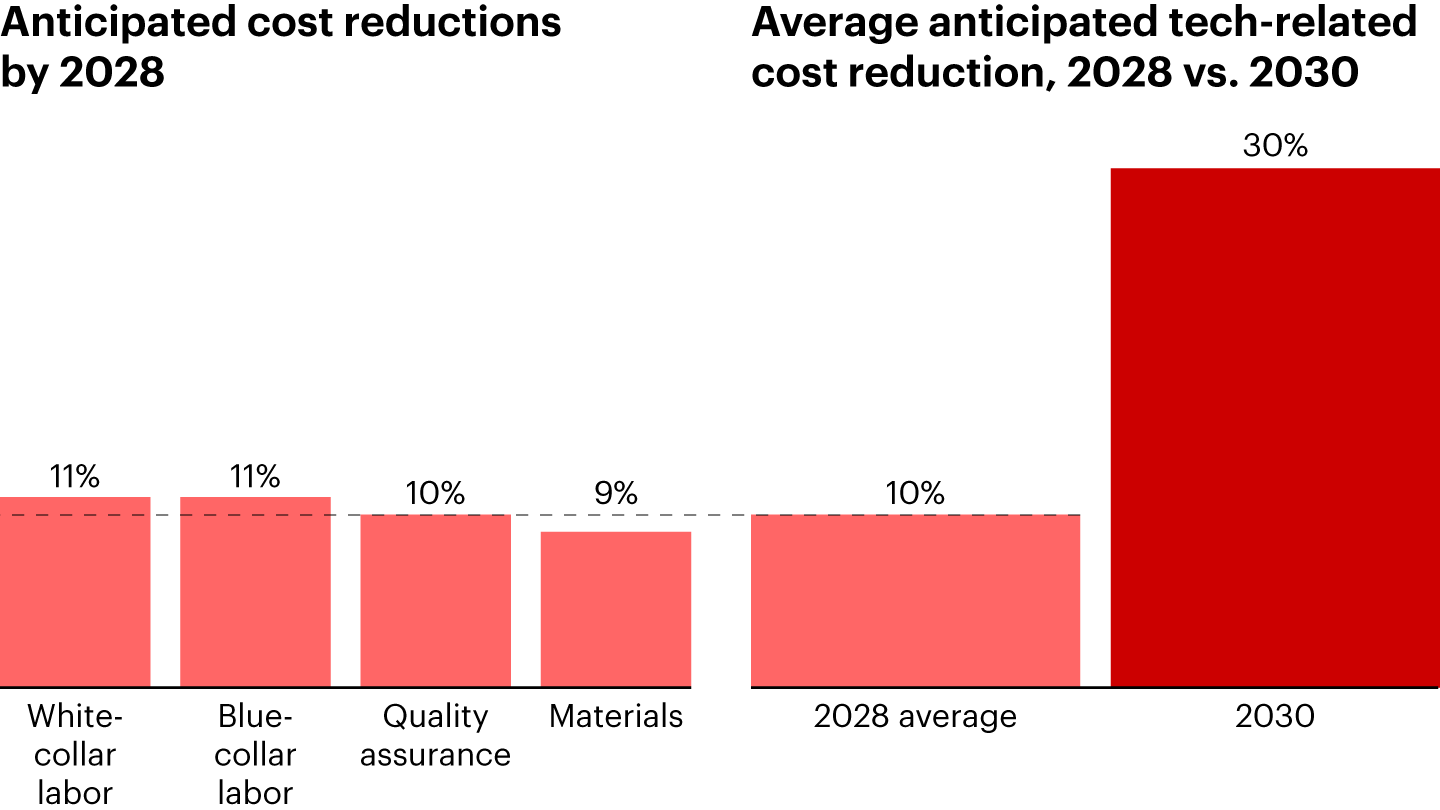
The Opportunity: A Quantum Leap in Efficiency
Rapid Development: From Years to Months
One of the biggest technology-led breakthroughs will be a faster, smarter development process. Digital collaboration between OEMs and suppliers has already begun to slash vehicle development times by more than 40%, transforming how new vehicles come to life. Leaders now aim for 24 months to market, and development times are likely to shrink further.
Those efficiency gains will be made possible by:
Teams working in sync across shared digital platforms
More experimentation and earlier decision-making in the process
Reduced complexity and lower development costs
Faster response to shifts in consumer demand and regulation
Automation: AI on the Factory Floor
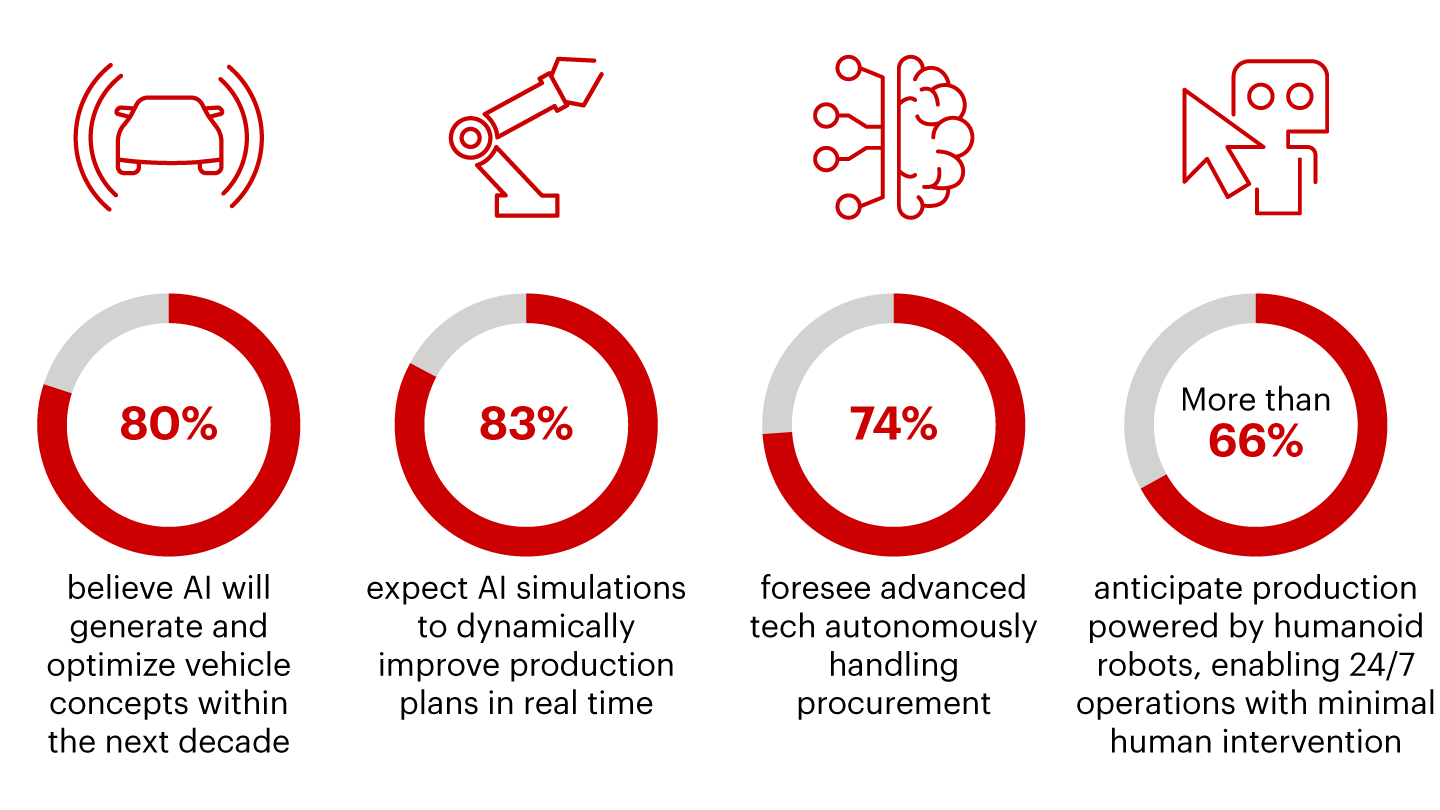
Leading companies are harnessing artificial intelligence in indirect functions to make critical decisions, from shaping vehicle concepts to adjusting factory schedules and sourcing strategies in real time. On the factory floor, automation is steadily advancing, with another leap expected as intelligent robots and humanoids become more common by the end of the decade.
Efficiency Driver Expected Impact
Digital collaboration - 40% reduction in development times
AI in production: Real-time optimization of factory schedules
Humanoid robots - operate 24/7 with minimal human intervention
Gen AI in commercial activities - exceeded expectations in 80% of use cases
Outsourced Manufacturing: The Fabless Model
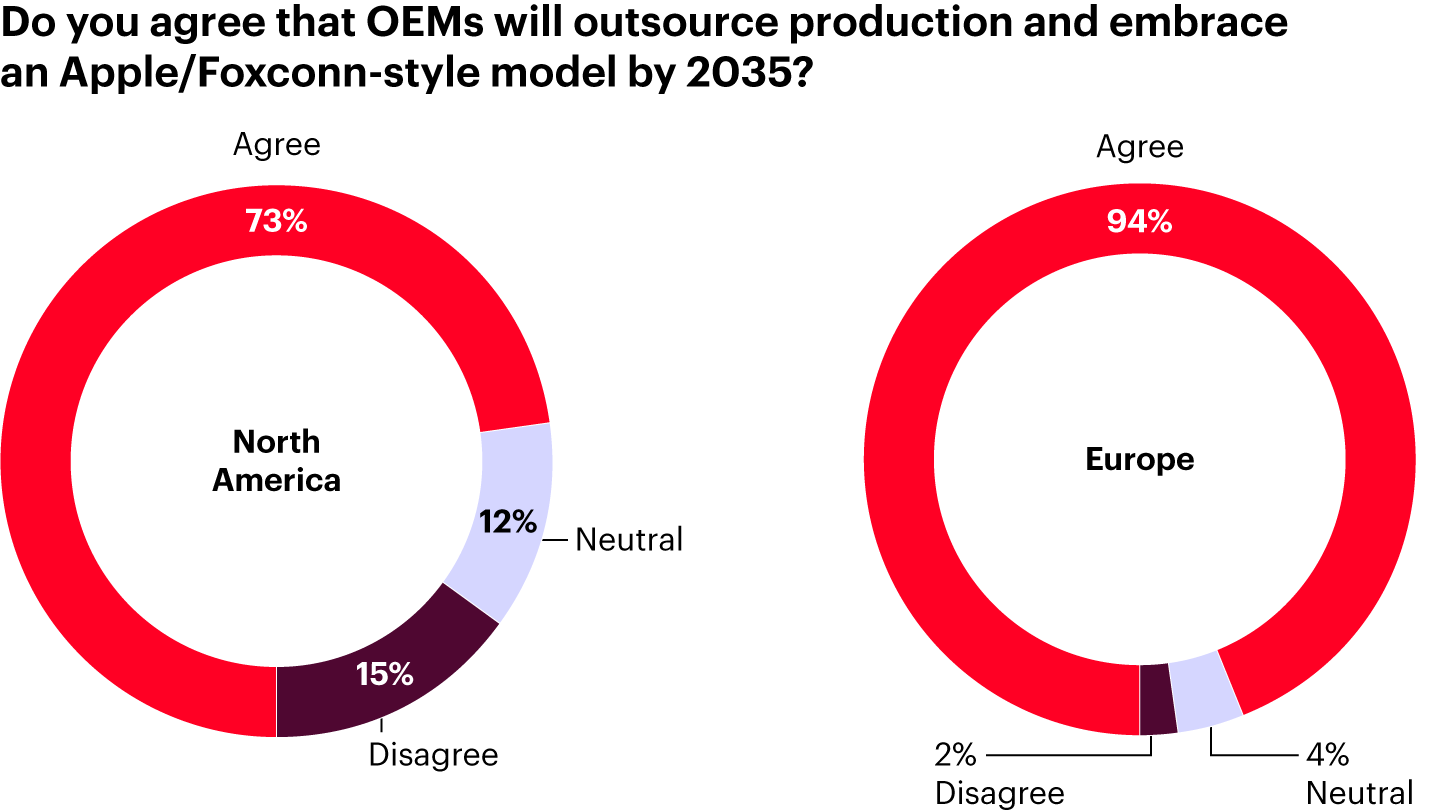
Many automakers are reimagining the factory itself, including a shift to an outsourced production model. More than 80% of those surveyed said they expect a shift to fabless production, similar to Apple's iPhone arrangement with Foxconn, by 2035.
Under this model, OEMs would design their products, focusing on customer experience and brand management, while delegating operations to external partners, who would take on the capital-heavy manufacturing. This would mark a major departure from the vertically integrated systems that have defined the automotive industry for decades and could create greater flexibility and resilience.
Commercial Wins: Smarter Decision-Making
Leading OEMs are also applying generative AI tools to commercial activities, with impressive results in marketing and lead generation. These tools include digital sales assistants for frontline staff and direct customer engagement. In Bain's survey, four out of five respondents said gen AI applications exceeded their expectations. Many are finding that they can better understand what customers want, tailor content quickly, and bring greater precision to digital engagement.
The Challenges: From Data to Mindset
Despite technology's potential to cut costs dramatically, companies continue to cite poor data quality as the key stumbling block. Many organizations have invested in cloud infrastructure and edge computing, but their systems are still fragmented, their data definitions inconsistent, and their platforms built for an earlier era.
The Data Foundation Problem
For most leadership teams, the challenge isn't the technology itself; it's building a data foundation robust enough to allow digital tools to work at scale. Auto manufacturers are moving faster than suppliers in adopting and scaling advanced technologies. They have more experience identifying high-impact use cases and are more likely to have the data governance needed to support large-scale implementation.
The Mindset Gap
Beyond technical constraints, mindset is the biggest obstacle to realizing substantial savings. Technical capabilities are similar across North America and Europe, but management outlooks differ between the regions:
Region Attitude Toward Tech Savings
US: Greater confidence in digital tools; focused on headcount and cost savings
Europe is more cautious, questioning whether new technologies will deliver as promised
This hesitancy could fail to reap the benefits of digital technology. This difference in mindset and culture, not infrastructure, may prove to be the bigger barrier to broad adoption.
What Sets the Leading Companies Apart
To harness the power of AI and other digital technologies, organizations must be ready to embed new tools and change the way they work. Those adept at using digital technologies and AI to dramatically reduce costs follow a few key guidelines.
1. Solve Real Problems
Rather than rushing to deploy the latest digital tools, successful companies start by addressing their biggest operational challenges. Whether it's improving production processes, optimizing sourcing, or empowering frontline staff, they wield technology to solve pressing problems.
2. Focus on Impact
Instead of launching dozens of disconnected pilots, fast movers begin with a few high-impact use cases that can be scaled. Once those "lighthouse" projects deliver results, leaders replicate them systematically across other sites and functions.
3. Build a Data Backbone
The foundation isn't software, it's data. Leading companies are investing in clean data and standardized, integrated platforms that allow them to see across the organization and act on insights with confidence.
4. Change the Operating Model
The most effective management teams optimize processes from end to end, transform the organization and develop new capacities, and encourage decision makers to take bold moves. They also install incentive systems that reward robust use of AI and digital technologies to take out cost.
The auto industry has faced pressure on costs for decades, but what's happening now isn't about marginal gains. It's a quantum leap in efficiency. The winners won't be the ones with the most advanced tools or the biggest budgets. They'll be the ones that focus on solving the right problems, with the right technology, at the right time. Ultimately, these leaders will forge a new operating model that redefines the industry's cost curve.
What do you think about the future of auto economics? Will AI and digital technologies truly deliver 30% efficiency gains? Share your thoughts in the comments below.
About the Creator
Mark Lim
Hi I am mark an automotive student and a car, tech and food enthusiast ! Im gonna try and post daily & hope you enjoy what I write and do share my page with people you know. I would gladly appreciate it! Cheers
Enjoyed the story? Support the Creator.
Subscribe for free to receive all their stories in your feed.
Comments
There are no comments for this story
Be the first to respond and start the conversation.