
Taking the Wheel: AITO’s Independence and the Reset of the Huawei–Seres Partnership
Handover of Control Signals End of Exclusive Growth Era "Huawei Tax" and Shared Channels Erode Margins Seres Faces Test of Building Brand Beyond Tech Partner

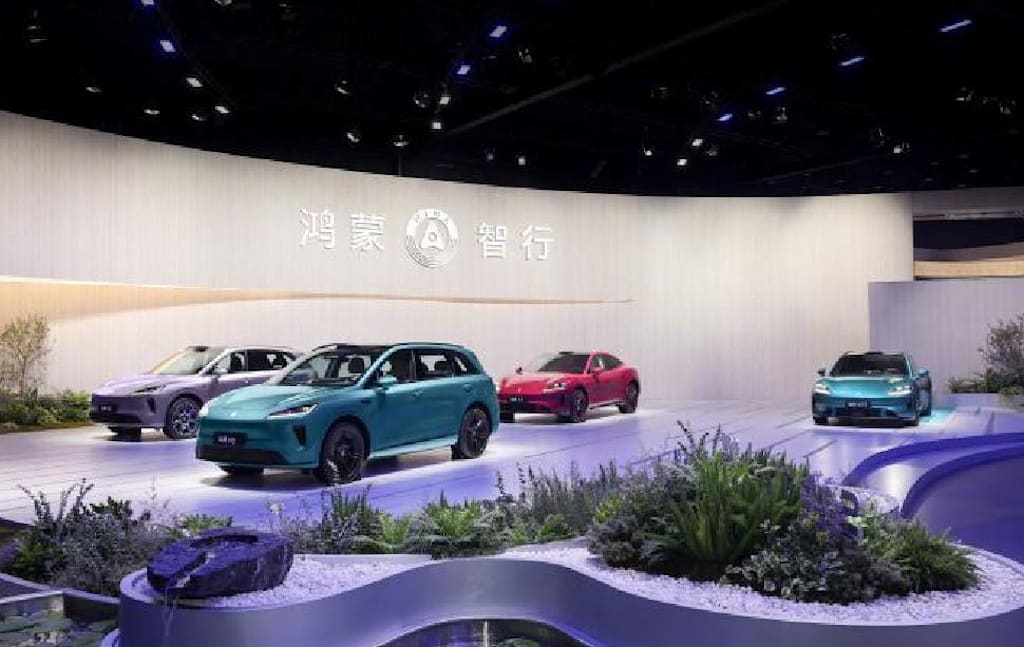
On September 15, 2026, the automotive landscape shifted. Seres and HarmonyOS Intelligent Mobility announced a revised operating model for the AITO brand: from that day forward, Seres would take full lead across product definition, design, marketing, retail channels, and after‑sales service. Huawei would remain a strategic technology partner through Yinwang Intelligent Technology, but its Consumer Business Group would step back from day‑to‑day operations, branding, and distribution. The market’s immediate verdict was unambiguous: Seres’ A‑share closed down 5.09% at ¥45.46, while its H‑share fell 6.12% to HK$34.68, touching the lowest point since its November 2025 listing. While both sides characterised the move as an evolution rather than a breakup, the restructuring marks the end of one of the most explosive growth partnerships in China’s automotive history and the beginning of a make‑or‑break chapter for Seres.
From the Brink to the Breakthrough
The story begins in 2020, when Seres, then known as Chongqing Xiaokang faced an existential crisis. Its traditional micro‑vehicle business was shrinking; the SF5 flagship had sold just 732 units all year; and the company posted a net loss of ¥1.73 billion, its largest since listing. In the same period, Huawei was refining its stance: “We do not build cars, but we help car companies build good cars.” In March 2021, the two signed a memorandum of cooperation; in April, they deepened integration across technology, product, and distribution, launching the Seres Huawei Smart Selection SF5, the first vehicle sold through Huawei’s own retail network. The AITO brand was formally unveiled on December 2, 2021, with the M5 debuting three weeks later at Huawei’s Winter Flagship Launch Event.
What followed was unprecedented. By January 13, 2026, cumulative AITO deliveries surpassed one million units a milestone achieved in just over four years, compared with nearly a decade for many rivals. The M9 dominated the ¥500,000 segment with over 110,000 units delivered in 2025 alone, while the M8 claimed leadership in the ¥400,000 bracket with cumulative sales exceeding 180,000. Annual revenue hit ¥165.05 billion in 2025, with net profit of ¥5.96 billion two consecutive years in the black. The partnership had transformed Seres from a struggling regional manufacturer into a national powerhouse.
The Cost of Success: The "Huawei Tax"
Beneath the growth figures, however, lay a structural burden. Between 2022 and 2025, Seres paid approximately ¥111.34 billion to the Huawei ecosystem — equivalent to 29.29% of total revenue over the same period. By contrast, Seres’ total non‑recurring net profit across those four years stood at just ¥1.48 billion. The outflows comprised three main streams: hardware procurement fees to Yinwang covering smart cockpits, lidar, electric drive systems, and autonomous‑driving controllers; a technology licensing fee of roughly 2% of vehicle selling price; and channel and marketing service fees of approximately 8% of selling price to Huawei Terminal Business Group. Together, these amounted to what the industry termed the “Huawei tax” roughly 10% of every transaction, payable regardless of profitability. Critically, these charges were tied to sales volume, not profit margin: vehicles were sold, and fees were collected, even as manufacturing margins narrowed.
Seres moved to formalise and restructure these ties as early as mid‑2024. In July, it acquired all AITO trademarks and related design patents from Huawei for ¥2.5 billion, securing full brand ownership. In August, it invested ¥11.5 billion for a 10% equity stake in Yinwang, shifting the relationship from pure service provision to deeper capital alignment. Yet the underlying cost structure remained unchanged and as sales momentum stalled, the burden became unsustainable.
Momentum Fades, Pressures Mount
By 2026, the tide had turned. First‑half revenue fell 7.87% year‑on‑year to ¥57.49 billion; attributable net profit swung to a loss of ¥1.72 billion from a profit of ¥2.94 billion. The divergence was stark: Q1 still delivered 34.5% revenue growth and modest profit, but Q2 saw revenue plummet 26.6% and losses widen to ¥2.47 billion. Gross margin contracted from 26.2% in Q1 to 20.9% in Q2, down 8.6 percentage points year‑on‑year, as lithium carbonate prices rose 132.2% and memory chip costs surged. Seres Chairman Zhang Xinghai confirmed that rising raw material expenses added ¥15,000–¥20,000 to the production cost of every vehicle. Sales followed: AITO deliveries fell 14.1% year‑on‑year across January–August; in July and August, Seres‑badged sales dropped by roughly 50% in each month.
Shared Shelves, Diluted Priority
The shift to a multi‑brand ecosystem within Huawei’s stores amplified the strain. AITO was once the flagship recipient of Huawei’s latest technology — the first to receive new lidar systems, software updates, and OTA upgrades. That exclusivity eroded as Chery, BAIC, JAC, and SAIC joined the platform, creating five “Jie” brands competing for the same floor space, sales resources, and customer attention. In August 2026, total HarmonyOS Intelligent Mobility deliveries reached 42,101 units; AITO accounted for nearly half, but Shangjie and Zhijie each delivered over 8,000. For Huawei, brand diversity was a strength whichever vehicle a customer chose, the ecosystem prevailed. For Seres, it meant diminishing visibility, delayed feature rollouts, and the end of privileged access to cutting‑edge hardware. When the next‑generation lidar debuted simultaneously on the AITO M9 and the Zunjie S800, the message was clear: no single partner would stand alone at the front of the line.
A New AITO, But Will Buyers Follow?
The September 15 transition transfers full control to Seres: product definition, design language, marketing strategy, dealer networks, and service standards all shift in‑house. Huawei remains present as a shareholder in Yinwang and a technology enabler, but the brand will no longer carry Huawei’s name or draw on its retail dominance as before. The question now is whether customers bought AITO for the vehicles or for the Huawei badge. As store displays, sales scripts, and software update priorities are reoriented, the premium that buyers associate with “Huawei‑inside” is at risk of diminishing.
Yet the M8 and M9 have proven enduring appeal: the M9 has held leadership at the high end for two years running, and the M8 commands fierce loyalty. These are not products sustained by marketing alone; they are vehicles with genuine market traction. The challenge for Seres is to translate that existing strength into a standalone identity: to build an ecosystem, a service experience, and a technology roadmap that buyers recognise and trust without Huawei’s name above the door. If it succeeds, the “Huawei tax” becomes a memory and margins recover. If it does not, the brand could drift into the crowded middle ground where differentiation is scarce and pricing power fragile.
The AITO handover is not a breakup; it is a growing up. The partnership that carried Seres from near collapse to one million vehicles in four years has evolved because the scale it created no longer fits the structure that built it. For Huawei, the multi‑brand strategy spreads risk and extends influence across the industry. For Seres, independence means shouldering full control and full responsibility. The stores, the software, the brand, and the sales targets now belong entirely to Seres. Whether customers will follow is the question that will define the next chapter.
About the Creator
Mark Lim
Hi I am mark an automotive student and a car, tech and food enthusiast ! Im gonna try and post daily & hope you enjoy what I write and do share my page with people you know. I would gladly appreciate it! Cheers
Enjoyed the story? Support the Creator.
Subscribe for free to receive all their stories in your feed.
Comments
There are no comments for this story
Be the first to respond and start the conversation.