
Spark Plugs Explained: How to Read and Choose What's Best for Your Engine
Vehicle Maintenance

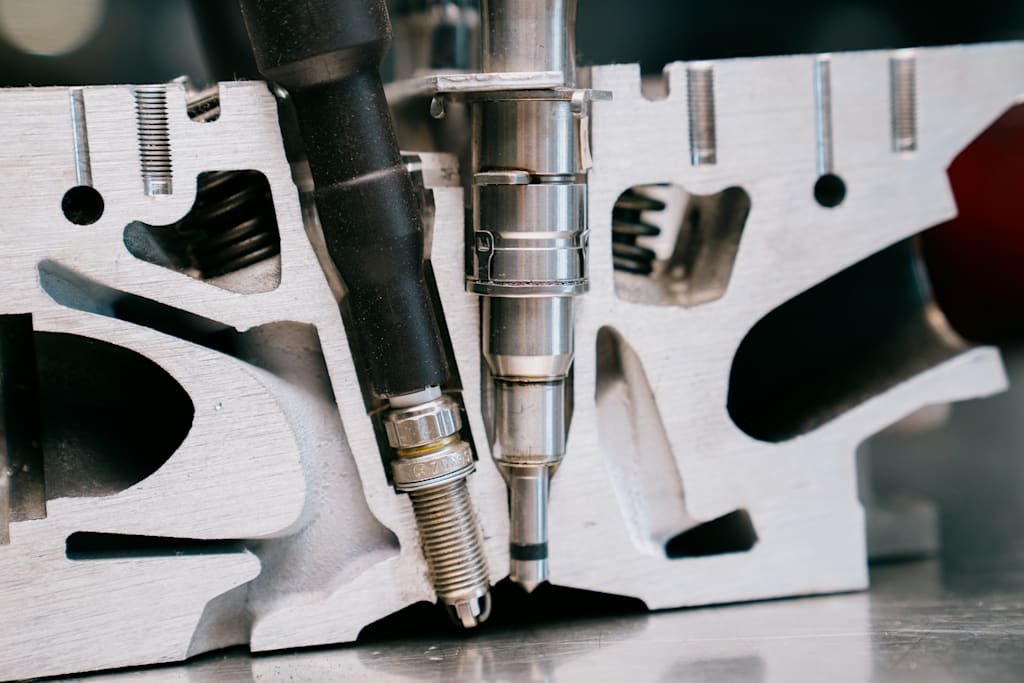
Spark plugs are often treated as an afterthought a routine replacement item to be checked off during a tune-up. But their role is far more critical than many drivers realize. Spark plugs are the ignition source for the entire combustion process. Their health directly influences performance, fuel economy, and drivability. Choosing the right plug for your application can be a hassle, given the many styles and performance ranges available. This guide will help you understand how spark plugs work, the different types available, and how to select the best one for your engine .
How Does a Spark Plug Work?
The spark plug's primary job is igniting the fuel and air mixture within the combustion chamber. The ignition system supplies electricity often through an individual ignition coil connected directly to the top of the plug. This electric charge passes through the centre electrode until it reaches the tip and arcs across to the ground electrode. As the charge arcs from electrode to electrode, it ignites the mixture of oxygen and gasoline. Combustion follows .
When a spark plug fails, it is typically due to one of two conditions: non-stoichiometric running or oil contamination. Lean mixtures (too much air) can overheat the spark plug, damaging the electrodes. Rich mixtures (too much fuel) can coat the electrodes in unburnt fuel and carbon, blocking the electricity from arcing. Oil causes the same effect as a rich mixture: it coats the electrodes and prevents reliable firing. In both cases, the phenomenon is called fouled spark plugs .
The Different Types of Spark Plugs
Spark plugs have existed since 1860, but modern automotive applications fall into a few distinct categories. Their main differentiator lies in the metals used for the side and centre electrodes. Toughness and thermal conductivity vary from one element to another, giving each spark plug differing qualities and applications .
Copper Plugs
The term "copper plug" is somewhat misleading, as all spark plugs use copper for its excellent conductivity second only to silver. However, copper is relatively soft with a low melting point. Left exposed in a combustion chamber, a pure copper tip would not last long. Instead, a nickel-alloy tip covers the copper core.
These inexpensive plugs are proven to provide the coolest burn and most peak power in high-performance situations. The trade-off is durability. Copper plugs typically last between 20,000 and 30,000 miles, with 10,000 hard miles not uncommon. Vintage vehicles with distributor-based ignition systems are the most common applications, as the copper plug provides an intense burn and lasts about as long as other components in those outdated systems .
Platinum Plugs
Platinum plugs use a platinum disc fused to the copper core rather than a nickel alloy. Platinum is significantly more durable than nickel alloy in terms of hardness and thermal conductivity. Its lifespan is roughly triple that of a copper plug. Platinum burns hotter, which helps prevent carbon buildup on the electrodes, and can withstand higher temperatures, aiding its longevity. Expect 60,000 to 100,000 miles from a set of platinum plugs.
Iridium Plugs
Iridium plugs use an iridium tip fused to a copper core. Iridium's strength and thermal durability far exceed platinum's, offering unrivaled longevity and better performance properties. Iridium plugs are easily identified by their "fine wire" tip. Iridium is so tough that manufacturers reduce tip size to below 0.5 mm without any risk to longevity. This smaller tip provides a more concentrated spark and a lower draw on the ignition system. The only drawback is cost; iridium is not the cheapest metal to source .
Double Platinum and Double Iridium Plugs
Double spark plugs include the same metal platinum or iridium on the ground electrode as well as the centre electrode. This design is unnecessary for distributor or individual coil systems but is essential for wasted-spark ignition systems , where the electric charge jumps from the centre electrode to the ground electrode and then back again.
"Wasted spark" refers to the system firing on both the compression stroke and the exhaust stroke, caused by two cylinders sharing an ignition coil. It is a common upgrade for anyone looking to ditch a distributor-style ignition without the cost and complexity of individual coils .
What Is Spark Plug Heat Range?
A spark plug must operate within a specific temperature range for optimal performance. If it runs too cold, carbon, fuel, and oil will build up on the electrodes, disrupting spark strength and reliability. If it runs too hot, the electrodes can melt.
Engineers could easily find a universal temperature range if all engines shared a standard peak and average cylinder temperature. They do not. Combustion intensities vary wildly, rendering a single plug design inadequate for most engines. The heat range determines how quickly a spark plug sheds absorbed heat into the cylinder head.
A hotter plug has less ceramic insulation surrounding the core, exposing the core to more heat and slowing heat transfer. A colder plug has much more insulation, requiring a higher average cylinder temperature to stay within the ideal operating range. Modifying an engine to improve performance almost always intensifies combustion, which is why tuners often recommend a colder plug .
Spark Plug Replacement Costs
Costs vary dramatically based on engine type. High-performance engines often require specialized plugs with short service intervals. Ordinary engines use far more common and less expensive types. Specialization, production volume, and metal type all play a role.
Multiply the individual plug cost by the number of cylinders (or spark plugs, for twin-plug ignitions), and you have your primary cost. Also consider when your ignition coils were last replaced; they are just as critical to spark production .
Do I Need to Gap Spark Plugs?
Generally, no. Modern plugs almost always come pre-gapped to a safe level. The only times you would need to gap plugs are on vintage vehicles, race cars, or heavily modified engines. Moving to a colder plug on an engine to which you have added power may require gapping, but this is not a guarantee .
Spark plugs are more than routine maintenance. They are integral to engine performance, fuel economy, and reliability. Choosing the right type copper, platinum, or iridium depends on your engine, your driving habits, and your performance goals. Understanding heat range helps if you are modifying your engine. And knowing when to replace them prevents the frustration of fouled plugs and misfires.
With this information, you are now equipped to shop for the right spark plugs for whatever engine you have. If you wish to deviate from the original plug type, do your research and consult an engine tuner familiar with your specific modifications. Otherwise, follow your vehicle manufacturer's recommendations and enjoy the peace of mind that comes from a properly firing engine .
About the Creator
Mark Lim
Hi I am mark an automotive student and a car, tech and food enthusiast ! Im gonna try and post daily & hope you enjoy what I write and do share my page with people you know. I would gladly appreciate it! Cheers
Enjoyed the story? Support the Creator.
Subscribe for free to receive all their stories in your feed.
Comments
There are no comments for this story
Be the first to respond and start the conversation.