
Red Bull Admits Budget Cap Will Slow F1 Development as Team Pivots Early to 2027
After closing a massive 1.3-second deficit in the first half of 2026, Laurent Mekies confirms financial constraints will limit upgrades for the remainder of the season as Red Bull avoids repeating last year’s costly development trap.

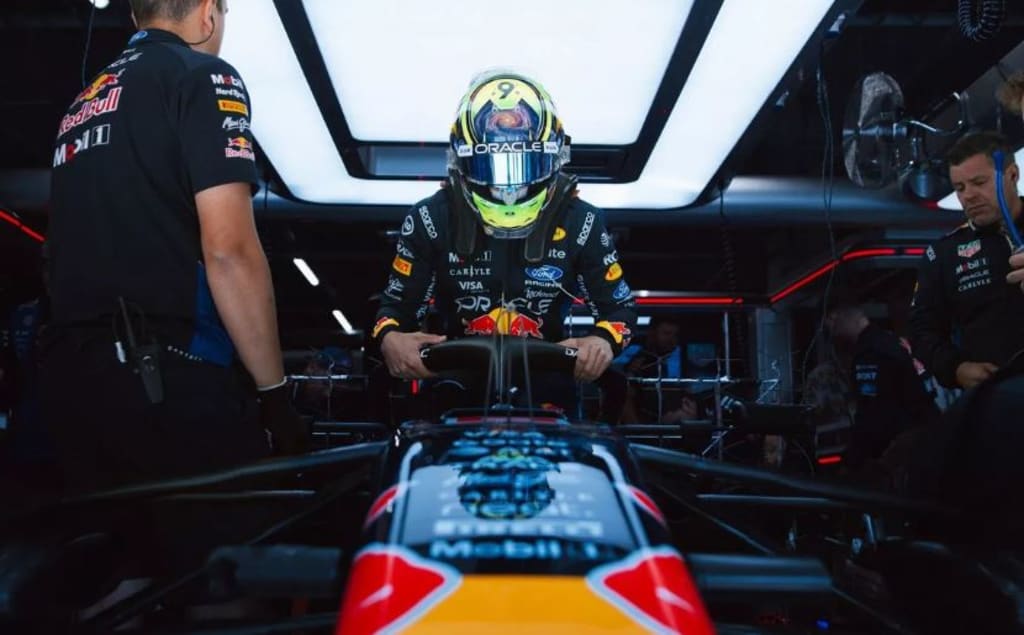
Red Bull Racing enters the Formula 1 summer break fourth in the constructors’ championship, but the standings obscure a remarkable technical recovery. Since the season opener in Melbourne, the team has slashed its race pace deficit from 1.3 seconds per lap to just two or three tenths, effectively finding a full second of performance relative to the front-runners. However, this aggressive early-season development blitz has come at a high cost. Team principal Laurent Mekies has now confirmed that the $215 million budget cap will force a reduced upgrade cadence in the second half of 2026, as Red Bull shifts resources toward the 2027 challenger earlier than it did during its ill-fated 2025 title defense.
A Remarkable Recovery at a Price
Data from Paceteq illustrates the scale of Red Bull’s turnaround. In Australia and China, the RB22 was mired in the lower midfield, battling Haas and Alpine for position. By the final races before the summer break, major aerodynamic revisions including completely redesigned sidepods and weight reduction programs had transformed the car into a consistent podium contender. Ferrari even suggested Red Bull may have introduced more new parts in the opening 11 races than any other team, countering Toto Wolff’s criticism of Maranello’s own upgrade frequency.
But this front-loaded strategy has exhausted much of Red Bull’s annual development budget. “We have brought a huge amount of development to the car between race one and here, to try to as soon as possible correct the large deficit we initially had,” Mekies explained. “And it's probably difficult to imagine that we will continue at that rhythm.” The admission signals a necessary recalibration: while the team still aims to close the final two-to-three-tenths gap to the leaders, it must do so with diminishing financial ammunition.
The Hardest Tenths and Diminishing Returns
Mekies has previously noted that the last few tenths of lap time are exponentially harder to find than the initial gains. With rivals like McLaren, Ferrari, and Mercedes continuing their own development cycles, maintaining parity requires sustained investment, precisely what the budget cap prevents after an aggressive first half. This creates a strategic dilemma: push for marginal 2026 gains at the expense of 2027, or accept a plateau this year to secure next year’s foundation.
The choice is complicated by regulatory stability. Unlike previous transition years where early pivots carried high risk, the 2027 regulations represent a known quantity. This reduces the penalty of shifting focus, making an earlier transition more strategically viable than in past cycles.
Learning From Last Year’s Costly Lesson
Red Bull’s 2026 predicament is directly tied to decisions made in 2025. Technical director Pierre Wache later acknowledged that throwing all available resources at closing the gap to McLaren and supporting Max Verstappen’s fifth title bid left the team unprepared for the 2026 regulation reset. The resulting early-season deficit forced the very development blitz that has now constrained their second-half options.
This year, Red Bull intends to avoid repeating that mistake. “At some stage we'll need to make a call on the balance between this year and next year,” Mekies stated. “I expect that to happen earlier than what we have done last year, especially as the regulations are what they are.” The phrasing suggests a hard deadline looms likely immediately after the summer break when wind tunnel time, CFD allocations, and engineering personnel will be formally redirected toward the 2027 project.
Strategic Implications for the Title Fight
For Red Bull’s drivers, this means the window for championship contention may be narrower than current form suggests. If rival teams maintain aggressive upgrade schedules through Q3 and Q4 while Red Bull conserves resources, the two-to-three-tenth gap could stabilize or even widen again. Conversely, if Red Bull’s existing platform retains sufficient competitiveness and operational execution improves, the team could remain in the mix without further major hardware changes.
The broader implication is that the 2026 championship may increasingly be decided not by who develops fastest in the second half, but by who managed their first-half spending most efficiently. Red Bull’s transparency about budget constraints reflects mature organizational learning but also acknowledges that in the cost cap era, recovery from early deficits carries compounding penalties. Whether this disciplined pivot yields dividends in 2027 remains to be seen, but for now, Red Bull has chosen sustainability over sprinting a decision born of hard-won experience.
About the Creator
Mark Lim
Hi I am mark an automotive student and a car, tech and food enthusiast ! Im gonna try and post daily & hope you enjoy what I write and do share my page with people you know. I would gladly appreciate it! Cheers
Enjoyed the story? Support the Creator.
Subscribe for free to receive all their stories in your feed. You could also become a paid subscriber, letting them know you appreciate their work.
Comments
There are no comments for this story
Be the first to respond and start the conversation.