
Proton S70 Seen with Geely Badging for Export Markets; Malaysian Market Facelift with NA Variant This Year?
The Tanjong Malim plant appears to be producing Geely-badged sedans for export, while a more affordable naturally aspirated version of the S70 may be on the horizon for Malaysia.

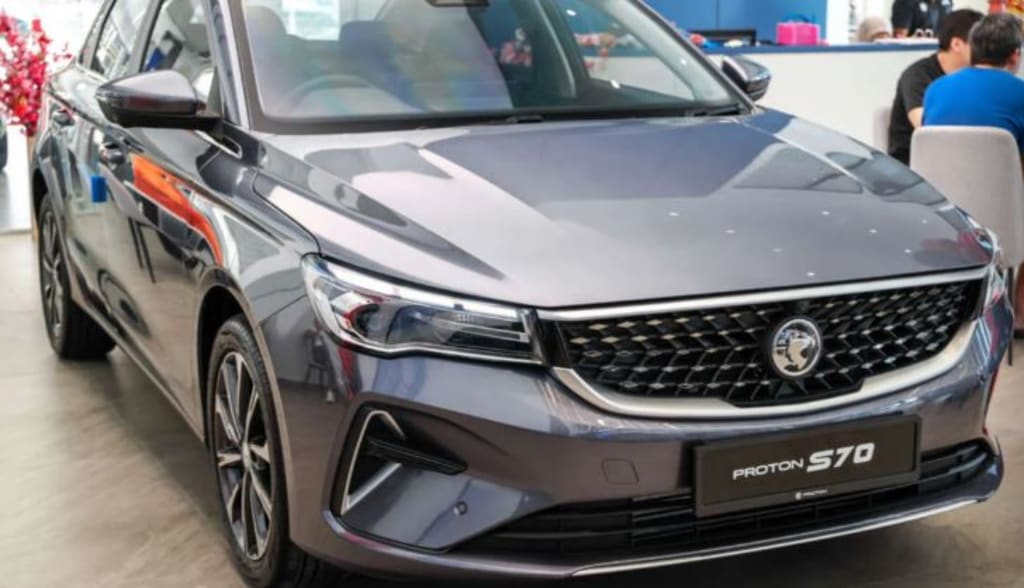
The Sighting That Set the Automotive World Abuzz
Footage of a transporter trailer loaded up with units of what appears to be the Proton S70 sedan was recently posted to the paultan.org Automotive/Car Discussion Group on Facebook. Closer viewing reveals Geely badging on the wheels of the cars, suggesting these are for export markets rather than local consumption.
The footage, which quickly went viral among Malaysian automotive enthusiasts, shows a transporter carrying multiple units of the sedan, all bearing the distinctive Geely emblem on their wheel hubs. This is a significant development, as it marks the first time the S70 has been spotted with Geely badging since its introduction in Malaysia.
These units aboard the transporter appear not to be visually different from the latest version on sale in Malaysia, namely the MC1 that was launched in February this year. The sighting has sparked intense speculation about Proton's expanding role as a manufacturing hub for Geely vehicles in the region and what this means for the Malaysian automotive landscape.
The Tanjong Malim plant that produces the S70 also makes the X50 for export markets including Indonesia and Vietnam. The left-hand-drive S70 could therefore be destined for these markets, with the Philippines a strong possibility as well.
Why the Philippines Makes Sense as a Destination
The Philippines currently sells the sedan as the Emgrand sourced from China. However, production of this version may have stopped as the Emgrand has since moved on to an all-new, fifth-generation iteration. This makes it logical for the left-hand-drive market to receive the model from Malaysia instead.
The Philippines has long been a key market for Geely vehicles in Southeast Asia, and establishing Malaysia as a regional production hub for the Emgrand/S70 platform would make strategic sense for the Chinese automaker. It would allow Geely to leverage Proton's existing manufacturing infrastructure and supply chain while avoiding the tariffs and logistics costs associated with shipping vehicles from China.
Interestingly, the Geely Emgrand and Proton S70 have significant mechanical differences. The Emgrand is offered with a 1.5-liter naturally aspirated four-cylinder engine producing 102 PS and 142 Nm, paired with a CVT automatic gearbox. In contrast, the Proton S70 currently uses a turbocharged 1.5-liter engine producing 181 PS and 290 Nm with a seven-speed dual-clutch transmission.
This means Proton has already begun assembling the 1.5 NA engine and CVT gearbox combination on the S70 body through the production of Emgrand units for export. This development has significant implications for the Malaysian market, as it suggests Proton now can produce naturally aspirated versions of the S70 locally.
Malaysian Market Implications: A Facelift and an NA Variant
While the Geely-badged units are clearly for export, there are strong indications that Proton is working on significant updates for the local S70. Proton is said to be working on a local facelift for the S70, and with it a naturally aspirated version to replace the B-segment Persona.
The Persona's Quiet Retirement
The Proton Persona's lifecycle has quietly come to an end. As the Iriz—the Persona's hatchback sibling was discontinued in September 2025, the Persona's retirement was essentially confirmed. The model did not appear in any of Proton's future product planning slides at the recent Proton Tech Showcase.
The Persona had been a mainstay of Proton's lineup for years, offering a compelling alternative to the Saga with its sportier styling and more powerful engine. However, as Proton has shifted its focus toward SUV models and more technologically advanced sedans, the Persona has increasingly become a relic of a bygone era.
Another telling sign is Proton's powertrain strategy. The company has confirmed that its i-GT engine family will fully replace the Campro VVT and GEP3 engines by 2026. Since the Persona uses the 1.6L Campro VVT engine, its discontinuation aligns perfectly with this plan. The i-GT family represents Proton's commitment to modern, efficient, and more powerful engines, and the Campro VVT simply no longer fits into that vision.
What an NA S70 Would Look Like
The concept of a naturally aspirated S70 is not without precedent. The Geely Emgrand, which serves as the S70's donor car, is available with a 1.5-liter naturally aspirated engine in other markets, producing around 126 PS and 152 Nm. This engine is well-suited to budget-conscious buyers who prioritize fuel efficiency and affordability over outright performance.
There are also reports of Proton exploring a CVT with torque converter application for a potential budget-oriented model. This would be a more suitable transmission for an entry-level S70 than the Punch CVT used in the Saga. A torque converter CVT would offer smoother power delivery and better reliability, addressing some of the concerns that Proton owners have had with the Punch CVT in the past.
If Proton does introduce an NA S70, it would help bridge the significant price gap between the top-spec Saga and the base S70, a difference of approximately RM25,000. The NA variant could effectively replace the Persona in Proton's lineup while offering a more modern platform and better equipment. This would give Proton a compelling entry-level sedan that can compete with the Honda City and Toyota Vios while offering better value for money.
The Facelift: What to Expect
Beyond the NA variant, Proton is also rumored to be working on a local facelift for the S70. This facelift could bring a range of updates, including revised styling, improved interior quality, and potentially even additional features.
The current S70 MC1, launched in early 2026, already represented a significant step forward for the model. However, Proton appears to be keen to keep the S70 competitive in a rapidly evolving segment. A facelift would help maintain the model's momentum and ensure it remains a top contender in the C-segment sedan market.
The MC1: A Quick Recap
The current Proton S70 MC1, launched in early 2026, brought significant changes under the hood. The headline upgrade was the new 181 PS/290 Nm 1.5-liter i-GT turbocharged inline-four-cylinder petrol engine, which replaces the previous 1.5-liter three-cylinder turbo unit in all variants.
This new engine represents a major leap forward in terms of performance. The previous three-cylinder unit, while adequate, was often criticized for its lack of refinement and occasional turbo lag. The new i-GT engine addresses these issues, offering smoother power delivery, better throttle response, and significantly more pulling power.
The new engine also serves in the X50 facelift, X70 MC3, and X90 MC, demonstrating Proton's commitment to platform sharing and powertrain standardization across its lineup. Beyond the powertrain, the MC1 features new LED headlamps inspired by the Geely Emgrand facelift, revised 17-inch alloy wheels, and a new black bodykit on the Flagship X variant.
Inside, the MC1 received subtle but meaningful updates, including improved material quality, a more responsive infotainment system, and additional sound deadening for a quieter cabin. These changes have been well-received by both critics and customers, helping to cement the S70's reputation as a value-for-money proposition in the C-segment.
Proton's Export Ambitions
The sighting of Geely-badged S70 units is just the latest sign of Proton's growing export ambitions. The Malaysian automaker has been steadily expanding its presence in regional markets, leveraging its partnership with Geely to access new technologies and markets.
The X50 Export Success
The X50 has been a particularly successful export model for Proton. The compact SUV is currently exported to Indonesia and Vietnam, where it has been well-received by consumers seeking a stylish and affordable SUV. The X50's success in these markets has given Proton confidence to expand its export lineup, and the S70 appears to be the next model to get the export treatment.
The Indonesia and Vietnam Connection
Indonesia and Vietnam represent significant opportunities for Proton. Both countries have large and growing automotive markets, with consumers increasingly seeking modern, well-equipped vehicles at competitive prices. The left-hand-drive configuration required by these markets aligns with the Geely-badged S70 units spotted on the transporter.
Vietnam, in particular, has been a bright spot for Proton. The X50 has performed well in the Vietnamese market, and there is strong demand for sedans as well. The S70, with its modern design and advanced features, could be a compelling alternative to established players like the Toyota Vios and Honda City in Vietnam.
The Philippines: A Strategic Market
The Philippines is another key target for Proton's export expansion. The country has a large and growing middle class, and demand for new vehicles is strong. However, the Philippine automotive market is dominated by Japanese brands, and breaking into this market would require a compelling value proposition.
The S70's combination of modern design, advanced features, and competitive pricing could make it an attractive option for Filipino consumers. Furthermore, sourcing the S70 from Malaysia would allow Proton to offer competitive pricing while maintaining quality and reliability.
The NA Variant's Role in Proton's Strategy
Bridging the Gap
One of the most significant challenges Proton currently faces is the gap between its entry-level models and its more premium offerings. The Saga, while a strong seller, is an aging model that struggles to compete with newer competitors. The Persona, which once bridged the gap, is being phased out. This leaves a significant hole in Proton's sedan lineup.
The introduction of an NA S70 would help fill this gap. By offering a naturally aspirated variant with a lower price point, Proton could appeal to buyers who want a modern, well-equipped sedan without paying for the performance of the turbocharged version.
Competition in the B-Segment
The NA S70 would also allow Proton to compete more effectively in the B-segment, a highly competitive market segment in Malaysia. The Honda City and Toyota Vios dominate this segment, and breaking their stranglehold would require a compelling alternative.
The NA S70 would offer several advantages over its Japanese competitors. It would be built on a modern platform, offering better space and refinement than older B-segment models. It would also offer better value for money, with a lower price point and more features than its Japanese rivals.
A Natural Persona Replacement
The Persona's discontinuation has left a void in Proton's lineup that the NA S70 is ideally positioned to fill. The NA S70 would offer a similar value proposition to the Persona—a sporty, affordable sedan with modern styling and decent performance. However, it would be built on a more modern platform, offering better safety, refinement, and technology.
What's Next for Proton?
Upcoming Launches
Proton is expected to launch at least two new models by the end of the year, including the AMA 02 SUV and the S70 facelift. These launches will be critical to Proton's continued growth and market share expansion.
The AMA 02 SUV is particularly significant, as it represents Proton's entry into a new market segment. The SUV is expected to be built on a Geely platform and will feature advanced technology and design. Its launch will help Proton compete with established players like the Honda CR-V and Mazda CX-5.
The S70 Facelift Timeline
The S70 facelift is expected to be launched later this year, possibly as early as the fourth quarter. If Proton does introduce an NA variant, it is likely to be launched alongside the facelift, giving buyers a choice between turbocharged performance and naturally aspirated efficiency.
Powertrain Evolution
Proton's powertrain strategy is evolving rapidly. The company has already confirmed that its i-GT engine family will fully replace the Campro VVT and GEP3 engines by 2026. This shift will bring more power, better efficiency, and improved refinement to Proton's lineup.
The introduction of an NA S70 would represent an interesting deviation from this strategy. While the i-GT engine family focuses on turbocharged performance, the NA S70 would offer a more traditional, fuel-efficient powertrain option for budget-conscious buyers.
Conclusion
The sighting of Geely-badged S70 units suggests Proton is fully utilizing its Tanjong Malim plant as a regional export hub. At the same time, Proton seems to be preparing a facelift for the local S70, potentially introducing a more affordable naturally aspirated variant to fill the void left by the Persona's retirement.
If Proton does introduce an NA S70, it would mark a significant shift in the company's sedan strategy. It would allow Proton to compete more effectively in the B-segment while offering better value for money than its Japanese competitors. It would also give Proton a modern, entry-level sedan that can appeal to a wide range of buyers.
The return of a naturally aspirated engine to the S70 lineup would appeal to budget-conscious buyers who don't need the full performance of the turbocharged variants. And with the facelift expected later this year, the S70 looks set to remain a key player in the Malaysian automotive market for years to come.
About the Creator
Mark Lim
Hi I am mark an automotive student and a car, tech and food enthusiast ! Im gonna try and post daily & hope you enjoy what I write and do share my page with people you know. I would gladly appreciate it! Cheers
Enjoyed the story? Support the Creator.
Subscribe for free to receive all their stories in your feed.
Comments
There are no comments for this story
Be the first to respond and start the conversation.