
Porsche’s Strategic Reset: Fewer Cars, Higher Margins, and a Return to Desirability
Break-Even Below 200,000 Units Profit Rebound From 1.1% to Double Digits China Slump and U.S. Tariffs Force Change Aligning With Ferrari and Luxury Brands 9,000 Job Cuts and Deep Restructuring

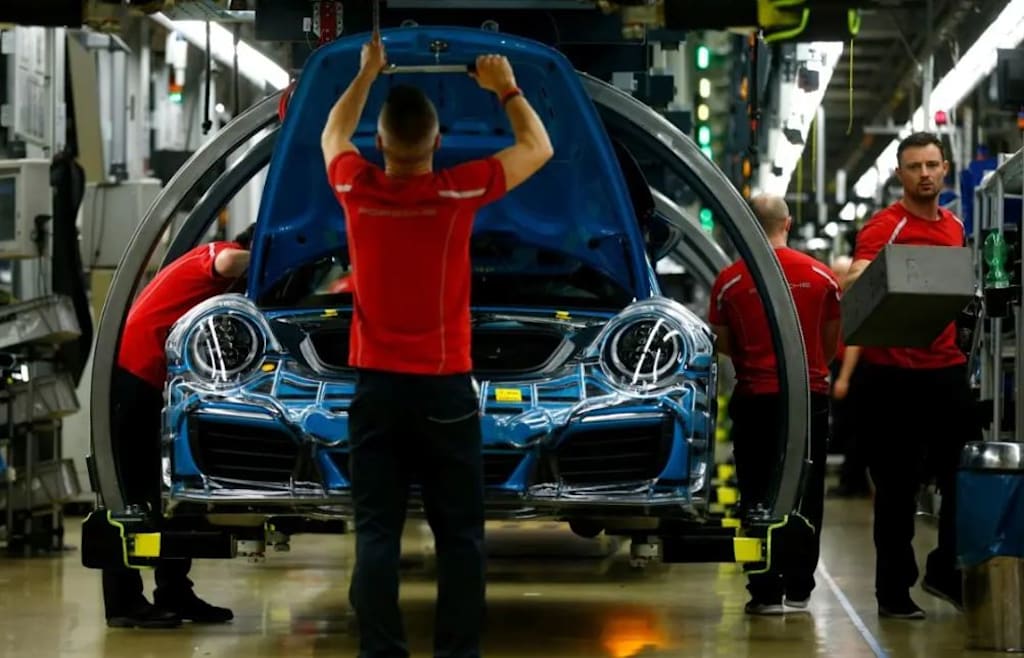
At its development and innovation centre in Weissach on Wednesday, Porsche unveiled a far-reaching strategic overhaul designed to secure the company’s future not through expanding production, but through deliberate, disciplined focus on value, exclusivity, and enduring desirability. Facing slowing global demand, shifting consumer preferences, and intense pressure from low-cost competitors, newly appointed Chief Executive Officer Michael Leiters presented a plan that redefines what success looks like for one of the world’s most celebrated automotive brands: fewer cars sold, each commanding a premium price, underpinned by a leaner, more efficient organisation built to withstand economic uncertainty.
The Challenge: Headwinds and Margin Collapse
The need for change is undeniable. Since Porsche’s landmark public listing in 2022, a moment marked by robust growth and operating margins in the high teens, the landscape has shifted dramatically. Global deliveries have declined by nearly 10%, falling from a peak above 300,000 to 279,449 vehicles last year. The downturn is most acute in China, the brand’s largest single market, where consumer confidence has softened and competition has intensified. In the United States, tariffs have added further cost and complexity, eroding competitiveness across an already fragile trading environment.
Most alarming of all has been the squeeze on profitability. Operating margins tumbled to just 1.1% in the most recent financial year, a fraction of the returns investors came to expect, and far below the levels required to fund innovation, electrification, and long-term growth. Parent company Volkswagen’s own broader restructuring challenges have added urgency to the situation, making it clear that Porsche cannot rely on external support to solve internal structural issues.
The New Vision: Desirability Over Volume
Leiters’ response is bold and unambiguous: Porsche will no longer chase sales volume as its primary measure of success. Instead, it will re-centre on the principle that has defined the brand since its earliest days: exclusivity. The company will lower its break-even point to below 200,000 units annually, meaning it can operate sustainably at roughly 80,000 fewer deliveries than it made last year. This deliberate reduction in scale is not retreat; it is a repositioning. Resources will be concentrated on the highest-margin, most coveted models led by the iconic 911 with a specific ambition to lift pricing and value across the top 10,000 vehicles produced each year.
“We want to reinforce Porsche as the world’s most desirable sports car manufacturer,” Leiters stated plainly, framing the brand’s future not against mass-market automakers, but alongside ultra-luxury names such as Ferrari and global premium houses including Louis Vuitton. This shift recognises that in an increasingly crowded and competitive market, true resilience comes not from being the biggest, but from being the most wanted.
Restructuring for Resilience: Costs, People, and Platforms
To make this vision real, Porsche is undertaking deep, multi-layered restructuring designed to cut waste, speed decision-making, and build financial flexibility. By 2035, the company will reduce its total workforce by approximately one-fifth, 9,000 positions through a combination of natural attrition, voluntary separation, and targeted redundancies. Management layers will be streamlined by 40%, flattening the organisation to empower faster, more agile leadership at every level. Development budgets, sales overheads, and administrative costs are all under rigorous review, with every investment measured against its ability to deliver tangible value.
Strategic collaboration will also play a central role. Porsche will deepen engineering and platform-sharing partnerships with fellow Volkswagen Group premium brand Audi, eliminating duplicated research and development while preserving the distinct identity and performance DNA of each marque. These shared foundations will support future models across both brands, delivering significant savings without diluting what makes a Porsche a Porsche.
Leiters was clear that these changes are not merely a reaction to current conditions they are preparation for whatever comes next. “We don’t know what the next crisis will look like or where it will come from,” he cautioned. “That is why Porsche needs to be adaptable, efficient and resilient.” Building that robustness now means ensuring the business remains profitable even when external conditions weaken a capability the company has lacked in recent years.
The Path Forward: Margins, Markets, and Identity
Financially, the roadmap is clear: Porsche targets an operating margin between 10% and 15% in the medium term, rising to 15% as a sustained long-term goal. The company is currently tracking toward the lower end of that range; reaching the higher end will require either further internal discipline or a more supportive global economic environment. Investors responded with guarded optimism, pushing Porsche’s share price up 3.2% as the strategy was unveiled.
What makes this moment significant is that it is more than a financial turnaround; it is a return to identity. For decades, Porsche carefully balanced growth with exclusivity; in recent years, the balance shifted toward volume, with consequences now visible in margins and market perception. Leiters’ plan restores the equilibrium: fewer vehicles, more carefully engineered, more distinctively crafted, and more enduringly prized. It is a pivot that accepts slower growth in exchange for greater durability proving that the most valuable brands are not built on how many they sell, but on how deeply they are desired.
About the Creator
Mark Lim
Hi I am mark an automotive student and a car, tech and food enthusiast ! Im gonna try and post daily & hope you enjoy what I write and do share my page with people you know. I would gladly appreciate it! Cheers
Enjoyed the story? Support the Creator.
Subscribe for free to receive all their stories in your feed.
Comments
There are no comments for this story
Be the first to respond and start the conversation.