
Nissan: The Architect of JDM Culture and Motorsport Legend
Nissan: The Architect of JDM Culture and Motorsport Legend

Nissan. A name that resonates deeply with car enthusiasts around the world. Whether you are a die-hard JDM (Japanese Domestic Market) fan, a drifting aficionado, or simply someone who appreciates automotive excellence, there is no denying that Nissan has left an indelible mark on the industry. But how did it all start? And what exactly makes Nissan such an iconic brand, especially in the worlds of motorsport, tuning, and drift culture? Let’s take a journey through its storied history.
The Birth of a Legend
Nissan's roots trace back to 1933, when it was founded as the "Nihon Sangyo Company," later shortened to Nissan. In the early years, the company focused on producing small, reliable cars for the masses. However, it wasn't long before its ambitions expanded beyond mere transportation.
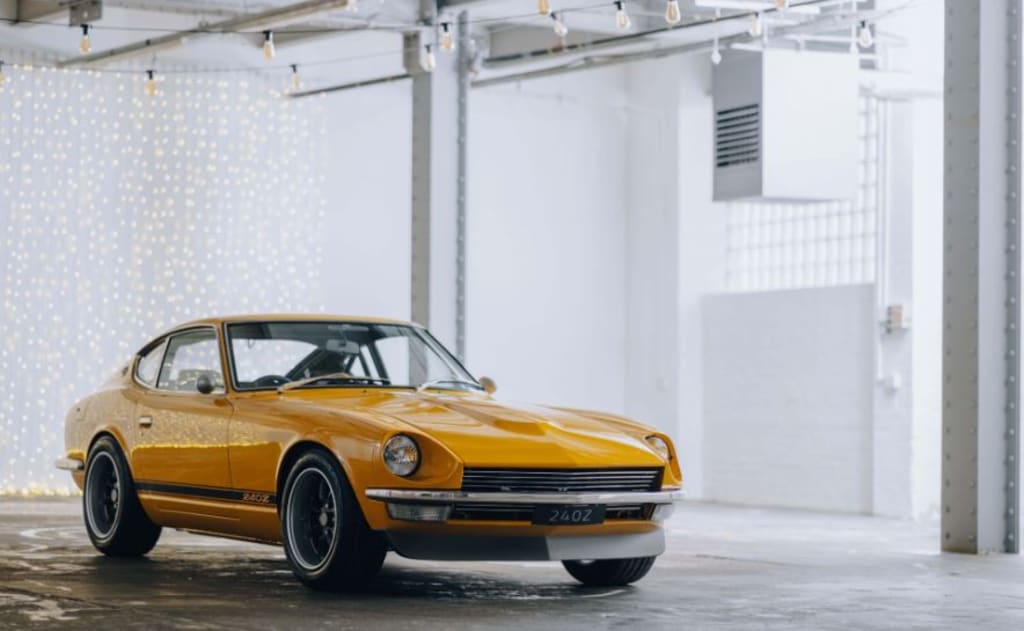
The 1960s and 70s marked a pivotal turning point. While other manufacturers were content with family sedans, Nissan dared to dream of sports cars that could compete with European giants. The result was the Datsun 240Z (known as the Fairlady Z in Japan). Affordable, stylish, and packing a punch under the hood with its smooth inline-six engine, the Z cars put Nissan on the global performance map. It proved that high-performance driving didn't have to be exclusive to the wealthy, democratizing speed and style for a new generation of drivers.
But Nissan didn’t stop there. They ventured into motorsport, proving their engineering prowess on the racetrack and laying the groundwork for a legacy that would span decades.
Dominating the Motorsport Scene
Nissan's foray into motorsport was nothing short of legendary. From conquering Le Mans to dominating touring car championships, the brand consistently pushed the boundaries of performance.
Perhaps their most famous motorsport achievement comes from the world of Group C racing in the late 80s and early 90s. During this era, Nissan competed against some of the biggest names in endurance racing, such as Porsche and Jaguar, with the formidable R90C and R92CP race cars. Despite facing tough competition and complex regulations, Nissan managed to achieve significant victories, including a historic win at the 24 Hours of Daytona. The company's commitment to innovation led to groundbreaking developments in aerodynamics, turbocharging, and weight reduction, allowing their cars to compete at the highest levels.
Beyond endurance racing, Nissan made its mark in touring car racing, particularly in Australia and Europe. The Nissan Skyline GT-R, especially the R32 model, dominated Group A racing, earning the nickname "Godzilla" for its sheer dominance on the track. With its advanced ATTESA E-TS all-wheel-drive system and the formidable RB26DETT twin-turbo inline-six engine, the R32 crushed the competition, winning multiple championships and rewriting the history books. It wasn't just fast; it was technologically superior, featuring a level of electronic integration that rivals couldn't match.
Nissan's motorsport legacy also extends to rallying. The brand participated in events such as the Safari Rally, where their rugged and reliable vehicles proved their mettle in some of the harshest terrains on the planet. Models like the Nissan 240Z and the Pulsar GTI-R demonstrated the company's ability to balance raw performance with durability.
Even in modern times, Nissan continues to participate in motorsport through series such as Super GT, Formula E, and endurance racing. Their involvement in these disciplines not only showcases their engineering excellence but also helps to inspire the next generation of car enthusiasts and engineers.
The Birth of Drift Culture
If there’s one aspect of Nissan’s legacy that resonates beyond the racetrack, it's drifting. The art of controlled oversteer was born on the winding mountain roads (touge) of Japan in the late 1980s, with enthusiasts taking their rear-wheel-drive Nissans to the limit.
The Nissan Silvia, in particular, played a crucial role in shaping drift culture. Lightweight, balanced, and easily tunable, it became the go-to platform for many aspiring drifters. The rear-wheel-drive configuration of Nissan’s models, such as the Silvia S13, S14, and S15, made them perfect for sliding through tight corners with precision and style. These cars were equipped with the legendary SR20DET engine, which provided an excellent balance of power, reliability, and aftermarket support, further cementing their popularity in the drifting scene.
Drifting itself has deep roots in Japan's touge culture, where drivers would test their skills on the country's narrow, twisty mountain passes. As drifting gained popularity, it transitioned from underground street racing to organized events, leading to the establishment of professional competitions like the D1 Grand Prix in Japan. Nissan vehicles were at the forefront of this evolution, with drivers such as Keiichi Tsuchiya, the "Drift King" pushing the limits of what these cars could do. The Nissan 180SX, another iconic drift machine, became a favorite among grassroots drifters thanks to its affordability, lightweight chassis, and powerful turbocharged engine.
The drift scene wasn't just confined to Japan. Nissan's influence quickly spread to the United States and Europe, where the arrival of the Fast and Furious movies in the early 2000s introduced drifting to a global audience. Events like Formula Drift saw a surge in popularity, with drivers modifying their Silvias and 350Zs to compete at a professional level. The aftermarket scene for Nissan drift cars exploded, with parts manufacturers offering everything from coilovers and angle kits to turbo upgrades and widebody kits.
One of the standout features of Nissan’s drift-ready platforms is their adaptability. Whether it’s an S13 built for grassroots events or an extensively modified S15 competing in the professional circuit, Nissan cars have a unique ability to perform at any level. The RB and SR engine families offer an unparalleled combination of power, reliability, and community support, making them ideal choices for drifters worldwide.
The Gentleman’s Agreement and the Tuning Revolution
During the 1990s, Japanese automakers, including Nissan, entered into an unspoken "Gentleman’s Agreement" to limit their cars' advertised horsepower to 276 hp (280 PS). This was done in an effort to curb the escalating horsepower wars and maintain road safety amid growing concerns about street racing.
However, enthusiasts quickly discovered that Nissan’s performance cars such as the R34 GT-R were significantly underrated. True power figures often far exceeded the official numbers, with dyno tests revealing outputs closer to 320–330 hp from the factory. This discrepancy didn't stop tuners; instead, it fueled a global tuning revolution.
The RB26DETT engine found in the Skyline GT-R became the heart of the tuning world. Capable of producing over 1,000 horsepower with the right modifications (upgraded turbos, fuel systems, and internal strengthening), it became a legend in its own right. The engine's robust iron block and sophisticated electronics made it a canvas for engineers and hobbyists alike, spawning a multi-billion dollar aftermarket industry that persists to this day.
Nissan’s Impact on Global Car Culture
From the underground drift scene to Hollywood blockbusters, Nissan's influence is undeniable. The Fast and Furious franchise, for example, propelled the GT-R to global superstardom, introducing it to an entirely new generation of fans who may have never heard of the "Skyline" nameplate. Meanwhile, events like Formula Drift continue to showcase Nissan’s prowess in sideways action, with drivers pushing S13s, S14s, and S15s to the absolute limit.
Today, Nissan continues to innovate. The GT-R NISMO represents the pinnacle of their internal combustion engineering, while the Nissan Z (latest generation) carries the torch of the original 240Z into the modern era. Even as the industry shifts toward electrification, Nissan remains committed to performance, as seen in their electric efforts in Formula E and the development of high-performance EV concepts.
Owning a Nissan, particularly one from its performance lineage, is about being part of a culture. It’s about the camaraderie of the drift meet, the respect earned on the track, and the pride of driving a machine that has shaped automotive history.
From the affordable elegance of the 240Z to the technological dominance of the Skyline GT-R and the sideways mastery of the Silvia, Nissan has proven that performance can be accessible, durable, and endlessly fun. As the automotive world evolves, Nissan’s legacy remains a testament to the power of innovation, passion, and the relentless pursuit of driving pleasure.
About the Creator
Mark Lim
Hi I am mark an automotive student and a car, tech and food enthusiast ! Im gonna try and post daily & hope you enjoy what I write and do share my page with people you know. I would gladly appreciate it! Cheers
Enjoyed the story? Support the Creator.
Subscribe for free to receive all their stories in your feed.
Comments
There are no comments for this story
Be the first to respond and start the conversation.