
Mercedes’ Baby G‑Class Won’t Be Built In Germany
WHYYY NOTTT

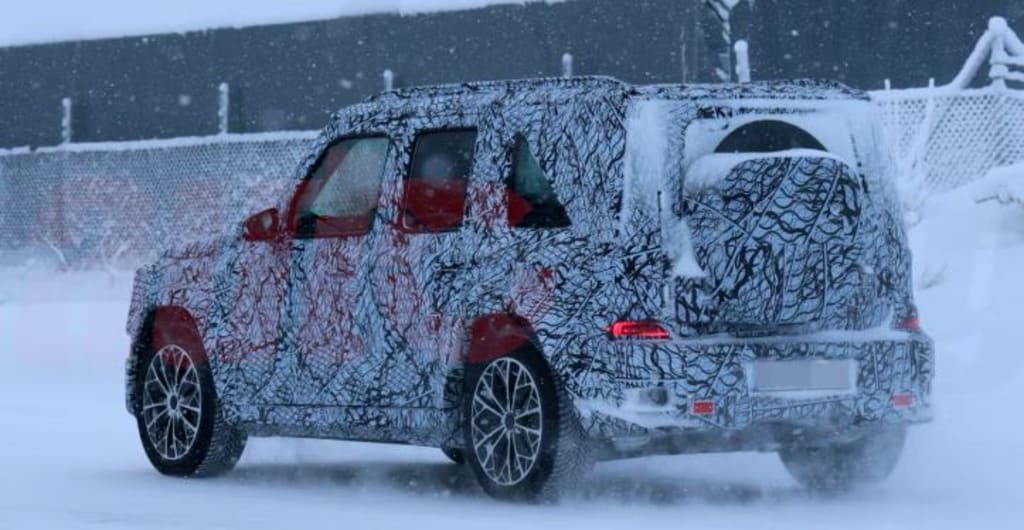
The compact “Baby G‑Class” has easily been one of the most hyped upcoming models in the entire automotive world for years now, but we’ve just learned one major detail that’s caught almost everyone by surprise: it won’t be built in Germany after all. Instead, Mercedes‑Benz is shifting all production of this highly anticipated new SUV to its factory in Kecskemét, Hungary, in a calculated cost‑cutting move that puts thousands of German manufacturing jobs at risk and signals a major shift in how the brand plans to build its future models.
What We Know About The Baby G‑Class So Far
First, let’s recap what makes this new model such a big deal. Spied testing in full camouflage across Europe earlier this year, it’s not just a shrunken carbon copy of the legendary full‑size G‑Wagon. Designers have worked hard to give it its own distinct personality: it keeps the instantly recognizable boxy silhouette, upright stance, and rugged charm that have made the G‑Class an icon for over 40 years, but it’s been tuned specifically for urban drivers, lighter off‑road adventures, and everyday usability.
Its powertrain story has already gone through a major pivot, too. When Mercedes first teased the project, it was billed as an exclusively electric entry point to the G‑Class family. But the brand has now confirmed it will offer both electric and internal combustion versions, a direct response to fierce pushback from dealers in North America, who warned that many customers in key markets are still hesitant to switch fully to battery power and want the option of a familiar gasoline engine. The whole range will be built on Mercedes’ new flexible MMA architecture, designed to work seamlessly with both powertrain types.
Why Hungary, And Why Not Germany?
According to exclusive reports from Automotive News, the decision to move production to Kecskemét comes down to simple economics and some hard realities facing legacy automakers right now. Building the new model in Hungary will reduce total manufacturing costs by roughly 10% compared to assembling it at one of Mercedes’ German plants, a saving the company says is essential as it battles rising raw material prices, brutal price wars in China, steep tariffs, and the multi‑billion‑euro investment needed to complete its shift to electrification.
This move also transforms the Kecskemét facility in one go. Following a major expansion, it will soon become Mercedes’ largest production hub in Europe, responsible for nearly one in three of all Mercedes‑badged vehicles built across the continent. Annual capacity will jump to over 300,000 units, creating thousands of new jobs in Hungary, while the Rastatt plant in Germany, which had long been tipped as the home of the compact G‑Class, misses out on this lucrative new program entirely.
Mercedes CEO Ola Källenius has been very open about the challenge facing German factories: high local labor costs, strict regulations, and lower output efficiency mean they simply can’t compete for new compact model programs right now. The brand has been pushing for longer working hours without matching wage increases to close the gap, a proposal that has already sparked tension with unions.
The Bigger Picture And The Risks
This shift is far more than just one factory losing a new model. It’s a stark reminder that heritage and national pride alone can’t keep production in high‑cost regions when margins are squeezed tighter than ever. Mercedes isn’t the only German brand facing these tough choices; even Porsche has recently hinted it may move some Cayenne production after two decades of building it in Slovakia.
But the move carries real risks. Alienating its domestic workforce could lead to prolonged labor disputes, lower morale, and disruptions across other German plants. And for buyers, the biggest question is the one that matters most: will building the G‑Class family’s newest member outside Germany affect the legendary build quality, durability, and attention to detail that the badge stands for? Mercedes insists it enforces identical global standards across all its facilities, but it will take the first customer cars hitting the road to prove that promise holds.
For now, all we know is that the Baby G‑Class is on track to launch in 2027, made in Hungary, designed in Germany, and facing one of the toughest tests of any new Mercedes in recent memory.
About the Creator
Mark Lim
Hi I am mark an automotive student and a car, tech and food enthusiast ! Im gonna try and post daily & hope you enjoy what I write and do share my page with people you know. I would gladly appreciate it! Cheers
Enjoyed the story? Support the Creator.
Subscribe for free to receive all their stories in your feed.
Comments
There are no comments for this story
Be the first to respond and start the conversation.