
Malaysia's Automotive Policy Is Broken And Nobody's Talking About It
A former deputy minister just revealed why BYD hesitated on its Perak plant, why local car parts makers are getting crushed, and why MITI is flying blind on EVs. The policy framework is six years old. The industry moved on without it.


Malaysia has a problem it's not equipped to solve.
In April 2026, BYD — one of the world's largest EV manufacturers — was considering a major investment in Tanjung Malim, Perak. A plant. Assembly facility. Jobs. Technology transfer. Real economic impact.
Then, MITI (the Ministry of Investment, Trade, and Industry) imposed "very stringent conditions." Export requirements. Localization mandates. The kind of rules that make international investors nervous.
BYD started thinking twice.
And instead of quietly negotiating behind closed doors, the entire thing became public. Media coverage. Public backlash. Heated discussions. Everyone is suddenly asking: "Why is Malaysia making it hard for one of the world's best EV companies to invest here?"
The real answer — the one nobody's saying out loud — is more damning than any single policy decision.
Malaysia's National Automotive Policy is six years old. The automotive industry has moved on. And MITI doesn't have the internal capacity to update it.
What Changed Since 2020 (Spoiler: Everything)
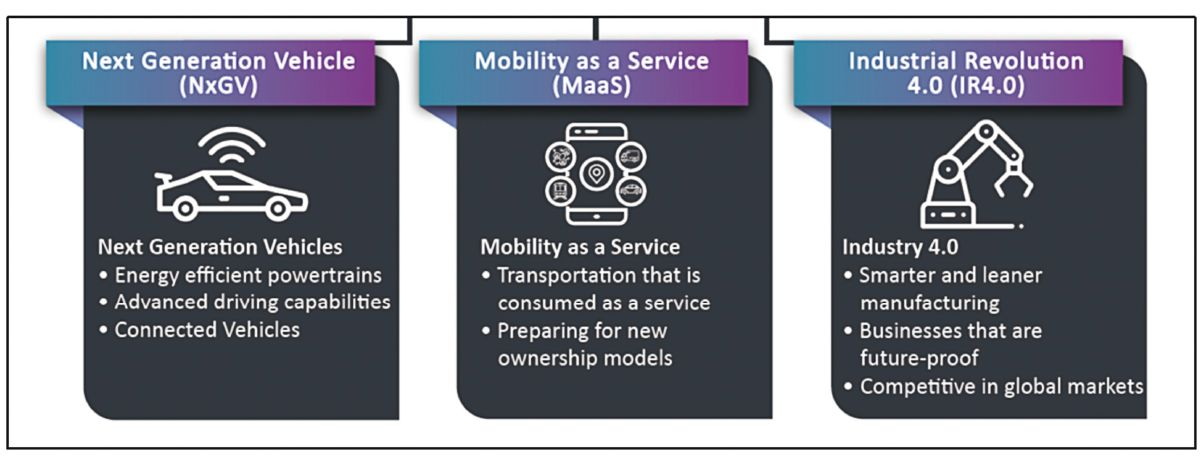
When Malaysia launched its National Automotive Policy in early 2020, the plan was clear:
Next-Generation Vehicles — including EVs, but as one component of a broader strategy
Mobility as a Service — preparing Malaysians for different car ownership models
Industrial Revolution 4.0 — updating manufacturing processes
It was a reasonable framework for 2020.
By 2026, it's obsolete.
Three massive shifts happened:
First: Chinese EVs Exploded
When the NAP was written, Chinese EV makers were interesting but not threatening. By 2024-2026, they're everywhere.
BYD isn't an experiment anymore. Chery is assembling cars in Malaysia. Zeekr is producing EVs in Proton's facility in Tanjong Malim. Xpeng partnered with EPMB to assemble EVs in Melaka. Great Wall Motors already has Haval hybrid EVs rolling off the Melaka production lines.
This wasn't supposed to happen this fast. Chinese manufacturers weren't supposed to be this good. Their pricing wasn't supposed to be this competitive.
But it is. And Malaysia's policy framework doesn't account for it.
Second: Oil Prices Went Crazy
In late 2025/early 2026, the Strait of Hormuz was blockaded. Unsubsidized petrol and diesel prices in Malaysia skyrocketed.
Suddenly, EVs weren't just environmentally good. They were economically necessary.
This changed the math for car buyers. And the math for MITI's policy.
Third: The Local Automotive Ecosystem Is Getting Crushed
Here's the part everyone's worried about but not discussing openly:
Malaysia has an entire ecosystem of local automotive component manufacturers. Spare parts makers. Seat suppliers. Electronics component producers. Companies that supply parts to Proton, Perodua, and the various assemblers.
That ecosystem was built for ICE vehicles (internal combustion engines). It's struggling as EVs take over.
Chinese EV makers don't use the same supply chains. They bring their own components, their own suppliers, their own ecosystems. They assemble cars locally, but they don't source locally the way traditional automakers did.
Result: local component makers are watching their business evaporate.
A report on the automotive components ecosystem was commissioned by the Malaysian Automotive Component Parts Manufacturers last year. It was submitted to MITI. And then... nothing. Silent. No public strategy on how to help local suppliers transition to the EV era.
The Invisible Committee That Actually Makes Decisions
There's a committee almost nobody knows about called the Automotive Business Development Committee (ABDC).
This committee is powerful. Like, "influences the actual prices you pay for cars" is powerful.
What does it do? It discusses incentive applications under the Multi-Sourcing Parts Programme and the Industrial Linkage Programme schemes. Translation: It recommends tax breaks and subsidies for companies that assemble cars in Malaysia.
Those tax breaks and subsidies? They directly affect how much you pay for a car. They determine whether a locally assembled car costs RM100,000 or RM150,000.
But nobody knows how this committee works. There's no public scorecard. No transparency on which companies get which incentives or why. No explanation of the rationale.
Ong Kian Ming, the former deputy minister who wrote about this, mentioned that a transparent scorecard system was developed under former MITI Minister Tengku Zafrul Aziz. But public announcements about it? Almost none.
Result: Debates about EV pricing, ICE vehicle pricing, and local vs. imported vehicles generate enormous heat with almost no light. People argue about why cars cost what they cost without understanding the incentive structure that's actually driving prices.
That's not policy. That's theater.
The Real Crisis: MITI Lost Its Best People (And Its Capacity)
Here's where it gets serious.
For years, including when Ong Kian Ming was deputy minister, Malaysia's automotive policies were effectively "subcontracted" to MARii — the Malaysia Automotive, Robotics and IoT Institute.
MARii had a powerful CEO named Datuk Madani Sahari. He was the person driving automotive policy. The institution that was actually thinking.
Then, in March 2022, Datuk Madani was arrested by the MACC on corruption charges. In 2024, he was convicted and sentenced to a year in jail.
During and after that crisis, many of MARii's staff left. Understandably. The agency lost institutional knowledge, talent, and momentum.
MITI's own internal capacity for automotive policymaking had atrophied. The thinking had been outsourced to MARii. When MARii collapsed, that capacity disappeared.
Now, MITI is trying to rebuild. A new MARii CEO, Azrul Reza Aziz, took over in April 2023. But rebuilding institutional knowledge takes years.
Meanwhile, the industry is moving at light speed. Chinese EVs are investing billions. The petrol subsidy is becoming unsustainable. The local component ecosystem is collapsing.
And MITI is playing catch-up with a six-year-old policy and staff trying to remember how to think about automotive strategy.
The Giant Hole In The Strategy: Motorcycles
Malaysia sells over 600,000 motorcycles annually.
Six hundred thousand.
Most of them are ICE motorcycles. Most of them require fuel. Most of them burn government money on petrol subsidies.
The NAP has no coherent strategy for electric motorcycles.
Think about that. Malaysia has a government spending billions on petrol subsidies. It has one of the largest motorcycle markets in the world. And there's no policy framework for transitioning motorcycles to electric.
If Malaysia could move even 20% of motorcycle sales to EVs, it would reduce petrol subsidy costs significantly. But there's no framework. No incentives. No manufacturer partnerships. Nothing.
This isn't a small policy gap. This is a massive opportunity that's being ignored.
The Inter-Ministerial Mess
Here's the fundamental problem:
Malaysia announced an EV target of 20% by 2030 and 80% by 2050. That's part of the National Energy Transition Roadmap launched in 2023.
But who's responsible for hitting that target? MITI? The Ministry of Energy Transition? The Ministry of Transport? The Ministry of Finance?
Nobody's clearly in charge. Which means nobody's fully accountable. Which means coordination is weak. Which means targets look good on paper, but implementation is messy.
And the questions that actually matter don't have clear answers:
What's the actual EV adoption roadmap Malaysia wants?
How will mass EV adoption impact local ICE component manufacturers?
How will this reduce government spending on petrol subsidies?
How fast should this happen?
Who pays for the transition?
These aren't rhetorical questions. They're operational questions that determine government budgets, company investments, and people's car-buying decisions.
Right now, they're being handled inconsistently across multiple ministries with no clear framework.
Why This Matters To You (Even If You Don't Buy Cars)
If you're Malaysian, this affects you in multiple ways:
If you want to buy an EV, Pricing depends on incentives given to local assemblers by a secret committee. Without transparency, you can't understand whether prices are fair or inflated.
If you work in automotive components, your industry is transitioning from ICE to EV, and there's no government strategy to help. You're on your own figuring out how to survive.
If you ride a motorcycle: There's no policy framework for moving motorcycles electric, even though it's economically rational and environmentally necessary.
If you care about the petrol subsidy, this consumes billions annually. A clear EV strategy could reduce that burden significantly. But there's no integrated government plan.
If you're a manufacturer considering Malaysia, do you know what rules you'll face? Do you know what incentives you might get? The framework is unclear, so you'll probably invest elsewhere.
What Needs To Happen
According to Ong Kian Ming (who knows this system from the inside), MITI needs to:
Update the NAP — It's six years old and doesn't reflect current reality
Make the ABDC transparent — Publish how incentives are allocated and why
Rebuild internal capacity — MITI needs to do its own thinking instead of outsourcing it
Create a motorcycle strategy — 600k+ sales annually can't be ignored
Coordinate across ministries — Finance, Transport, Energy, and Environment all need aligned targets
Communicate publicly — People deserve to understand automotive policy
None of this is radical. It's just competent governance.
But it requires political will. It requires resources. It requires admitting that the current framework isn't working.
Malaysia's National Automotive Policy is six years old. The industry has moved on. MITI's policymaking capacity was weakened when its partner institution (MARii) collapsed amid corruption charges. Chinese EV companies are investing billions, while Malaysia's policy framework remains unclear and non-transparent.
This isn't the fault of any single minister. It's institutional decay. It's the consequence of outsourcing thinking, then having that outsourced institution collapse.
The good news: It can be fixed. It requires updating the policy, rebuilding institutional capacity, creating transparency, and coordinating across government.
The bad news: Until it happens, Malaysia will keep reacting to international investors instead of attracting them with a clear, consistent policy.
BYD hesitating on Tanjung Malim isn't a BYD problem.
It's an MITI problem.
And MITI needs to know that everyone's watching now.
About the Creator
Mark Lim
Hi I am mark an automotive student and a car, tech and food enthusiast ! Im gonna try and post daily & hope you enjoy what I write and do share my page with people you know. I would gladly appreciate it! Cheers
Enjoyed the story? Support the Creator.
Subscribe for free to receive all their stories in your feed.
Comments
There are no comments for this story
Be the first to respond and start the conversation.