
Japanese Consortium Unveils JNFP-1: A Domestic Challenge to Dallara’s Super Formula Monopoly
Led by Dome and comprising 80 industry players, the Japan Motor Racing Industry Association has built a prototype next-generation chassis, aiming to bring single-seater manufacturing back to Japan by 2029 or 2030.

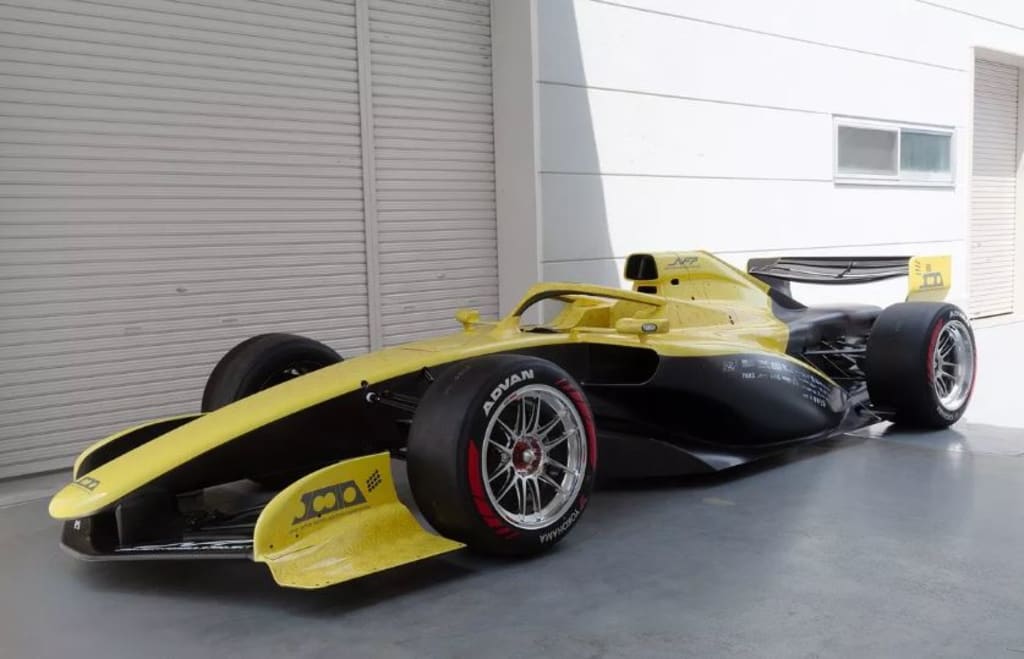
In a significant move to reclaim domestic control over its premier open-wheel category, a consortium of 80 Japanese racing industry companies has unveiled a prototype for the next-generation Super Formula car. Known as the JNFP-1, the vehicle represents a bold bid to displace Italian constructor Dallara, which has held the exclusive chassis supply contract for the series since 2014.
The initiative is spearheaded by the Japan Motor Racing Industry Association (JMIA), a non-profit organization, with renowned racing car constructor Dome leading the design and engineering efforts. The project marks a major resurgence for Dome in single-seater production, nearly two decades after its ambitious but unsuccessful attempt to enter Formula 1. Since returning to single-seaters in 2015 with the F110 for Japan’s domestic F4 series, Dome has steadily rebuilt its expertise, most recently with the Formula Regional-compliant F111/3.
Technical Specifications and Safety Standards
The JNFP-1 is designed to meet current Formula 1 safety standards, ensuring it remains at the cutting edge of driver protection. It is engineered to accommodate the series’ existing power units: the two-liter, four-cylinder turbocharged engines supplied by Honda and Toyota.
Visually and technically, the JNFP-1 diverges from the current Dallara SF23 in several key areas:
Wheels: It features low-profile 18-inch wheels, aligning with modern trends in top-tier motorsport.
Weight: At 750kg (including the driver), the JNFP-1 is 73kg heavier than the current SF23. This increase likely reflects the robust structural requirements needed to meet F1-level safety criteria and the integration of new hybrid or electrical components potentially planned for future regulations.
Collaborative Engineering: While Dome led the overall design, the project was a true industry-wide effort. Key contributors included Toyota subsidiary TGR-D, M-TEC (parent of Team Mugen), Toda Racing, and Toray Carbon Magic, the latter of which currently produces chassis for Super GT’s GT500 class.
From Exhibition to Track
The JNFP-1 made its public debut at an exhibition in Yokohama in May 2026 before being displayed at Fuji Speedway during the fourth round of the Super Formula season. Simulator testing has already begun with former Super Formula driver Kazuya Oshima, and the consortium plans to conduct the first on-track tests in the coming months. These trials will be critical in validating the car’s performance, handling, and reliability against the benchmarks set by the current Dallara machinery.
A Complex Path to Adoption
Despite the technical achievement, the path to replacing the SF23 is far from guaranteed. Japan Race Promotion (JRP) President Yoshihisa Ueno expressed admiration for the prototype but emphasized that "nothing has been decided" regarding its adoption.
"The selection of the next-generation machine is not something determined solely by the promoter," Ueno stated. "What matters is whether entrants genuinely want to race with this machine, and whether a movement emerges in which fans say they want to see racing with this machine."
Ueno highlighted the logistical challenges of such a transition. Super Formula requires a grid of 30 cars, meaning any new supplier must guarantee safety, consistent supply capability, and cost-effectiveness. He noted that the value of the JNFP-1 extends beyond its potential adoption, stating, "It is remarkable that more than 40 Japanese constructors came together to build this prototype, and it is hoped that this will help elevate Japan’s motorsport industry as a whole."
Timeline and Future Outlook
Even if the JRP decides to move away from Dallara, the timeline for implementation is long. Last year, Ueno indicated that the lifespan of the current SF23 could be extended beyond 2027. Given the need for extensive testing, homologation, and mass production, the earliest the JNFP-1 could feasibly supply the entire grid is 2029 or 2030.
For now, the JNFP-1 stands as a powerful symbol of Japanese engineering prowess and collaboration. Whether it eventually races in Super Formula or serves as a technological showcase for the industry, it has already succeeded in reigniting the conversation about domestic innovation in one of Asia’s most prestigious racing series.
About the Creator
Mark Lim
Hi I am mark an automotive student and a car, tech and food enthusiast ! Im gonna try and post daily & hope you enjoy what I write and do share my page with people you know. I would gladly appreciate it! Cheers
Enjoyed the story? Support the Creator.
Subscribe for free to receive all their stories in your feed.
Comments
There are no comments for this story
Be the first to respond and start the conversation.