
Jaguar’s Bold Rebirth: Type 01 Unveiled as £130,000 Electric Grand Tourer
End of Production Hibernation High-Stakes Luxury Pivot Mixed Early Reactions Targeting Younger Buyers and the U.S. Market A Radical Rebrand and a Long Road Back

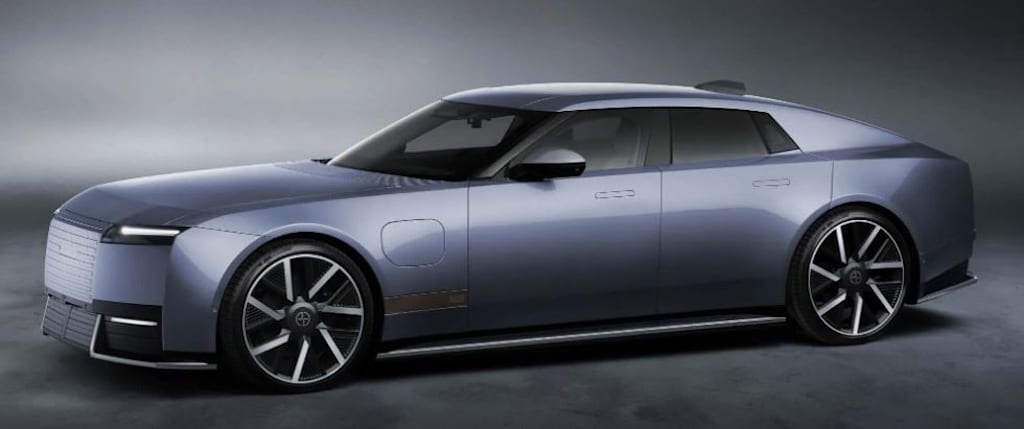
After more than two years of silence, deliberate reinvention, and complete withdrawal from new car sales in the United Kingdom, Jaguar has stepped back into the spotlight. On Tuesday evening in New York, the storied British marque unveiled the Type 01, its first new model in eight years, a fully electric grand tourer priced from £130,000 (US$172,000), launching a new, all‑electric era intended to restore lustre to a name that had faded from view. Orders open in early 2027, and with them comes one of the most ambitious and controversial reboots in automotive history.
From Hibernation to High‑End EV
The scale of what Jaguar has done is unprecedented. In 2024, the brand, founded in 1922 and immortalised by icons such as the E‑Type stopped selling new cars in the UK entirely. Apart from continued production of F‑Pace SUVs for export, it paused almost all output to make way for a total transformation: repositioned as an ultra‑luxury, electric‑only marque, separated from its more mainstream past and set on a course to compete in the highest tier of the global market. Parent company JLR, owned by India’s Tata Motors, had for years prioritised its more profitable Land Rover and Range Rover lines; Jaguar, by contrast, had slipped, selling just 66,900 vehicles in its final full year, barely a third of the volume it reached following the launch of the I‑Pace in 2018.
The rebranding exercise began in 2021 with the announcement of an electric‑only future, but early steps were met with scepticism. A 2024 launch video designed to build anticipation was widely criticised devoid of vehicles and featuring expressionless models; it drew confusion rather than excitement. Early footage of the Type 01 has also divided opinion: some reviewers described it as “boring” and “generic,” while others praised it as “beautiful” and “fabulous.” This split reception underscores just how high the stakes are — and how hard it is to satisfy everyone when rebuilding a legend.
Designed for a New Audience in a New Era
The Type 01 is intended to change not just what Jaguar builds, but who buys it. Historically favoured by middle‑aged and older drivers, and long the choice of British prime ministers, the brand now aims to attract younger buyers particularly in the United States, the market chosen for the unveiling. That choice is significant: EV scepticism remains deeply entrenched among American consumers, including at the luxury level, making the U.S. simultaneously the most important and most challenging frontier.
At 5.2 metres (17 feet) long, the car is unmistakably grand, spacious, imposing, and built for distance and comfort to the point where it will not fit comfortably in standard British parking bays. That is not an oversight; it is a deliberate statement: this Jaguar is designed for wide avenues and long highways, not crowded city streets. Under the skin, the specifications are competitive: up to 400 miles (644 km) of range, 200 miles of charge added in 13 minutes via rapid charging, and a sprint to 62 mph in 3.2 seconds performance that matches the premium price tag. It will be built at the historic Solihull plant, with electric drive units and battery packs manufactured nearby in Wolverhampton, sustaining vital high‑skill automotive jobs across the UK.
Industry Crosscurrents and Competing Visions
Jaguar’s arrival coincides with a moment of uncertainty across the sector. Other luxury brands have faced similar scrutiny: Ferrari’s first electric model, the Luce, was widely panned upon reveal, while Bentley deliberately chose a more conservative, familiar design for its debut EV to avoid controversy. Some mass‑market brands, including Volkswagen and Mercedes‑Benz, have walked back earlier pledges to go fully electric, adjusting their timelines as demand patterns shift. Just one day before the Type 01 reveal, Porsche reaffirmed its commitment to combustion engines, announcing a new line of high‑end mid‑engine sports cars as part of its own pivot toward exclusivity.
Jaguar has taken the opposite path complete, uncompromising electrification and it is the only legacy brand to have fully paused production to make the transition. As JLR Chief Executive P.B. Balaji stated: “Jaguar is a vital part of JLR’s growth story.” The UK Business Secretary, Jonathan Reynolds, welcomed the launch as “another big vote of confidence in our world‑class automotive industry,” placing it alongside recent major commitments from McLaren and Nissan. Yet the company faces real challenges: roughly 4,000 jobs are being cut across JLR amid U.S. tariffs, the lingering impact of a major cyberattack, and intense competition from Chinese EV manufacturers. The new Jaguar will also be produced in relatively small volumes it is not returning to mass production, but to rarity.
Two and a half years ago, Jaguar vanished from showrooms to rebuild itself. The Type 01 is the first proof of whether that bold decision will pay off. It will not win back every past owner; nor was it designed to. Instead, it seeks to capture a new generation of buyers who value sustainability, status, and British craftsmanship on their own terms. The reception has been mixed so far, but the most important verdict will come when the first cars reach customers in 2027. For a brand that has defined automotive elegance for more than a century, this is not just a new model it is a second life.
About the Creator
Mark Lim
Hi I am mark an automotive student and a car, tech and food enthusiast ! Im gonna try and post daily & hope you enjoy what I write and do share my page with people you know. I would gladly appreciate it! Cheers
Enjoyed the story? Support the Creator.
Subscribe for free to receive all their stories in your feed.
Comments
There are no comments for this story
Be the first to respond and start the conversation.